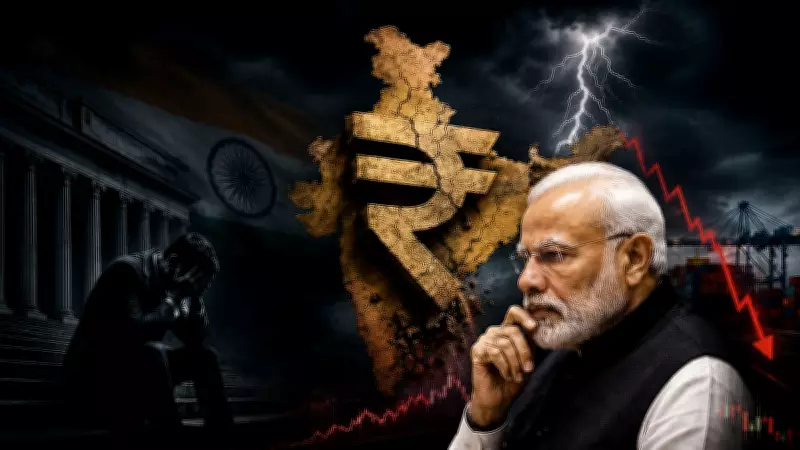
India's economic journey under Prime Minister Narendra Modi has taken a concerning turn, moving from being part of the 'Fragile Five' to what some analysts now call the 'Vulnerable One'. This shift highlights growing challenges in sustaining robust growth and maintaining macroeconomic stability.
The Fragile Five Era
In 2013, India was labeled one of the 'Fragile Five' economies by Morgan Stanley, alongside Brazil, Indonesia, South Africa, and Turkey. These nations were characterized by high current account deficits, inflationary pressures, and vulnerability to external shocks. At that time, India's economy was struggling with slow growth, high inflation, and a depreciating currency.
Transition Under Modi
When Modi came to power in 2014, his government implemented several reforms aimed at stabilizing the economy. Initiatives like the Goods and Services Tax (GST), the Insolvency and Bankruptcy Code (IBC), and 'Make in India' were intended to boost manufacturing and attract foreign investment. For a period, India's growth rates improved, and it was often cited as a bright spot in the global economy.

The Vulnerable One Status
However, recent years have seen a reversal. India's growth has slowed significantly, with GDP expansion falling to multi-year lows. The COVID-19 pandemic exacerbated existing weaknesses, leading to a sharp contraction in 2020. While there has been a recovery, it remains uneven, and structural issues persist.
Key Concerns
- High Unemployment: Job creation has not kept pace with the growing workforce, leading to rising unemployment rates.
- Inflationary Pressures: Food and fuel prices have pushed inflation above the Reserve Bank of India's comfort zone.
- Fiscal Deficit: Government spending, especially during the pandemic, has widened the fiscal deficit, raising debt sustainability concerns.
- Banking Sector Stress: Non-performing assets (NPAs) remain high, particularly in public sector banks.
- Export Slowdown: Global demand weakness and trade barriers have affected India's export performance.
Comparative Analysis
Other nations from the 'Fragile Five' have shown varied performances. Brazil and Indonesia have managed to recover more strongly, while Turkey and South Africa continue to face challenges. India's current position as the 'Vulnerable One' suggests it is lagging behind its peers in addressing structural bottlenecks.
Policy Implications
To reverse this trend, experts call for comprehensive reforms in agriculture, labor laws, and land acquisition. Enhancing ease of doing business, improving infrastructure, and investing in education and healthcare are critical. The government must also focus on fiscal consolidation and monetary policy coordination to restore confidence.
Conclusion
India's transition from 'Fragile Five' to 'Vulnerable One' underlines the need for urgent policy action. While the Modi government has taken steps in the right direction, the pace and scope of reforms must be accelerated to ensure sustainable and inclusive growth. The coming years will be crucial in determining whether India can regain its position as a global economic powerhouse.