

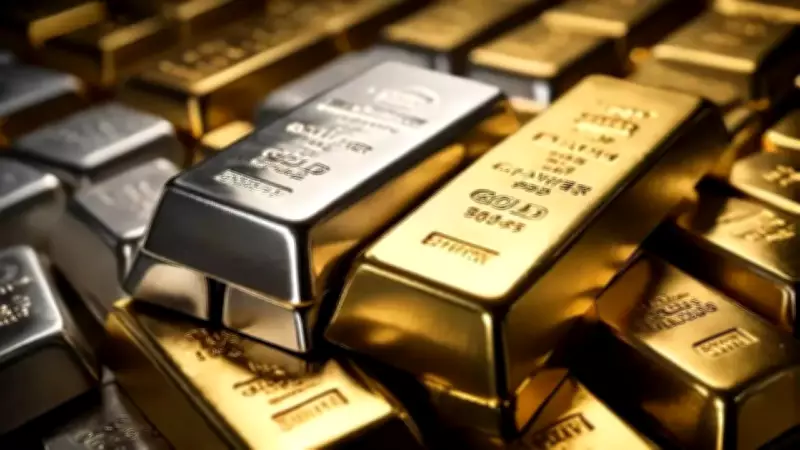
India's imports of gold and silver reached record-breaking levels in 2025, setting off alarm bells within government and policy circles. The soaring prices of these precious metals are threatening to significantly widen the country's trade deficit while adding fresh pressure on the already struggling rupee.
Record Import Figures Amid Global Price Surge
Official data reveals that gold imports increased by 1.6% year-on-year to reach $58.9 billion in 2025. Meanwhile, silver imports experienced a dramatic jump of 44% to $9.2 billion during the same period. These staggering figures emerged even as global prices for both metals climbed to historic highs throughout the year.
Collectively, gold and silver accounted for nearly one-tenth of India's total foreign exchange reserves in 2025. This substantial share could potentially rise even further in 2026 if the current price rally continues unabated.

Why Policymakers Are Worried
India holds the position of the world's second-largest consumer of gold and the largest market for silver. However, the country depends almost entirely on imports to satisfy domestic gold demand and relies on imports for more than 80% of its silver requirements.
The recent import surge has directly contributed to widening the trade deficit while simultaneously weakening the rupee, which touched a record low earlier this month. Although silver finds extensive industrial applications in sectors ranging from solar power to electronics, gold consumption remains largely concentrated in jewellery and investment purposes.
Indian policymakers have historically viewed gold demand as non-essential and a significant drain on foreign exchange reserves. This perspective has prompted repeated attempts to curb imports through higher import duties over the years.
Limited Policy Tools Available
With limited policy instruments at their disposal, officials and market participants have indicated that raising import duties is once again emerging as a key option under serious consideration. Any potential move to increase import duties may be signaled through the Union Budget 2026, either via changes in the customs duty structure or through an enabling provision that would grant the government flexibility to act if external pressures intensify further.
Market Expectations for Duty Hikes
With gold and silver prices hovering at record highs, even stable import volumes translate into a sharply higher import bill. Trade and industry officials suggest this situation could prompt the government to consider raising duties in the coming weeks to contain external imbalances.
India has established precedent for such measures. During the 2012–13 period, New Delhi sharply increased gold import duties to stabilize the rupee amid significant currency stress. Traders now speculate that a similar move could be imminent, potentially reversing the 2024 duty cuts when import taxes on both metals were reduced to 6% from 15% in an effort to curb smuggling activities.
Reflecting these market expectations, gold and silver in India are already trading at a premium to global benchmarks as investors price in the risk of higher duties.
Resilient Demand Despite Record Prices
International gold prices have surged an astonishing 98% since the beginning of 2025, which has understandably dampened jewellery demand. Yet overall consumption has remained remarkably resilient due to a sharp rise in investment demand.
While jewellery accounted for over three-fourths of India's gold demand until 2023, investment now constitutes more than 40% of total consumption. Investors have increasingly turned to gold coins, bars, and exchange-traded funds (ETFs) to capitalize on the ongoing price rally.
ETF inflows jumped 283% in 2025 to reach a record Rs 429.6 billion ($4.69 billion), effectively cushioning the impact of weaker jewellery buying and keeping import levels elevated.
Will Higher Duties Actually Curb Demand?
Past experience suggests that duty hikes may have limited impact on overall demand. When India raised gold import tax to 10% in 2013 from just 2%, demand remained largely unchanged. Domestic gold prices have climbed from approximately Rs 8,000 per 10 grams in 2006 to around Rs 1.62 lakh currently, yet annual demand has not experienced any sustained decline.

Market analysts suggest that a fresh duty hike of 4–6 percentage points is unlikely to deter buyers, particularly those who absorbed a 76.5% price jump in 2025. Instead, higher duties could potentially lift investor returns and risk reviving smuggling activities that the government has worked to suppress.
Silver Also Under Intense Scrutiny
Silver prices have risen even faster than gold, sharply inflating India's import bill. While industrial demand served as the primary driver earlier, investment demand has gained significant traction in recent months.
Silver ETF inflows surged to Rs 234.7 billion in 2025, up substantially from Rs 85.69 billion a year earlier. The growing popularity of silver as an investment vehicle suggests imports could rise further if the price rally persists through 2026.
The government's potential response to these import challenges may be formally announced during the Union Budget 2026 presentation. This could include specific changes to the customs duty structure or broader enabling provisions that would allow authorities to adjust import duties as external economic pressures evolve throughout the fiscal year.





