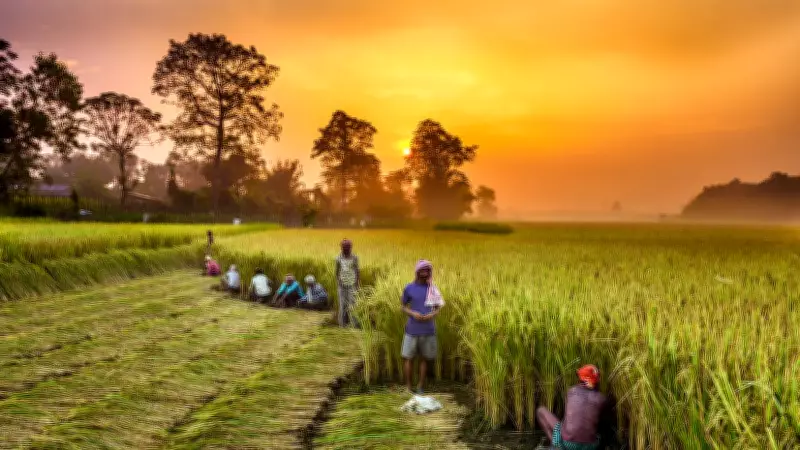
Kharif Sowing Accelerates Across India
Kharif sowing has gained significant momentum across India, with rice and millets recording a surge in acreage, while oilseeds and cotton continue to lag behind. According to data from the Ministry of Agriculture, the total area under kharif crops has increased compared to the same period last year, driven by favorable monsoon conditions in several regions.
Rice and Millets Lead the Charge
Rice, the primary kharif crop, has seen a notable increase in sown area, rising to 120.5 lakh hectares as of June 22, 2026, up from 115.2 lakh hectares during the corresponding period last year. Millets, including jowar, bajra, and ragi, have also surged, with acreage expanding to 45.3 lakh hectares against 42.1 lakh hectares in 2025. This growth is attributed to government incentives and improved rainfall distribution in key producing states like Uttar Pradesh, Punjab, and Madhya Pradesh.
Oilseeds and Cotton Struggle
In contrast, oilseeds such as groundnut, soybean, and sunflower have witnessed a decline in sowing area, falling to 68.7 lakh hectares from 71.2 lakh hectares last year. Cotton acreage has also dropped to 95.4 lakh hectares from 98.6 lakh hectares, primarily due to pest infestations and lower price realizations in major growing regions like Gujarat and Maharashtra. The Ministry noted that farmers are shifting towards more remunerative crops, impacting the overall oilseed and cotton output.

Sugarcane Acreage Edges Higher
Sugarcane acreage has edged higher to 57.31 lakh hectares against 56.64 lakh hectares last year, reflecting steady demand from the sugar industry. The increase is modest but consistent with the trend of stable sugarcane cultivation in states like Uttar Pradesh, Maharashtra, and Karnataka. According to an agriculture ministry official, the area under sugarcane is expected to remain stable throughout the season.
Monsoon and Sowing Progress
The southwest monsoon has been active over central and western India, aiding sowing operations. As of June 22, 2026, the total sown area for all kharif crops stands at 285.6 lakh hectares, compared to 274.3 lakh hectares last year, marking a 4.1% increase. The government has set a target of covering 1,050 lakh hectares under kharif crops this season, and officials are confident of achieving it given the current pace.
Impact on Agricultural Output
The surge in rice and millets is expected to boost food grain production, potentially stabilizing prices in the domestic market. However, the lag in oilseeds and cotton could lead to higher imports of edible oils and raw cotton, affecting the trade deficit. The Ministry of Agriculture is closely monitoring the situation and may consider extending support measures for oilseed and cotton farmers to encourage sowing in the remaining weeks.
Overall, the kharif sowing season is progressing well, with most regions receiving adequate rainfall. The final outcome will depend on the performance of the monsoon in July and August, which are critical for crop development.