

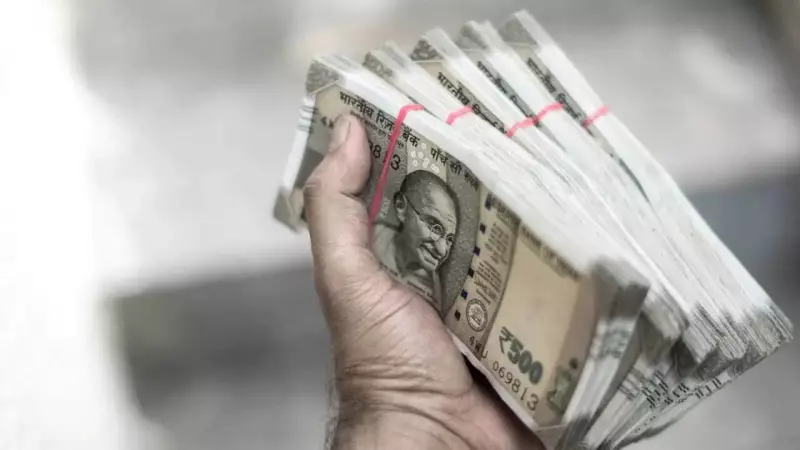
The Indian rupee tumbled to an unprecedented low against the US dollar on Tuesday, marking its fifth consecutive day of decline. The currency's slide was fueled by the absence of a key trade agreement with the United States, which has severely weakened both trade and portfolio inflows into the country.
Rupee's Historic Slide and Market Dynamics
During the trading session, the rupee touched a record low of 89.95 before settling at 89.87, down 0.4% for the day. However, data revealed deeper pressures. Information from the Clearing Corporation of India showed multiple bilateral trades executed at the 90 level after the official market close. This was corroborated by a PTI report confirming the rupee traded above the 90 mark on Tuesday.
Despite India posting strong domestic growth figures for the September quarter, the stress on the external sector remains unrelieved. Market traders anticipate more weakness ahead, even as the Reserve Bank of India (RBI) is expected to intervene to curb excessive volatility.

Expert Outlook: A Bearish Trajectory Towards 92?
Ashish Vaidya, Head of Treasury at DBS Bank India, provided a grim assessment. "While the rupee hasn't officially broken 90 today, it has already moved past earlier resistance levels and could trade in the 90–92 band in the near future," Vaidya stated.
He highlighted the core issue: "Pressure on the current account is high and the capital flows that once offset it are missing. The outlook isn't bullish. Although growth numbers appear strong, nominal growth has cooled, which is a significant concern. There's a clear case for policy support to growth, yet the headline GDP strength may make it hard to justify."
Importer Demand, Exporters' Hesitation Create Imbalance
The market is experiencing a pronounced imbalance due to heavy dollar demand from importers coupled with a reluctance from exporters to sell their foreign currency earnings. This uneven flow has not only pressured the spot rate but also contributed to a rise in forward premiums. The 1-month premium climbed above 19 paisa, with the 1-year implied yield reaching 2.33%.
While other Asian currencies and the dollar index traded sideways—as investors held onto expectations of a US interest rate cut in December—the rupee has been a regional underperformer. It is among the weakest currencies in Asia this year, having depreciated by 4.8%.
The combination of a high current account pressure, missing capital flows, and persistent market imbalance suggests the rupee's challenges are far from over, with all eyes now on potential policy responses and global cues.






