

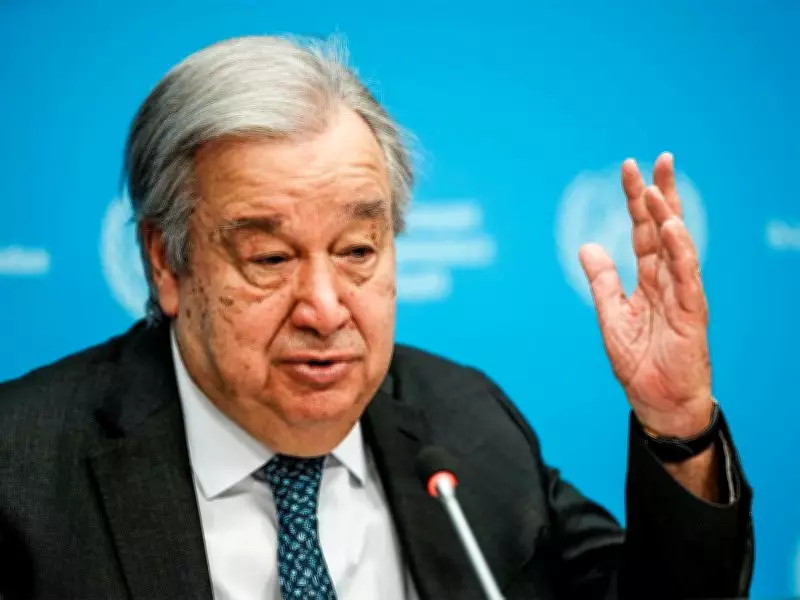
United Nations Secretary-General Antonio Guterres has issued a stark warning, stating that the global organization is facing an imminent financial collapse. This alarming situation stems from a combination of significant unpaid dues by member states and restrictive budget rules that are crippling the UN's operational capabilities.
The Dire Financial Situation at the United Nations
In a recent address, Guterres highlighted the precarious financial state of the United Nations, emphasizing that the body is struggling to maintain its essential functions. The Secretary-General pointed out that the accumulation of unpaid contributions from various countries has created a severe cash flow crisis. This financial shortfall is exacerbated by stringent budgetary constraints that limit the UN's ability to allocate funds efficiently and respond to global emergencies.
Impact of Unpaid Dues and Budgetary Restrictions
The failure of member states to fulfill their financial obligations has led to a substantial deficit in the UN's budget. Guterres stressed that these unpaid dues are not merely administrative issues but have real-world consequences, potentially hampering peacekeeping missions, humanitarian aid, and development programs worldwide. Furthermore, the restrictive budget rules, often imposed by member states during funding negotiations, prevent the UN from adapting to evolving global challenges, such as climate change, conflicts, and public health crises.

The Secretary-General warned that without immediate action to address these financial woes, the United Nations could face operational paralysis. This could undermine its role in promoting international cooperation, security, and sustainable development, as outlined in its charter.
Call for Urgent Reforms and Collective Responsibility
Guterres called upon member states to take collective responsibility and implement urgent reforms to stabilize the UN's finances. He proposed measures such as revising payment schedules, enhancing transparency in budgetary processes, and encouraging timely contributions. The Secretary-General also emphasized the need for a more flexible financial framework that allows the UN to respond dynamically to global needs without being hindered by rigid rules.
This financial crisis comes at a critical time when the world is grappling with multiple interconnected challenges, from geopolitical tensions to economic disparities. The potential collapse of the UN's financial system could have far-reaching implications, weakening multilateralism and leaving vulnerable populations without essential support.
Looking Ahead: The Path to Financial Sustainability
To avert a collapse, Guterres urged a renewed commitment from all 193 member states to uphold their financial commitments. He highlighted that a financially robust United Nations is crucial for addressing global issues effectively and maintaining international peace and security. The Secretary-General's warning serves as a wake-up call for the international community to prioritize the sustainability of this vital institution.
In conclusion, Antonio Guterres's alert about the UN's imminent financial collapse underscores the urgent need for reform and cooperation. As the world watches, the response from member states will determine whether the United Nations can continue to serve as a cornerstone of global governance or face debilitating financial constraints.






