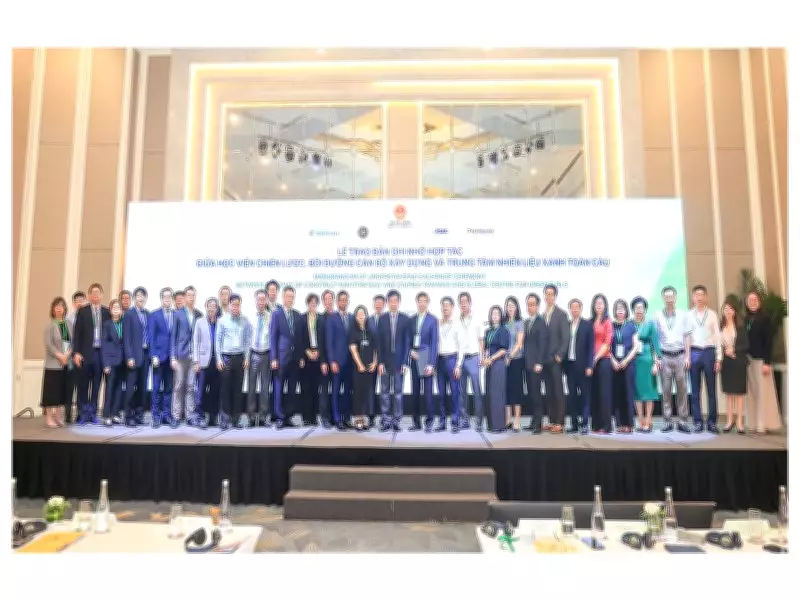
The International Conference on Sustainable Aviation Fuel (SAF): Policy Frameworks and Market Development in Asia took place in Hanoi on June 25, 2026, drawing policymakers, aviation regulators, airlines, fuel suppliers, technology providers, and international organisations. The event highlighted growing regional interest in sustainable aviation and the role SAF could play in supporting Vietnam's aviation and energy transition objectives.
Conference Organisation and Objectives
The conference was jointly organised by the Global Centre for Green Fuels (GCGF) and the Vietnam Academy of Construction Strategy and Cadres Training (ACST) under the Ministry of Construction, with support from the Asia Pacific Sustainable Aviation Centre (APSAC). The gathering aimed to discuss SAF policy frameworks, market development, and investment opportunities across Asia.
Vice Minister Le Anh Tuan of the Ministry of Construction opened the conference by emphasising the growing importance of SAF in supporting aviation decarbonisation. He reaffirmed Vietnam's commitment to achieving net-zero emissions by 2050 and noted that SAF development should follow a roadmap tailored to Vietnam's circumstances, balancing emissions reduction, energy security, and business competitiveness.

Keynote Address and Regional Perspectives
Mr. Subash S., Deputy Regional Director of the International Civil Aviation Organization (ICAO) Asia and Pacific Office, delivered the keynote address. He highlighted SAF's role within ICAO's Long-Term Aspirational Goal of achieving net-zero carbon emissions from international aviation by 2050. He emphasised the importance of national SAF roadmaps, coordinated policy frameworks, and collaboration across government agencies, industry, and financial institutions to support SAF deployment.
Discussions provided Vietnamese stakeholders with regional perspectives and implementation experiences across policy frameworks, certification requirements, market development, technology pathways, and supply chains. The exchanges are expected to contribute to ongoing assessments of SAF development opportunities and future planning efforts in Vietnam.
Opportunities Beyond Emissions Reduction
For Vietnam, SAF development may also present opportunities beyond emissions reduction. Participants discussed the country's potential role in emerging regional SAF value chains, including opportunities relating to feedstock supply, fuel production, infrastructure development, and investment, as well as the policy and market conditions required to support long-term growth.
"The transition to sustainable aviation requires coordinated action across multiple sectors, including aviation, energy, agriculture, industry and finance," said Mr. Clarence Woo, Managing Director of the Global Centre for Green Fuels. "By bringing together regional policymakers, industry leaders and technical experts, this conference provides an important platform for dialogue and the exchange of regional experience as Vietnam explores potential pathways for SAF development."
Regional Cooperation and Industry Contributions
Mr. Philip Goh, Chief Executive Officer of the Asia Pacific Sustainable Aviation Centre (APSAC), highlighted the importance of regional cooperation and capacity building in supporting SAF development across Asia-Pacific. He noted that countries in the region possess diverse feedstock resources, policy approaches, and market conditions, and that sharing experiences and lessons learned can support more informed SAF development pathways.
The programme featured contributions from ICAO, civil aviation authorities from across Southeast Asia, and industry leaders including Vietnam Airlines, Airbus, Boeing, SAFCo, Taiyo Oil, and LanzaTech. The discussions highlighted both the opportunities and challenges associated with SAF deployment and underscored the importance of coordinated action across government and industry to support future SAF development in Vietnam.
About the Organising Bodies
The Global Centre for Green Fuels (GCGF) is a Singapore-based not-for-profit think tank advancing the adoption of sustainable fuels across the transport sector. GCGF provides data-driven research, technical expertise, and policy advisory to governments and industry, helping accelerate practical and inclusive energy transition pathways.

The Vietnam Academy of Construction Strategy and Cadres Training (ACST) is an institution under the Ministry of Construction that supports policy research, capacity building, and strategic development initiatives in Vietnam's construction and infrastructure sectors.