Nine Startups to Address Urban Sustainability Challenges
Nine climate-tech startups are set to deploy innovative solutions targeting critical urban sustainability challenges across 10 Indian cities: Chennai, Kozhikode, Bengaluru, Khammam, Hyderabad, Mumbai, Pune, Nashik, Bhavnagar, and New Delhi. The initiative is part of the Innovations in Sustainable Urban Transition Program, led by Social Alpha and the University of Toronto India Foundation (UTIF). Each startup will receive grants of up to INR 35 lakh to support deployment and de-risk adoption in urban environments.
Key Innovations Across Sectors
The selected startups will deploy innovations in low-carbon construction materials, renewable energy, waste management, water efficiency, and sanitation. Notable solutions include:
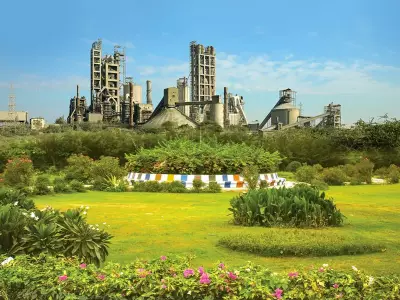
- Carbon Strong: A proprietary fly ash-based binder that replaces 35-40% of cement in concrete, reducing embodied carbon and costs without requiring process changes.
- Satiq Concrete Manufacturer: Develops low-temperature, waste-derived binders and engineered composites for lightweight, high-strength, thermally efficient concrete with lower emissions.
- Go Do Good Studio: Creates home-compostable food packaging using plant-based coatings and inks, eliminating plastic from urban food delivery.
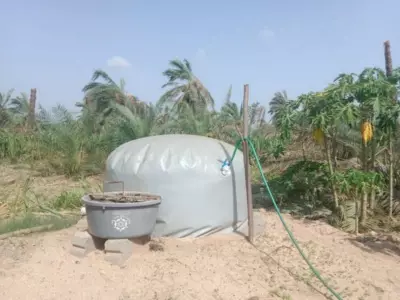
- Vivifica Sustainable Solutions: The WENERATOR system integrates process optimization, IoT monitoring, and multi-stage digestion to convert mixed organic waste into clean biogas, designed for institutional kitchens.
- Apeiro Energy: Develops vertical small wind turbines optimized for low wind speeds, paired with smart controllers and AI micrositing for wind-solar hybrid microgrids.
- Trinano Technologies: A patented nano coating for solar panels increases energy output by 4%+, extends panel life by 2-3 years, and reduces cleaning needs by 50%.
- Smart Terra: AI-driven SaaS creates digital twins of water networks to detect leaks and faulty meters with under 100-meter precision, hardware-agnostic.
- Vayujal Technologies: Atmospheric water generators produce 43 to 3,000 liters of drinking water per day from air, energy-efficiently and with zero water wastage.
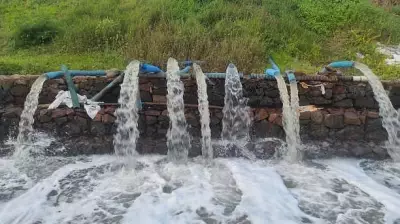
- Xpredict Labs: HiDrEC is a decentralized wastewater treatment system using electrochemical principles, requiring no external chemicals and lower land footprint.
Partnerships and Expected Outcomes
The technologies will be deployed through 17 partnerships with 11 private and 6 public organizations across the 10 cities. Expected outcomes include emissions reduction, waste diversion, clean energy production, energy efficiency, reduced non-revenue water losses, decreased groundwater dependence, and increased access to clean drinking water. Pilot partners include ready-mix concrete manufacturers like Veera Concrete and PCS Industries, schools under Maharashtra and Tamil Nadu governments, research institutions like the Central Road Research Institute, hospitals such as Kilpauk Medical College Hospital and Meitra Hospital, OEMs like Contendre Solar and Boson Whitewater, industries like Ashapura Saltworks and Yashpoly, real estate companies like DRA Homes, and urban local bodies including Khammam Municipal Corporation and Chennai Metropolitan Water Supply and Sewerage Board.

Program Leadership Perspectives
Ganesh Neelam, Co-founder of Social Alpha, stated: "By 2036, India's towns and cities are expected to be home to 600 million people. As urban populations grow, pressure on the systems that support everyday life will intensify. Cities will need to rethink how they design and construct infrastructure, manage resources, deliver essential services and build resilience to climate risks. Addressing these challenges requires solutions that are practical, reliable and deployable at scale."

Gauravi Lobo, Director of U of T India Foundation, added: "What this program has surfaced is that the constraint isn't the technology. It's the distance between a working solution and a public system ready to absorb it. The nine start-ups in this cohort are being tested against that distance, with pilots designed around what urban local bodies and civic institutions actually need to make adoption decisions. For UTIF, that is where the research question lives - and what we carry back to the University of Toronto is not just the outcome, but the institutional logic of how Indian cities are learning to integrate innovation at scale."
Program Background and Impact
The Innovations in Sustainable Urban Transition Program was first launched in 2024. Its first cohort of 11 startups deployed innovations in 11 cities addressing air quality, sanitation, waste management, clean mobility, and low-carbon construction. The program demonstrated measurable outcomes: 105.99 tonnes of CO2e emissions avoided, 407.15 tonnes of waste diverted, 16,896 kiloliters of water saved, and 20% to 94% reduction in PM 2.5 and PM 10 across four locations.