

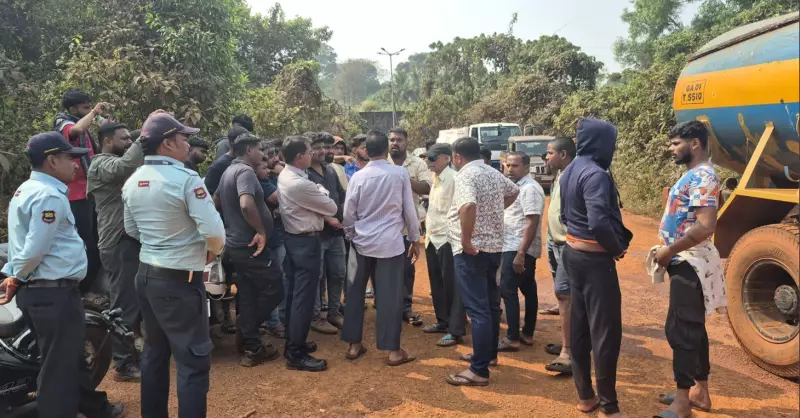
Bicholim Locals Stage Roadblock, Halting Mining Operations
In a significant display of community dissent, residents of Poira-Bicholim brought the transportation of iron ore to a standstill this week. The protest, which began on Monday and continued into Tuesday, saw locals directly stopping the trucks of the Salgaonkar mining company along the crucial Poira-Shirgao route.
Core Grievances: Unemployment and Pollution
The demonstration, spearheaded by truck owners and others whose livelihoods are tied to mining, centered on deep-seated frustrations. The community alleges persistent unfairness in how employment opportunities from the mining operations are distributed. They argue that while their village bears the brunt of the industry's negative impacts—like pervasive dust and pollution—they receive insufficient benefits in return.
Local resident Smita Ghatwal voiced the collective sentiment, questioning the purpose of the mining activity if locals are sidelined. "We are tolerating dust and other pollution," she said. "However, if we are being treated unfairly in terms of employment, what is the use of mining in the village?"

Tensions Escalate as Water Tanker Blocked
The protest intensified when villagers expanded their blockade beyond ore-carrying trucks. They also stopped a water tanker belonging to the Salgaonkar company, an action that heightened tensions on the ground. This move particularly sparked a confrontation between the protesting Poira residents and members of the Shirgao Truck Owners Association.
Vijay Pole, a truck owner and former sarpanch, criticized the mining company's tactics. He accused the firm of deflecting blame onto the Shirgao truck owners whenever pressed about hiring local workers. Pole powerfully framed the community's plight, stating that the suffering caused by mining pollution is unjustified if locals are denied jobs.
Demands for Immediate Infrastructure Improvements
Beyond employment, the protesters have laid out clear demands for corporate responsibility and improved local infrastructure. Vijay Pole explicitly called for the company to provide essential services to the affected community. His demands include:
- Access to reliable medical services.
- Provision of free water access for residents.
Pole insisted that these are not negotiable long-term promises but needs that must be met promptly. The protest underscores a growing movement in mining regions where communities are no longer willing to accept environmental degradation without tangible, fair socio-economic returns.






