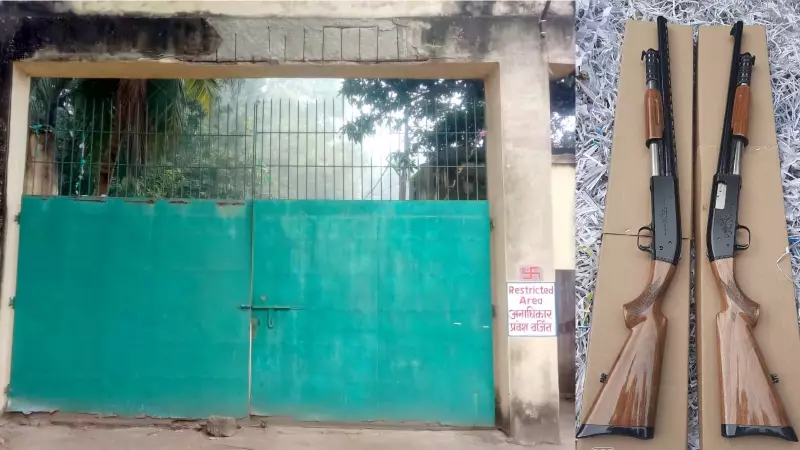
Bihar's historic gun manufacturing hub in Munger, which has been struggling for survival, is poised for a major transformation. The state government has approved a plan to integrate these centuries-old factories into a new defence corridor, offering a potential revival for the iconic industry.
A Legacy Under Threat
Established in 1762 under colonial rule, the gun factories in Munger district represent one of India's oldest surviving arms manufacturing units. For generations, they evolved into a specialized hub for crafting breech-loading firearms, deeply ingraining the craft into the town's economy and identity. At their peak, these units employed close to 1,500 families, catering primarily to civilian demand.
However, a steep decline began after 2016, when India's arms licensing policy changed. The number of firearms a civilian licence-holder could possess was reduced from three to two. This policy shift, combined with the rise of illegal arms manufacturing and duplicate firearms like the desi katta, severely impacted the legitimate industry.

The consequences were stark. Weekly engagement of workers plummeted from 1,000-1,200 to just about 150. Many skilled artisans were forced to migrate, taking up work as masons, auto-rickshaw drivers, or gig workers. Of the 108 licensed gun factories in India, 37 are located in Munger on about eight acres of BIADA land. These units, which once paid excise duty of Rs 2-3 crore in a single year (2001), now operate under a restrictive annual production cap of 12,392 breech-loading guns.
The Defence Corridor: A New Lease of Life
The revival hope comes from the Bihar Cabinet's recent approval for creating a new tech hub, which includes a defence corridor. Bihar Deputy Chief Minister and Home Minister Samrat Choudhary confirmed that the Munger gun factories will be revived and upgraded under this new framework.
A defence corridor is a strategically planned region aimed at promoting indigenous production of defence and aerospace items, making India self-reliant. This initiative, already operational in Uttar Pradesh and Tamil Nadu, carries a nationwide outlay of Rs 27,000 crore. Steps to integrate Bihar into this national framework were initiated on November 25.
Government officials indicate the corridor could lead Munger to manufacture advanced weaponry like automatic machine guns, ammunition, rocket launchers, bulletproof jackets, helmets, and night vision devices. This shift promises large-scale employment and a structural revival for the town.
Skill, Stigma, and Structural Shift
Industry representatives highlight the root cause of the decline. Sandeep Kumar Sharma, joint secretary of the Munger Gun Manufacturers (Licensees) Association, explained that the 2016 policy changed consumer preferences, reducing demand for traditional breech-loading weapons. Civilians had to surrender weapons, and demand shifted towards faster-firing pistols and rifles.
Despite the challenges, the centuries-old expertise remains. Kali Charan Sharma, a factory proprietor, emphasized that Munger's craftsmen possess the skill to manufacture small arms, rifles, shotguns, ammunition, and defence export items. What they need is a transfer of technology and removal of the production cap.
A senior police officer noted an additional benefit: the defence corridor could help wipe away the stigma Munger has faced due to its association with illegal arms manufacturing in areas like Qasim Bazar and Bargeh. While illegal business is now minimal, the formal corridor could put a complete end to it.
The move has sparked careful optimism. For a town where a generational skillset was on the brink of being erased, inclusion in the defence corridor framework marks a critical juncture. It offers a path to preserve heritage craftsmanship, boost the local economy, and contribute to national defence production goals.