

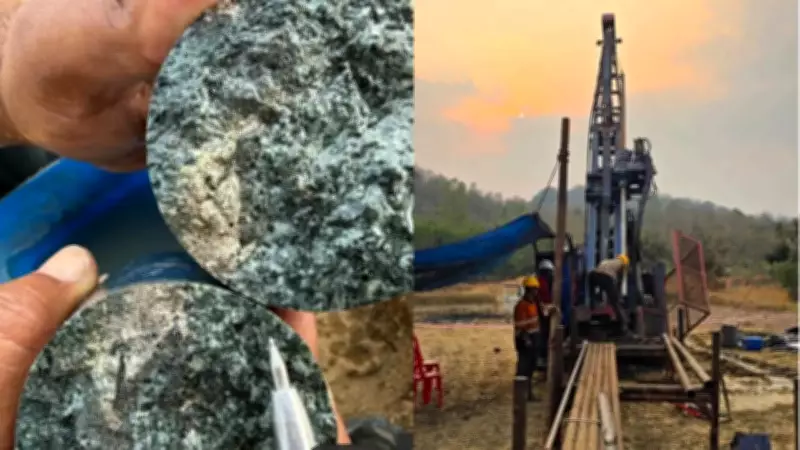
VIJAYAWADA: In a significant breakthrough for India’s critical minerals sector, Deccan Gold Mines Ltd — a partner in the Jonnagiri Gold Project in Andhra Pradesh — has announced the discovery of promising nickel, copper and palladium mineralisation in Chhattisgarh during the very first phase of drilling at its Bhalukona project. The company described the findings as a major milestone that could potentially pave the way for India’s first nickel-copper-PGE (platinum group elements) mine. The development assumes strategic importance at a time when India is aggressively looking to secure domestic supplies of critical minerals required for electric vehicles, renewable energy technologies and advanced manufacturing.
Deccan Gold Limited, in a communication to shareholders through mandatory disclosure to the Bombay Stock Exchange (BSE), revealed that its maiden drill hole at the Bhalukona-Jamnidih composite license area intersected three mineralised gabbro layers with a combined width exceeding 60 metres. The company reported nearly 30 metres of potentially economic sulphide mineralisation grading above 0.2 per cent nickel equivalent, averaging 0.4 per cent nickel equivalent. The most significant intersection recorded in the first drill hole included 2.6 metres containing 1.01 per cent nickel, 0.29 per cent copper and palladium mineralisation, indicating strong commercial potential.
The exploration programme has already completed nearly 1,200 metres of drilling across seven holes spanning a strike length of 1.3 kilometres. According to the company, all drill holes encountered varying widths of disseminated and heavy-massive sulphide mineralisation containing nickel and copper-bearing minerals such as pyrrhotite, pentlandite and chalcopyrite. Assay results from additional drill holes are awaited and are expected to provide a clearer picture of the overall resource potential.

Deccan Gold managing director Dr Hanuma Prasad Modali termed the discovery a strong validation of the geological potential of the Bhalukona project. “The successful first phase of drilling reinforced confidence in the project’s strategic relevance for India’s rapidly growing critical minerals ecosystem,” said Dr Hanuma Prasad. The company said it plans to accelerate drilling activities to define a mineable resource and fast-track mining lease applications. Subject to continued drilling success, the project could emerge as India’s first integrated nickel-copper-PGE mining operation.
The Bhalukona nickel block, spread across 30 square kilometres in Mahasamund district of Chhattisgarh, was granted to Deccan Gold in April 2025, making it among the earliest private sector licences issued for nickel-copper-PGE exploration in the country. Interestingly, Deccan Gold is already associated with Andhra Pradesh’s Jonnagiri Gold Project, India’s first private gold mining venture. The latest discovery further strengthens the company’s position in India’s emerging strategic minerals sector and highlights the growing importance of domestic mineral exploration in reducing dependence on imports.
Strategic Implications for India's Critical Minerals
The discovery comes at a crucial time when India aims to reduce reliance on imported critical minerals, particularly for clean energy technologies. Nickel is essential for lithium-ion batteries used in electric vehicles, while copper is vital for electrical infrastructure. Palladium and other platinum group elements are used in catalytic converters and hydrogen fuel cells. Developing a domestic mine could significantly bolster supply chain security.
Exploration Progress and Future Plans
Deccan Gold has completed seven drill holes totalling 1,200 metres, with all holes intersecting sulphide mineralisation. The company plans to continue drilling to delineate a resource and apply for mining leases. If successful, the Bhalukona project could become India's first nickel-copper-PGE mine, setting a precedent for private sector involvement in critical mineral exploration.
The company's managing director emphasised the strategic relevance of the project, stating that it reinforces confidence in India's critical minerals ecosystem. The accelerated drilling programme aims to define a mineable resource quickly, potentially fast-tracking the country's entry into domestic production of these vital materials.






