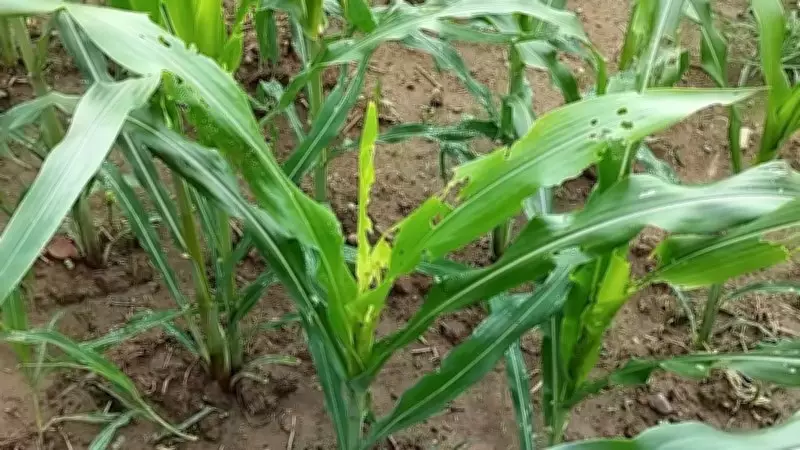
The fall armyworm (Spodoptera frugiperda) has spread to all six north zone districts of Himachal Pradesh, raising concerns over potential crop losses during the ongoing kharif season. The Agriculture Department has intensified field surveillance and issued detailed advisories to farmers.
Infestation Details
According to officials, the pest has been detected in Kangra, Chamba, Una, Hamirpur, Bilaspur, and Mandi districts, where approximately 1.5 lakh hectares of land is under maize cultivation. The Bhawarna block in Kangra and Bhattiyat in Chamba have reported 15 percent infestation.
Fall armyworm was first detected in India in Karnataka in 2018 and appeared in Himachal Pradesh a year later. It is among the most damaging pests affecting maize. Under warm conditions, female moths lay clusters of 100–200 eggs on the underside of leaves, which hatch within 2–3 days. In its entire life cycle, a single moth can lay 700–800 eggs. The damaging larval stage lasts 14–22 days, during which larvae feed aggressively on leaves, whorls, tassels, and developing cobs, often boring into plant tissue and causing irreversible damage that can substantially reduce yields. The larval stage is followed by an 8–13-day pupal stage in the soil. Adult moths live for 7–21 days and begin laying eggs within 3–4 days of emergence, allowing rapid multiplication. Adult moths can fly up to 100 kilometers in a single night, facilitating quick spread.

Advisory for Farmers
Additional Director of Agriculture (North Zone), Dr. Rahul Katoch, advised farmers to regularly scout their fields and adopt control measures based on infestation levels. He recommended avoiding chemical pesticides when infestation is below 10 percent, instead relying on neem-based formulations, bio-pesticides, and natural farming preparations. Where infestation exceeds 10 percent, he suggested spraying approved insecticides such as Chlorantraniliprole or Emamectin Benzoate at the prescribed dose of 0.4 ml per liter of water.
Dr. Katoch cautioned farmers practicing natural farming against using chemical pesticides, noting that maize grown under the state's natural farming programme is procured at a minimum support price of Rs 60 per kg, but only if chemical-free cultivation norms are maintained.
Integrated Pest Management
The department has urged farmers to follow an integrated pest management approach. Recommended practices include deep ploughing to expose pest pupae to sunlight, maintaining field sanitation, controlling weeds, preventing waterlogging, seed treatment before sowing, regular crop scouting, installing pheromone traps, and raising barrier crops such as cowpea and Napier grass. Intercropping maize with pulses has also been advised to reduce pest pressure.
To tackle the outbreak, a joint team of agriculture department officials, scientists from CSK Himachal Pradesh Agricultural University, Palampur, and its Krishi Vigyan Kendras has been formed. They are jointly monitoring affected areas and guiding farmers on pest control.
Dr. Katoch appealed to growers to remain vigilant, report fresh infestations without delay, and adopt integrated pest management practices to minimize crop losses.