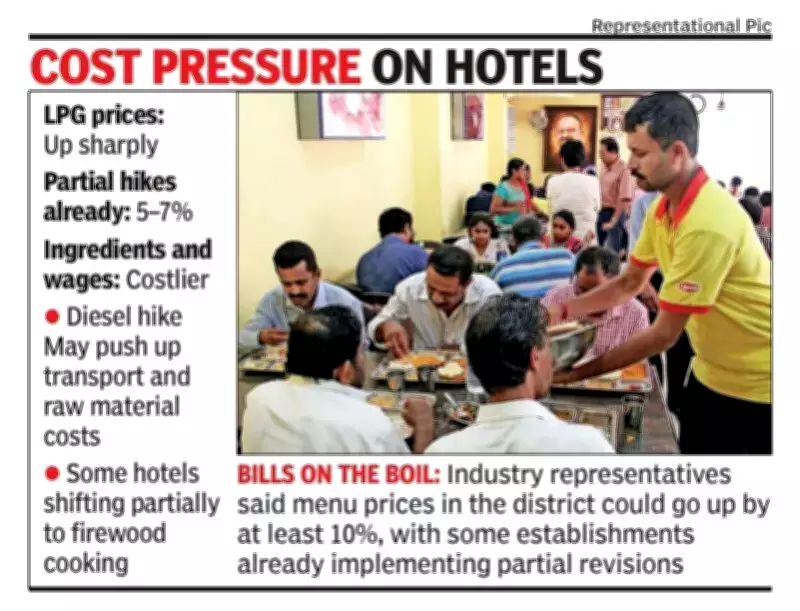
Hotels across Dakshina Kannada are evaluating a fresh increase in food prices following a steep rise in commercial LPG cylinder rates, which has significantly raised operating costs for restaurants and eateries. Industry representatives have indicated that menu prices in the district could rise by at least 10%, with some establishments already implementing partial revisions.
Association President Confirms Price Hike
Kudpi Jagadeesh Shenoy, president of the Dakshina Kannada Hotel Owners Association, stated that hotel prices across the district are expected to increase by 10 to 15% with immediate effect. He attributed the hike not only to the jump in commercial LPG prices but also to the rising costs of ingredients and higher wages for staff. The combined pressure on margins has made the price revision unavoidable.
Early Adopters and Partial Revisions
Some restaurants have already moved ahead with price adjustments. Anmol Family Veg Restaurant in Bejai has increased the total bill by 5%. Owner Vasanth Kamath explained that the restaurant typically revises prices annually in October, but weak business conditions prompted a 7% hike in February and an additional 5% increase from May 1. He warned that the sector would face a bigger blow if diesel prices increase, as that would automatically push up the cost of raw materials. Despite the pressure, hoteliers acknowledged that Dakshina Kannada remains a highly price-sensitive and competitive market, making any increase a delicate decision.

Potential Impact of Diesel Price Hike
Many hoteliers expressed concern that any diesel price hike would raise transport costs, triggering another round of increases in the prices of vegetables, groceries, and other essentials. BN Girish, senior vice president of Ocean Pearl in Mangaluru, noted that businesses are still analyzing the extent of the revision but are likely to proceed with a minimum 10% increase. The ripple effect of higher fuel costs could further strain the hospitality sector.
Shift to Firewood Cooking
Some hoteliers are considering continuing or expanding the use of firewood for cooking due to rising LPG prices. Establishments with sufficient space have already partially shifted to firewood as a cost-saving measure. This traditional method, while labor-intensive, offers a way to mitigate the impact of expensive commercial LPG cylinders. However, the practice may not be feasible for all restaurants, especially those in urban areas with space constraints.
As the situation evolves, hotel owners are closely monitoring input costs and market conditions to determine the appropriate timing and magnitude of price revisions. The industry remains cautious, balancing the need to maintain profitability with the risk of losing customers in a competitive environment.