

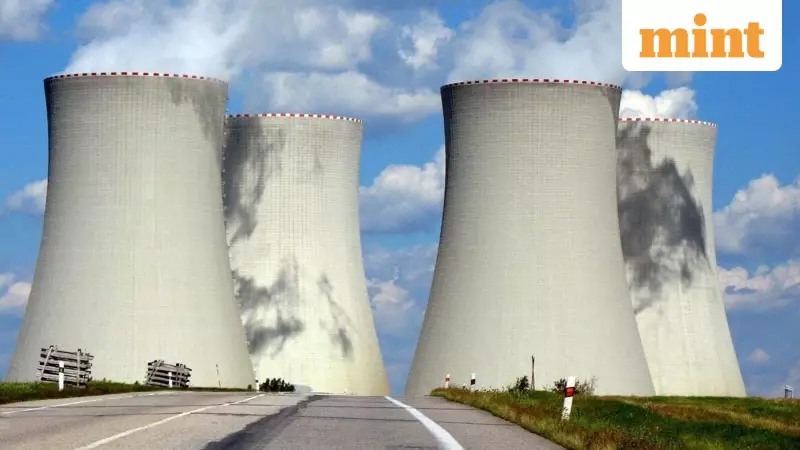
In a landmark policy shift for 2025, India enacted the Sustainable Harnessing and Advancement of Nuclear Energy for Transforming India (SHANTI) Act. This legislation fundamentally overhauls the nation's nuclear governance, opening doors that were previously shut to private enterprise.
A New Framework for Atomic Ambition
For the first time in India's history, the SHANTI law permits private sector participation across the nuclear value chain. This includes power generation, equipment manufacturing, and fuel-cycle services. Crucially, the act also eases stringent liability provisions that had long deterred foreign technology suppliers and investors from entering the Indian market.
On paper, this reform is a powerful boost to India's clean energy ambitions. Nuclear power plants operate in over 40 countries globally, supplying roughly 9% of the world's electricity. As a stable, low-carbon source that runs round the clock, nuclear is seen as an ideal complement to variable renewables like solar and wind. The International Energy Agency (IEA) states that reaching net-zero emissions by 2050 requires a massive scale-up, with global nuclear generation needing to jump from about 2,700 TWh in 2022 to nearly 6,000 TWh.

However, the success of this bold private-sector gambit is not guaranteed. Experts like Puneet Kumar Arora, an assistant professor of economics at Delhi Technological University, argue it will depend on three critical pillars: building public acceptance, ensuring regulatory clarity, and providing robust institutional support.
The Global Context and India's Position
Globally, the nuclear landscape is diverse. Advanced economies host over 70% of operating reactors. France leads with nuclear constituting about 65% of its electricity, while the United States, despite having the largest fleet of 94 reactors, gets less than 20% of its power from nuclear. China and India currently sit at the lower end, with shares of roughly 5% and 3% respectively, largely due to the dominance of coal. This is poised to change, as China now hosts half of all reactors under construction globally.
India's own nuclear journey has been marked by slow progress. Capacity inched up from 4.8 GW in March 2014 to just 8.2 GW by March 2024. The earlier regime, defined by the Atomic Energy Act of 1962 and the Civil Liability for Nuclear Damage Act of 2010, reserved the sector for the state and created liability hurdles. The state-owned Nuclear Power Corporation of India Limited (NPCIL) has been the sole anchor, a common model in emerging economies where state ownership helps manage high capital costs, long construction times (averaging seven years globally), and complex safety and waste management responsibilities.
The Path Forward: Challenges and Opportunities
The SHANTI Act is a direct response to these historical delays. By inviting private capital and technology, India aims to accelerate capacity addition. This is vital for its net-zero pathways, where firm, dispatchable nuclear power can balance a grid increasingly reliant on intermittent renewables.
Yet, significant challenges remain:
- Investment Intensity: Nuclear projects require enormous upfront capital and have long gestation periods, locking funds for years without revenue, which is unattractive to traditional investors seeking quicker returns.
- Execution Risks: Projects are prone to cost overruns and delays due to technical complexity and stringent regulatory scrutiny.
- Public Trust: The sensitive nature of nuclear energy necessitates strong community engagement and transparency to address safety and land acquisition concerns.
The act's success will ultimately hinge on creating a predictable regulatory environment, developing feasible risk-sharing models between public and private entities, and fostering a sustained public dialogue about the role of nuclear energy in India's sustainable future. If these pieces fall into place, the SHANTI Act could transform India's energy landscape, powering its growth with clean, reliable electricity.






