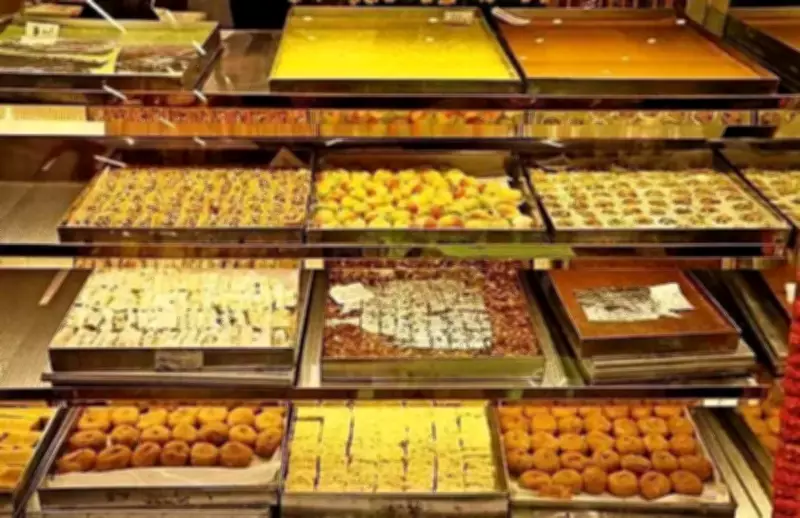
Caution: Mind your step, warns the floor as sliding doors open into a cold, pastel pink room where pedhas coexist with pastries and barfi with biscotti. At 9.15 pm on a Friday, Prashant Corner, a nearly four-decade-old mithai giant in Thane known for its pedhas, is humming with orders. Paper plates turn soggy under hot jalebis even as uniformed salesmen in chef hats glide between display counters with tasters. Would you like a humsafar? asks one, referring to a samosa-like snack stuffed with veggies.
Replete with mango donuts, bubblegum interiors and backlit snacks, the vibe is less old-school sweetmeat shop started by a local milk delivery boy and more Instagram-ready patisserie. Recently, I went there for malai barfi, recalls Thane resident Yaman Banerji about the brand that opened its 18th store in Vile Parle last month, and I was surprised to find bakes and cakes.
The spiffing up is part of the transformation unfolding in legacy sweet shops across Maharashtra. From Chitale Bandhu to Kaka Halwai to Haldirams, institutions once defined by steel plates, handwritten bills and neighbourhood familiarity are reinventing themselves as hybrid retail brands built for quick commerce, social media aesthetics and Gen Z tastes. Byproducts include shelves dedicated to diet snacks, innovations such as red peru ice cream and counters displaying millet chiwda binge bars shaped like protein bars, apart from social media teams that use phrases like princess treatment.

Change has been the flavour of our business, says Shiv Kishan Agrawal, patriarch of Haldiram Group. The octogenarian dropped out of school in the 1950s to join his fathers bhujia shop in Bikaner before eventually settling in Nagpur after a family tragedy. When I came to Nagpur in the 1960s and introduced bhujia, locals confused the name with bhajiya, he laughs. Three years ago, the Nagpur and Delhi businesses merged into Haldiram Snacks Food Private Limited, now preparing for a public listing, with expansion into bakery products, cakes, cookies and ready-to-eat meals. The group is also in talks with American chain Jimmy Johns for an India entry.
In Thane, Prashant Corners origin story is local folklore. Founder Prashant Sakpal once delivered milk packets on a cycle as an eight-year-old for Rs 60 a month before someone introduced him to mithai trading. Complaints about quality pushed him into manufacturing sweets himself using a home bhatti. Today, 18 outlets, a 1.2 lakh sq ft factory and annual turnover of nearly Rs 300 crore later, the royal feel includes VIP hampers, social media campaigns riffing on KitKats recent chocolate heist and kitchen tours on request.
At Chitale Bandhu, the shift happened on an industrial scale. The Pune brand, synonymous with bakarwadi queues and no-nonsense efficiency, now operates as a modern food company spanning packaged snacks and quick-commerce tie-ups. Nearly 45% of the business comes from packaged products, says Indraneel Chitale. The question was: how do we remain available no matter where they shop, including ecommerce, q-commerce, supermarkets or kiranas?
Speed has reshaped operations further: last year, the brand launched its first Quick Service Restaurant in Prabhadevi where hot dishes are served within five minutes. Metro kiosk customers, Chitale notes, barely have seven minutes between trains. They have to choose, pay and consume within that time.
Food writer Kunal Vijayakar believes the tension goes beyond taste. A neighbourhood place serves a community. A brand serves an audience. Earlier, people felt like insiders. Now they feel like customers. The soul, he says, moves from the kitchen to a system. If places like Chitale dont scale, Vijayakar warns, they risk becoming relics, not least because of attitude. What earlier felt like old-school no-nonsense charm can now feel like why are you behaving like youre doing me a favour? They can easily be outdone by aggressive, well-funded brands that will happily industrialise the same products. Scale, he says, is often the price of survival.

Indraneel Chitale would agree. Legacy is a golden cage, he says. If you change too fast, you disrupt a well-oiled machine. If you dont change, it becomes a rotting asset, says Chitale, whose brand has launched a loyalty programme app apart from factory tours. Not all products lend themselves to industrialisation though, anarase is still made manually. When Chitale attempted to reduce sugar in line with FSSAI recommendations, loyal customers revolted and the company launched a separate no-added-sugar line.
At Kaka Halwai, founded 135 years ago with temple prasad, seventh-generation partner Amit Gadve says the biggest change lies in the consumer. Earlier, customers picked up a box by looking at the front. Today, they turn it around, read labels and ask about oils and ingredients.
Even as decor grows sleeker and packaging more camera-friendly, customers still walk in searching for something older than dessert: reassurance that the taste of home has survived the upgrade. Bobade recalls a 93-year-old customer now based in America who visits Prashant Corner every year. No matter how modern we become, he says, peda will never go out of fashion.