

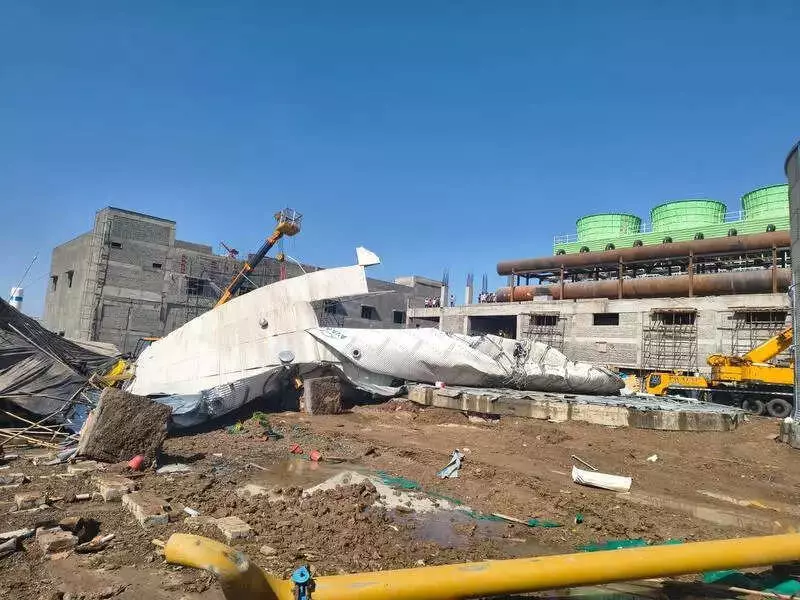
The silence of a tiny room in Dudha village, near Nagpur's Butibori MIDC, was broken by the familiar whistle of a pressure cooker early Saturday. Inside, four contract labourers from Bihar's West Champaran district prepared for another day of work, their group forever diminished. Just days earlier, they lost two roommates in a tragic industrial accident at the nearby Avaada plant.
Survivor's Harrowing Account of the Blast
One of the survivors, Manan Alam, recounted the terrifying moments after a tank burst at the site late last week. "I was welding nearby," Alam said, his face expressionless. "I was at a safer distance when the tank ripped open. I knew Bulat was somewhere there, so I ran to look for him." His search led him first to two women engineers trapped in the debris and crying for help. After freeing them, he continued his desperate hunt for his friend.
"Amid the chaos, I cried for help as many more were trapped," Alam stated. He claims that a rescue team arrived only after some time, and his friend Bulat's body was the first to be removed. "The rescue team reached only after my repeated cries," he added.

Dreams Cut Short: The Lives Lost
The victims were young men with dreams of supporting their families. The body of 28-year-old Arvind Sharma was soon discovered. A fellow worker, Tapendera Kumar, shared that Arvind had just married. His father had met with an accident, and the family was under debt.
The youngest among the dead was 19-year-old Bulat, whose real name was Aadarsh. Described by his roommates as a happy-go-lucky person, Bulat was the son of a farmhand who dreamt of ushering in better times for his family. His Aadhaar card still bore his childhood picture with the name Bulat, they said. All three victims hailed from the same village and were employed by a contractor from Uttar Pradesh.
Alleged Safety Lapses and Unpaid Wages
The survivors pointed to serious safety negligence. "They were filling up the tank with water to carry out a test," explained Manan Alam. "The contractor should have removed workers from the site while the testing was on. None heeded, and the accident happened." His colleagues nodded in agreement.
Tabrez Alam, another roommate, revealed a poignant last memory. "As he left for work, Arvind bid goodbye, saying 'Saat din bad milenge' (will meet after seven days), only to never return. Even his bag remains buried there." Tabrez was posted at another site and was supposed to join the welding point near the ill-fated tank after a week.
The tragedy highlights the precarious lives of migrant workers. Dudha village, close to the plant, is packed with workers from Bihar and Uttar Pradesh living in matchbox-sized rooms rented by locals. They earn Rs 500 a day for eight hours of work. "There is little regard for welfare," said Tabrez. "Many did not even dare to confront the company officials, asking them to stop until the testing was done. They quietly continued to work."
Adding to their woes, a housekeeping staff member from the village, also working on contract, complained that the contractor had not paid their wages for two months.
A Somber Morning After
Back in the cramped room, as one man turned off the stove declaring the food ready, the others prepared to finish their meals and face the next day. Their circle had shrunk; there were now two fewer to share the food and the burden of their shared dreams, leaving behind a silence far deeper than any pressure cooker's whistle could break.






