

Ranchi Eateries Make Permanent Shift to Coal Chulhas Following LPG Supply Crisis
What began as a temporary emergency measure during severe LPG supply disruptions has evolved into a lasting operational strategy for numerous small food establishments across Ranchi. Initially forced to adopt traditional coal-based chulhas to keep their stalls operational, hundreds of eatery owners are now choosing to continue with this method permanently, driven primarily by substantial reductions in fuel expenses.
Economic Drivers Behind the Transition
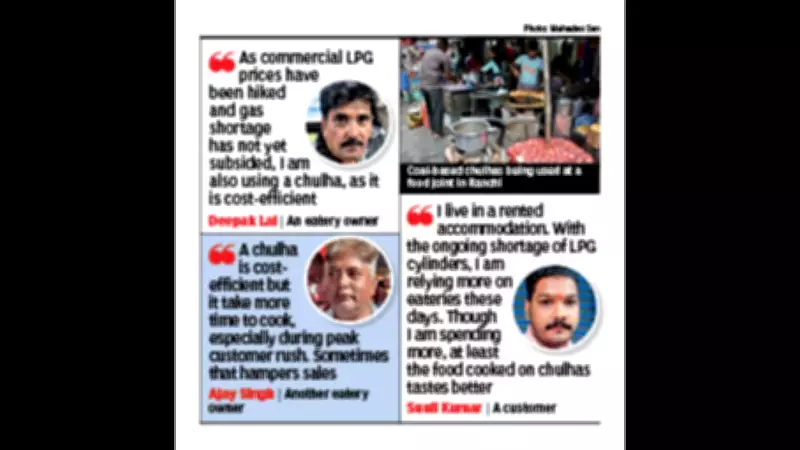
The shift from liquefied petroleum gas to coal has provided a crucial financial reprieve for small business owners grappling with tight profit margins. Bablu Kumar, who operates an eatery at Albert Ekka Chowk, shared his experience: "I had to shut down for five days due to the LPG shortage. Switching to a coal chulha was my only option initially. Now, even with LPG availability improving, I plan to stick with coal because it is far more economical."
Kumar detailed his cost savings, noting that his daily fuel expenditure dropped from approximately Rs 1,900 with LPG to just Rs 500 with coal, resulting in daily savings of Rs 1,400. Another proprietor, Suresh Malakar, has replaced his LPG cylinder with three coal chulhas. He acknowledged that the traditional method requires more time but emphasized its profitability: "After comparing costs and profits, coal usage clearly offers better financial returns."

Customer Response and Flavor Enhancement
Beyond cost benefits, the transition has unexpectedly enhanced the culinary appeal of the food. Customers have reported a distinct preference for dishes prepared on coal-fired chulhas, citing the rich, smoky aroma that permeates items from rotis to curries. This unique flavor profile has become a significant selling point, attracting more patrons and boosting business for these eateries.
Surge in Demand for Traditional Stoves
The growing adoption of coal chulhas has spurred a boom in the local market for traditional stoves. Vendors like Sunil Khalkho in Ranchi's Upper Bazar area have witnessed a sharp increase in sales. Khalkho reported: "Since the LPG crisis began, I have been selling at least five chulhas daily, primarily to small eatery owners. Small household models cost around Rs 500, while larger commercial versions are priced at Rs 1,500."
This trend highlights a broader movement toward cost-effective and sustainable cooking solutions in the face of fluctuating fuel supplies. The resilience of Ranchi's small food businesses demonstrates how traditional methods can offer viable alternatives in modern urban economies, blending heritage practices with contemporary economic needs.






