World First: Catheter-Based Rescue for Failing Heart Valves After Ross Procedure
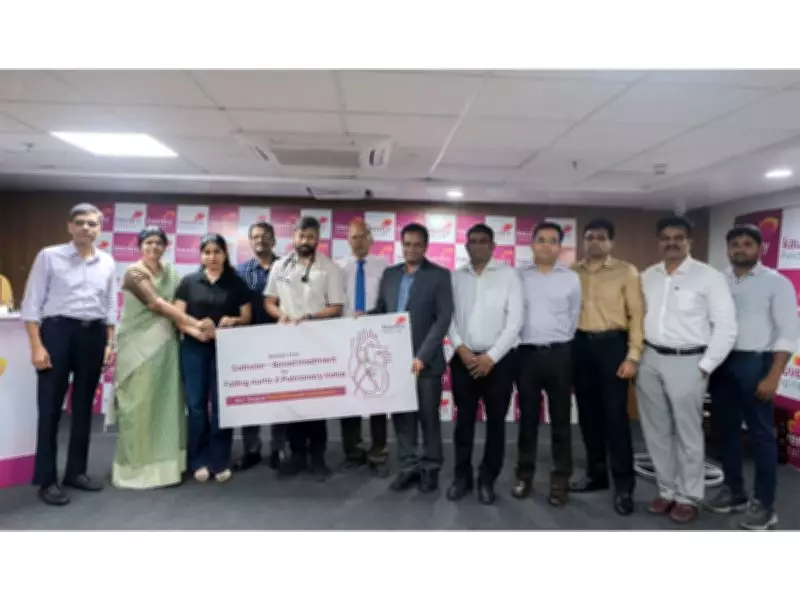
Kauvery Hospital in Alwarpet, Chennai, has successfully treated two failing heart valves in a 58-year-old man using a completely catheter-based approach, avoiding repeat open-heart surgery. This is believed to be the first reported case of its kind worldwide.
Patient History and Condition
The patient had undergone a Ross procedure nearly 25 years ago, where his own pulmonary valve was moved to replace the diseased aortic valve (aortic autograft), and the pulmonary valve was replaced with a donated human valve (pulmonary homograft). Over time, both valves deteriorated. He presented with severe aortic regurgitation, severe pulmonary regurgitation with moderate pulmonary stenosis, severe pulmonary hypertension, and moderate mitral regurgitation. He had repeated heart failure hospitalizations, severe leg and abdominal swelling, impaired kidney and liver function, severe breathlessness, and was classified as New York Heart Association Class III-IV heart failure.
Multidisciplinary Planning and Procedure
After consulting multiple centers where repeat open-heart surgery was deemed prohibitively high risk, the multidisciplinary heart team at Kauvery Heart Institute, led by Dr. Rajaram Anantharaman, Director of Transcatheter Heart Valve Therapies, evaluated the case using three-dimensional echocardiography and cardiac CT imaging. They identified the possibility of treating both failing valves via a catheter-based approach. Since no similar case was reported in medical literature, the strategy was extensively reviewed by the hospital's heart team and an international panel of experts. The procedure involved preparing the pulmonary homograft with covered stents and balloon dilatation, then implanting a Medtronic Melody transcatheter pulmonary valve. The failing aortic autograft was treated with an Edwards Sapien 3 Ultra Resilia balloon-expandable valve. AI predictive modeling with virtual valve implant was used due to the lack of calcium for anchoring. The procedure was performed in a hybrid operating room under general anesthesia with continuous transesophageal echocardiography guidance.

Recovery and Outcomes
The patient made an uneventful recovery and was discharged after a short ICU stay. At two-week follow-up, symptoms improved markedly: swelling resolved, he returned to New York Heart Association Class I functional status, slept comfortably, and could walk 20-30 minutes without limitation.
Expert Commentary
Dr. Rajaram Anantharaman stated, "Patients with failure of both the aortic autograft and pulmonary homograft after a Ross procedure have very limited treatment options because repeat surgery carries considerable risk. Careful imaging, meticulous procedural planning and close collaboration across multiple specialties enabled us to successfully replace both valves using a catheter-based approach without reopening the chest. To the best of our knowledge, this is the first reported case of a completely percutaneous double transcatheter Ross rescue strategy in the published world literature. This case opens the possibility of treating carefully selected high-risk patients who otherwise may not have a viable treatment option."
Dr. Aravindan Selvaraj, Co-founder and Executive Director of Kauvery Group of Hospitals, added, "Advanced structural heart interventions are transforming the way complex valve diseases are treated. Performing a procedure of this complexity requires experienced clinical teams, advanced imaging, hybrid operating room facilities and seamless coordination across specialties. This achievement reflects the advanced expertise and infrastructure available at Kauvery Heart Institute and our continued commitment to bringing the latest evidence-based treatment options to patients in India."