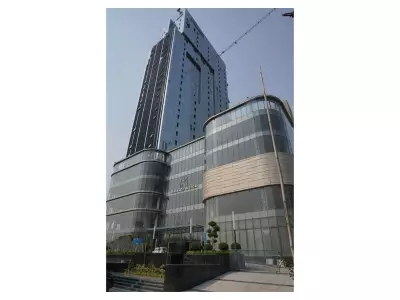
Karnataka's New FAR Guidelines Set to Reshape Bengaluru's Skyline
The Karnataka government has introduced significant revisions to the Floor Area Ratio (FAR) guidelines, paving the way for taller buildings and a transformed urban landscape in Bengaluru. Under the new regulations, the Karnataka Industrial Areas Development Board (KIADB) now permits the purchase of a FAR of up to 5.2, marking a substantial increase that is expected to drive vertical development across the city.
Understanding Floor Area Ratio and Its Impact
Floor Area Ratio is a critical real estate metric that determines the maximum total built-up area allowed on a specific plot of land, calculated by dividing the total building floor area by the gross plot area. Higher FAR ratios, such as 4.0 or above, facilitate denser and taller constructions, while lower ratios help manage infrastructure and population balance. This policy shift aligns Bengaluru with other major Indian cities like Delhi, Mumbai, and Noida, which have similarly increased FAR limits to optimize land utilization and encourage redevelopment near transit hubs.
Driving Economic Growth Through Vertical Expansion
The easing of construction regulations is poised to stimulate economic development, particularly along Bengaluru's outer ring industrial corridors. By enabling vertical factories, multi-level storage warehouses, and office parks on smaller footprints, the new FAR norms promote efficient land use, preserve valuable real estate, and boost economic activity within confined geographical areas. Ajay Singh, Senior Director of Sales and Strategy at Jenika Ventures, emphasizes that this creates opportunities for integrated townships combining manufacturing, logistics, commercial spaces, and worker housing, thereby reducing the need for extensive land acquisition.

Benefits for Developers, Investors, and the Ecosystem
For developers, a higher FAR translates into improved project economics by increasing saleable or leasable area on the same land. Institutional investors gain from enhanced scalability and potential value growth, while the broader ecosystem benefits from job creation, development-driven growth, and improved community infrastructure. The policy also aims to rationalize land use in KIADB-notified regions, addressing scarcity along growth corridors and fostering economic viability.
Residential Market Implications and Future Outlook
While the initial impact will be most visible in industrial corridors, the residential market is expected to experience secondary effects over the long term. As employment density and commercial activity rise in KIADB sites, demand for residential projects in peripheral areas is likely to increase, catering to professionals from factories, data centers, logistics parks, and office campuses. This decentralization could reduce congestion in Bengaluru's city center and spur micro-market development, offering opportunities for residential real estate investors to capitalize on emerging growth zones.
Strategic Advantages for Homebuyers and Investors
The new FAR policy holds significant promise for real estate investors and homebuyers, with key advantages including increased land value potential due to higher permissible built-up areas and improved rental opportunities in mixed-use developments. As integrated townships expand, demand for residential and commercial leasing is anticipated to grow alongside job creation and economic activity. This shift towards vertical growth signals more than just taller buildings; it reflects evolving demand patterns, decentralized employment nodes, and emerging residential growth areas, where research-driven investment choices can unlock substantial long-term value.
The Karnataka government's decision to allow FAR up to 5.2 underscores a strategic move towards vertical and efficient land use, positioning Bengaluru's peripheral areas as future-ready growth drivers aligned with comprehensive industrial development.