

Lucknow's Municipal Budget Prioritizes Development Without Tax Burden on Residents
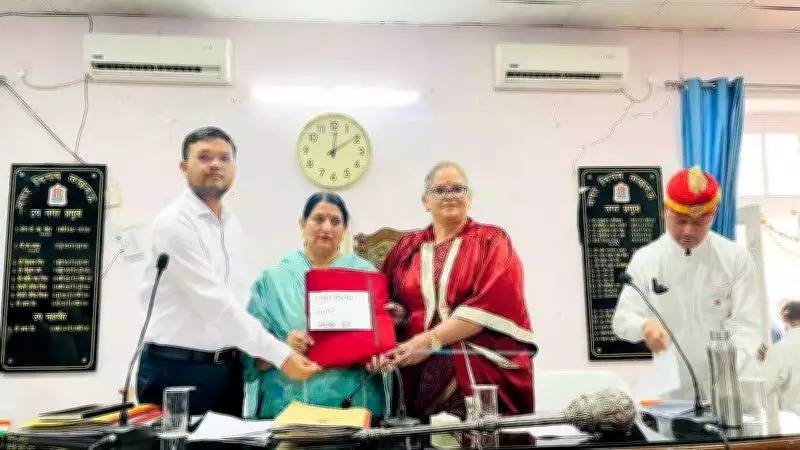
In a significant move for the city's residents, the Lucknow Municipal Corporation (LMC) has approved its budget for the fiscal year 2026–27, allocating a substantial Rs 1,253 crore for development works while assuring no increase in property tax or parking charges. The budget, along with revised estimates for 2025–26, was presented and passed unanimously on Sunday in the presence of key officials including Mayor Sushma Kharkwal and Municipal Commissioner Gaurav Kumar.
Focus on Revenue Enhancement Without New Taxes
Mayor Sushma Kharkwal emphasized that the civic body's strategy revolves around improving infrastructure without imposing additional financial strain on citizens. "No new taxes have been imposed. We are strengthening revenue through better collection and expanding the tax base," she stated. This approach involves identifying properties within city limits that are currently not paying taxes and taking action against defaulters, alongside efforts to boost income from rent, advertisements, and other sources.
To facilitate easier payments, POS machines will be installed across all 110 wards for house tax and user charges. Residents who pay on time will benefit from an 8–10% rebate, with additional cashback incentives for digital transactions. The LMC has already seen a positive trend in revenue collection, with house tax reaching Rs 517 crore—an increase of Rs 105.35 crore—including a record Rs 35 crore from the High Court premises. User charges rose to Rs 28.52 crore, advertisement revenue to Rs 16.16 crore, and income from rent, parking, and license fees also showed growth.

Comprehensive Development Plans Across Wards
The budget outlines extensive development initiatives aimed at enhancing civic conditions across Lucknow. Key allocations include:
- Rs 271 crore for road repair and maintenance.
- Rs 42.55 crore for street lighting improvements.
- Rs 300 crore earmarked for waste management.
- Rs 255 crore dedicated to cleaning roads and drains.
After securing third place in the Swachh Survey 2024–25, the city is now targeting the top rank. Efforts will focus on sanitation, building toilets, and increasing awareness under the Swachh Bharat Mission. Development works span all 110 wards, covering areas such as drainage cleaning, park beautification, open gyms, vending zones, transfer stations, school upgrades, anganwadi centres, women's hostels, sports complexes, and Miyawaki forests.
Green Initiatives and Community Facilities
To promote environmental sustainability, the budget includes plans for developing new vending zones with Rs 15 crore to organize street vendors and ease traffic congestion. Parks will be upgraded, and Miyawaki forests will be established to increase green cover. Additionally, open gyms will be set up with an allocation of Rs 20 crore, while a new zonal office and headquarters will be constructed in the Chakbast area.
Educational and social infrastructure will see enhancements with municipal schools being upgraded, one new school constructed, and 40 new anganwadi centres opened. The plan also encompasses women's hostels, sports complexes, public libraries, urban plazas, and high-tech nurseries. Lakes and ponds across the city will be beautified under the AMRUT scheme, and community halls, welfare centres, and care centres for senior citizens will be developed. Major intersections will undergo redesign and beautification to improve urban aesthetics.
Mayor Kharkwal affirmed that the surplus revenue generated will be channeled towards further improving civic conditions, ensuring that Lucknow continues to progress as a model city in Uttar Pradesh.






