

India's defence technology sector is undergoing a significant transformation. Startups that once focused primarily on building hardware platforms are now aggressively developing sophisticated software capabilities, aiming to evolve into durable, full-spectrum defence companies. This strategic pivot is powered by a surge in venture capital funding and supportive government policies, marking a new chapter for the country's indigenous defence industry.
The Software-First Pivot
The shift is evident in the journeys of pioneering companies. Digantara, a space-surveillance startup founded in 2020, began with a hardware platform but quickly learned that defence and intelligence agencies demanded more. "Defence and intelligence agencies aren't interested in buying just a subscription. They want complete control over systems when it comes to a crisis scenario," explained Anirudh Sharma, founder and CEO of Digantara. In response, the company developed its offering into a full-stack capability, charging a premium for sovereign software control that agencies are eager to pay for.
This software-centric approach offers long-term advantages. Once hardware systems are deployed, agencies can update them remotely via software, avoiding lengthy new procurement cycles. This transforms companies like Digantara from mere hardware vendors into indispensable, long-term partners providing integrated solutions. Software has become equally important because it's easy to adapt and scale, Sharma noted, highlighting the demand for interconnected systems.

Funding Boom and Policy Push
The catalyst for this growth spurt is multifaceted. The aftermath of Operation Sindoor saw the Indian armed forces sign emergency defence contracts worth nearly ₹2,000 crore for critical equipment like drone-detection systems and radars. Furthermore, the government's Defence Procurement Manual (DPM) 2025 set aside a 25% procurement reservation for MSMEs and eased norms for startups.
This environment triggered India's biggest funding boom in private defence tech. According to Venture Intelligence, startups raised a staggering $329 million in 2025 alone, surpassing the $256 million raised in the entire preceding four-year period from 2020 to 2024. "I wouldn’t have imagined that venture capital would overcome its reservations about this industry," admitted Mayuresh Raut, co-founder of Seafund, a deeptech-focused fund.
The Drone Dominance and Beyond
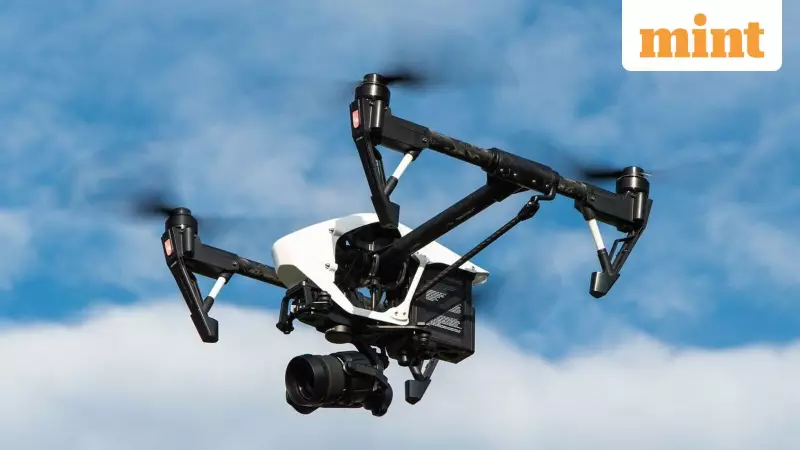
Despite the boom, the startup landscape reveals a concentration in specific areas. Data from Tracxn shows that of the 78 defence startups founded between 2020 and 2025, over a third are focused on drone systems or UAVs. Well-funded examples include ideaForge, Raphe Mphibir (which raised $100 million in June 2025), Vayudh, and Garuda Aerospace.
However, industry veterans see a low barrier to entry in drones unless a startup has a world-class parameter. "It's mostly just a matter of technology transfer or assembling," said Navneet Kaushik, a former Navy commander and founder of Jamwant Ventures. His fund seeks diversity, investing in companies like Spacefields (propellant systems), Axiel Aero (flight simulators), and AstraYAN (digital platforms for smart ships).
Even drone makers acknowledge the future lies in software. "Future-proofing comes from owning the full software stack, especially electronic warfare resilience, edge intelligence, and network integration," stated Ankit Mehta, co-founder of ideaForge. The intelligence layer must evolve long after the hardware is deployed.
Challenges and the Road Ahead
The transition to valuing software is not without hurdles. The procurement mindset still favours tangible hardware. "Procurement and financial approvals still lean heavily towards hardware acquisitions," Mehta pointed out. For now, software is often seen as an add-on to hardware, with upgrades tied to hardware refresh cycles, as noted by Suyash Singh of GalaxEye.

The ecosystem is still maturing. Kartik Bommakanti of Observer Research Foundation explains that policy incentives have historically pushed startups towards hardware-first strategies. Additionally, entrepreneurs lack the deep battlefield insight needed to build pure-play defence software companies. "India's never had the same industrial complex access that entrepreneurs in the US have had," added Kaushik.
Yet, the opportunity is vast. Venture capitalists like Vishesh Rajaram of Speciale Invest view hardware as the essential foundation for building larger defence conglomerates. Simultaneously, funds like Seafund are developing playbooks to invest in software that can 'smarten' legacy military hardware, seeing big opportunities in space, aerospace, and components for advanced systems.
The journey of Indian defence-tech from metal to code is well underway. While the sector must diversify beyond drones and fully embrace software as a standalone capability, the confluence of capital, policy, and entrepreneurial innovation is setting the stage for the rise of integrated, full-stack defence firms from India.





