

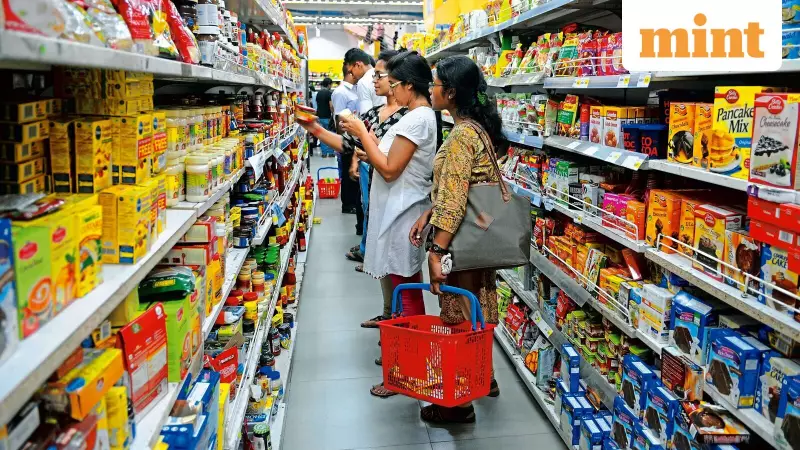
For years, the massive walls built by India's Fast-Moving Consumer Goods (FMCG) titans seemed unbreachable. Spending a staggering 10-20% of their revenue on mass media advertising, their scale and market dominance appeared unchallengeable. However, the digital revolution has fundamentally rewritten the rulebook, empowering a new wave of direct-to-consumer (D2C) brands to storm the fortress.
The Shallowening Moats: A New Battleground Emerges
The concept of a 'moat', popularized by investor Warren Buffett, refers to a business's sustainable competitive advantage. In consumer goods, this traditionally rested on three pillars: brand mindshare, distribution shelf share, and product habit share. Yet, as Tejas Shah of Avendus Spark notes, these moats are showing cracks. A dynamic wave of D2C challengers across segments like skincare (Minimalist, MamaEarth), food (YogaBar), luggage (Mokobara, Nasher Miles), and fashion (Snitch, The Souled Store) is successfully entering the fray.
This entrepreneurial spark isn't new—legends like Nirma and Thums Up proved it long ago. The critical difference in 2026 is the multiplication of such success stories, making them commonplace rather than rare exceptions. The moats protecting incumbent giants are looking significantly shallower.

The New Weapons: Product, Screen, and Digital Shelves
Product differentiation has become the sharpest weapon for new entrants. Today's disruption is heavily driven by 'India 1' consumers—the top 50 to 75 million affluent, well-travelled, and quality-conscious Indians. Brands like Mokobara, Wellbeing Nutrition, and Giva have tapped into this long-underserved segment, unlocking disproportionate value by offering superior, tailored products.
The brand-building playbook has been completely overhauled. Gone are the days when massive mass media spends were the only path to recall. Digital marketing allows for surgical precision, targeting consumers by income, region, gender, or age at a fraction of traditional costs. The influencer economy and user advocacy have democratized marketing muscle, displacing expensive celebrity endorsements. The battleground has decisively shifted from physical shelf space to screen space.
However, distribution remains the widest and toughest moat to cross. India's complex landscape of 28 states, 8 Union Territories, and a fragmented trade network makes physical shelf space hard-won. This is where online retail works its magic, offering infinite digital shelves for brand discovery. Challenger brands now routinely launch on horizontal, vertical, or quick-commerce platforms before expanding offline, a path proven by success stories like Atomberg and Mokobara.
The Catalysts: Curious Consumers and Patient Capital
A significant shift in consumer behavior is fueling this change. Rising per capita incomes have made affluent Indian consumers far more experimental. The 'value at risk' in trying a new brand is lower, leading to quicker acceptance, as seen with automotive brands like Kia and MG launched in 2019. This global trend is evident with challengers like HOKA and ON eroding the dominance of Nike and Puma.
Behind the scenes, patient and courageous capital is readily available. Investors across stages—angel, venture capital, private equity, and public markets—are now more willing to fund challenger brands and accept longer development cycles. Learning from China's playbook, India's maturing risk appetite shows an ecosystem ready to fund marathon ambitions, not just sprints.
The lines are also blurring as incumbents adapt. Major FMCG players like Hindustan Unilever (HUL), ITC, and Marico have acquired stakes in D2C brands like Minimalist, Yogabar, Plix, and Oziva, integrating the challenger ethos.
As distribution and discovery become more democratic, the next decade's defensibility will hinge on new-age moats: data, community, and experience. In this exciting era, winner brands will be those that, like Tyrion Lannister's advice in Game of Thrones, know exactly what makes them distinctive and protect it relentlessly as their armor.






