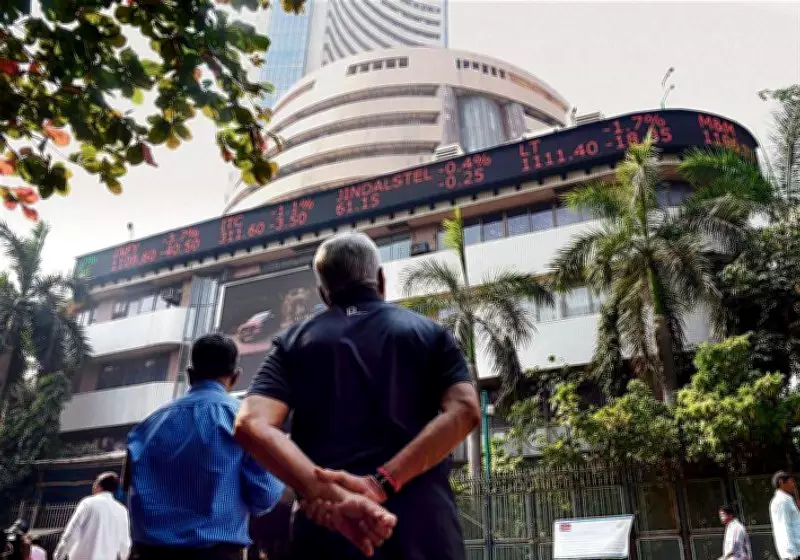
Global brokerage firm Morgan Stanley has projected that the BSE Sensex could hit the 1,00,000 mark by June 2027 in its bull-case scenario, though it assigns only a 25 percent chance to this outcome. The report emphasizes that the recent slowdown in Indian equity values is cyclical rather than structural, reinforcing India's long-term investment appeal.
Base and Bear Case Targets
In its base-case scenario, Morgan Stanley expects the Sensex to reach 89,000 by June 2027, representing an increase of about 15 percent from the July 2 closing level of 77,502. On the downside, the bear-case target is set at 66,000. The outlook is driven by factors such as accelerated economic growth, a revival in private capital spending, robust domestic liquidity, supportive government policies, and rising corporate profits.
Key Drivers for Market Revival
According to the brokerage firm, the slow Indian equities market will be revitalized by several variables. Stronger-than-expected corporate results, a rebound in private investment, modifications aimed at attracting foreign portfolio investors (FPIs), and sustained good domestic institutional inflows could contribute to additional gains in Indian shares. Morgan Stanley also predicts that India's investment-to-GDP ratio will increase to 37.5 percent over the next five years, potentially facilitating long-term economic growth.

Earnings Growth Projections
In terms of earnings, Morgan Stanley projects that Sensex companies will generate earnings at a compound annual growth rate (CAGR) of 16 percent between FY26 and FY29 in the base case. Broader market earnings are expected to increase by 10 percent in FY26, 15 percent in FY27, and 22 percent in FY28. In the bull-case scenario, earnings are predicted to grow at a 19 percent CAGR from FY26 to FY29, driven by lower crude oil prices and faster global economic expansion.
Sector Preferences and Underweights
Morgan Stanley continues to favor industries with higher earnings potential, including financials, consumer discretionary, and industrials. Conversely, the firm remains underweight on energy, materials, utilities, and healthcare. Despite concerns about labor disruption, the brokerage takes a neutral position on the technology sector, noting that artificial intelligence could open up new opportunities for Indian IT services firms.