

China Halts Indian Rice Imports in GMO Dispute
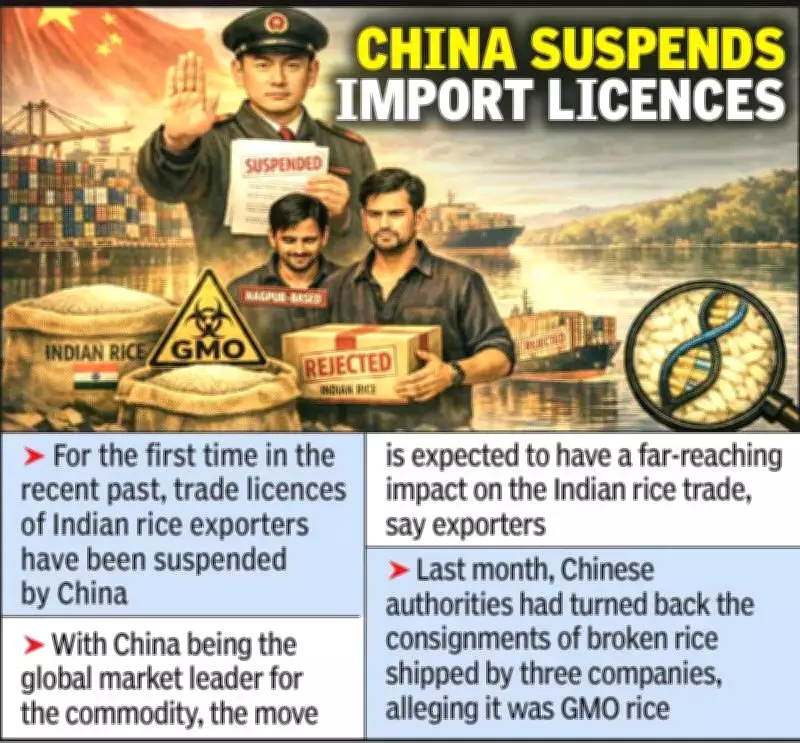
In a significant escalation of trade tensions between India and China, Chinese authorities have suspended the import licenses of three prominent Indian rice exporting companies. The action follows China's rejection of their consignments, claiming the rice contained genetically modified organism (GMO) material. This marks the first instance in recent history where China has suspended trade licenses of Indian rice exporters, potentially causing substantial repercussions for India's position as the global market leader in rice exports.
Companies Affected and Initial Rejection
The three companies impacted by this suspension are Shriram Food Industry Ltd based in Nagpur, Spone Enterprises Private Ltd from Raipur, and NM Foodimpex Private Ltd headquartered in Haryana. Last month, Chinese customs authorities turned back shipments of broken rice from these exporters, alleging the presence of GMO rice. This rejection occurred despite a Chinese state-owned agency, operating a laboratory in Visakhapatnam, having issued a non-GMO certificate for the rice prior to shipment.
Contradiction with Indian Regulations
The situation is particularly contentious because there is no legal approval for the cultivation of GMO paddy in India. This raises serious questions about how GMO rice could have been exported from India, as highlighted by industry sources. Officially, India only permits GMO cotton, known as Bt cotton, which has been genetically modified to resist bollworm pests. Another herbicide-tolerant GMO cotton variety is reportedly available through unofficial channels, awaiting legal approval.

Investigation and Verification Process
In response to the allegations, Chinese authorities have requested the Agriculture and Processed Food Products Export Development Authority (APEDA), an agency under India's Ministry of Commerce, to inspect the facilities of the three companies. The purpose is to ascertain whether the exported rice was indeed GMO. Sources indicate that the suspension may be reviewed following APEDA's report. However, exporters argue that APEDA should investigate seed producers or growers instead, as rice mills merely process paddy and are not involved in cultivation.
Broader Trade Implications and Disparities
The entire verification process by APEDA is expected to be lengthy and complex, meaning exports from these three companies will remain on hold indefinitely. Traders have pointed out an additional layer of concern: China has imposed a non-GMO condition specifically on Indian rice imports, while no such requirement exists for consignments from Pakistan. This selective application of standards could indicate broader trade strategy elements at play.
Impact on India's Rice Trade Leadership
This development is anticipated to have far-reaching consequences for India's rice trade, especially given its status as the world's leading exporter of the commodity. The suspension not only disrupts business for the affected companies but also casts a shadow over the reliability and compliance of Indian rice exports in the international market. Stakeholders are closely monitoring the situation, as the outcome could influence future trade policies and bilateral relations between India and China.






