

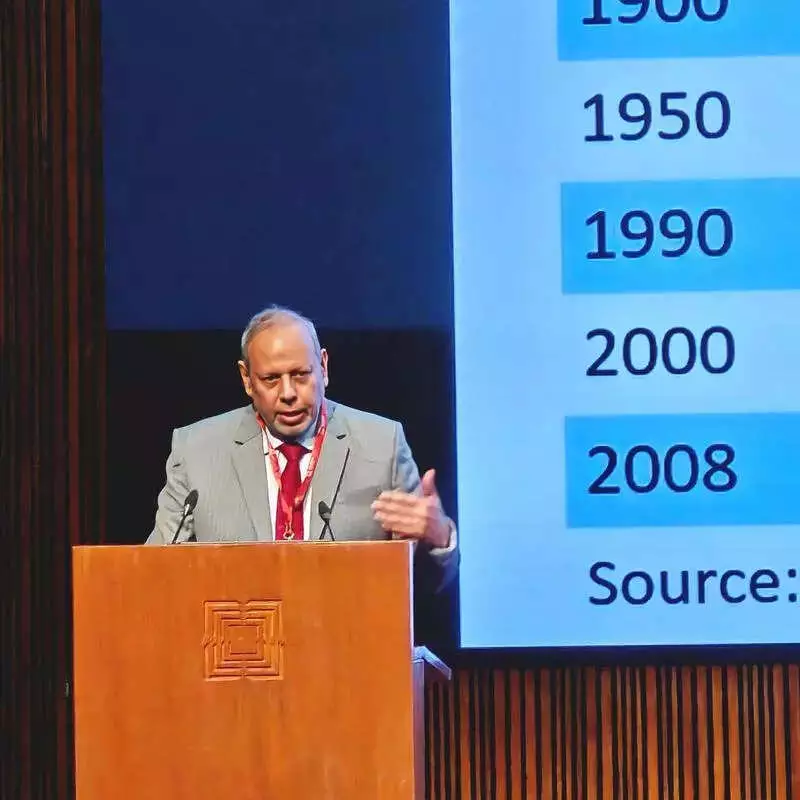
India is actively deploying a strategic four-point plan to navigate the economic challenges posed by steep US tariffs, according to a top government advisor. The chairman of the Economic Advisory Council to the Prime Minister (EAC-PM), Prof S Mahendra Dev, outlined this approach during a major economics conference in Ahmedabad.
India's Four-Pronged Defence Against Protectionism
Speaking at the inaugural session of the 7th Annual Economics Conference at Ahmedabad University on Friday, Prof Dev detailed the comprehensive strategy. India is supporting sectors hit by tariffs, actively diversifying its export basket, accelerating free trade agreement (FTA) negotiations with various nations, and maintaining diplomatic negotiations with the United States.
He cited a concrete example of state-level initiative, noting that a minister from Andhra Pradesh recently travelled to Australia to secure a deal for shrimp exports. This move came directly after US tariffs impacted India's shrimp sector, and Australia agreed to import the seafood from Andhra Pradesh. Prof Dev also emphasized the role of exchange rates, stating they should be leveraged to boost both imports and exports.

Ambitious Global GDP Targets and the Export Imperative
The economist presented an optimistic long-term vision for India's economy. He referenced studies projecting that India's share of global GDP could surge from approximately 13.9% in 2031-32 to 24.9% by 2043-44. These estimates position India's potential growth higher than several developed economies, including China, Japan, and the US.
However, Prof Dev stressed that achieving such high growth is inextricably linked to robust export performance. "No emerging market of India's size has grown at 7-8% for a decade or more without strong export growth," he asserted. He pointed out that while East and Southeast Asian nations capitalized on peak globalization, India now operates in a world rife with protectionist policies.
Investment and Savings: Key Pillars for Future Growth
To sustain high growth, Prof Dev highlighted critical domestic economic levers that need adjustment. He called for increased efforts from state governments to attract both foreign direct investment (FDI) and domestic private investment. Furthermore, he identified a crucial gap in savings, stating that the domestic savings rate must be elevated from the current 30% to 37-38% to fuel the necessary investment for development.
On the topic of technological disruption, Prof Dev addressed concerns about artificial intelligence (AI). While acknowledging that some developed nations have felt AI's disruptive impact, he suggested the overall effect could be net positive for India, potentially creating new opportunities.
The two-day conference, which drew economists, academics, and scholars from across India, featured sessions on vital sectors including health, education, agriculture, international trade, and labour. The discussions come at a critical time, as global trade tensions simmer, including reports of a new US bill granting authority to impose tariffs as high as 500% on nations importing Russian oil.






