

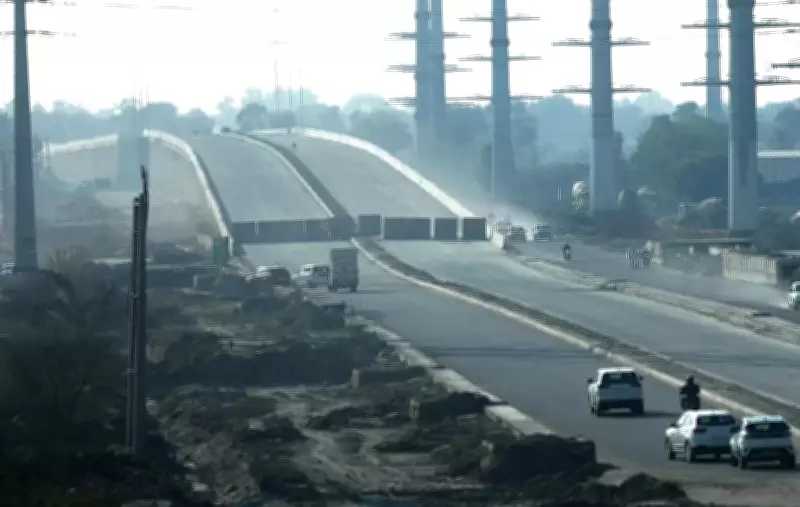
Geopolitical Tensions Cause Delays in Gurgaon Highway Project
The ongoing crisis in West Asia is now impacting infrastructure projects in India, with supply chain disruptions delaying the opening of a key section of the 43-kilometer Gurgaon-Pataudi-Rewari highway. The National Highways Authority of India (NHAI) had initially planned to open the stretch by the end of February but is now targeting the end of March due to these challenges.
Bitumen Shortage and Construction Setbacks
NHAI officials have cited disruptions in supply chains stemming from geopolitical tensions as a primary factor affecting the availability of bitumen, a crucial material used for road surfacing. This shortage has led to significant delays in the project's completion. An NHAI official stated, "We are planning to open the first 10km stretch connecting Dwarka Expressway and KMP Expressway by the end of March. Bituminous work is underway, but some delays have been caused due to supply constraints in procurement of construction materials because of the ongoing situation."
Bitumen, a by-product of crude oil refining, is procured by contractors from oil refinery companies and transported to project sites for use in hot mix plants. Its availability is closely tied to global crude supply and refining output, making it vulnerable to international conflicts and market fluctuations.

Phased Opening and Pending Components
To mitigate the delay, NHAI is implementing a phased approach. Initially, traffic will be allowed on the service road before the main carriageway opens, as a transmission line passing over the stretch has yet to be shifted. The official added, "However, we are trying to open a portion of the stretch for traffic within the next six to seven days. Initially, traffic will be allowed on the surface road."
While most structural work has been completed, key components remain pending, including a railway overbridge (ROB) at Pahari village and a unidirectional flyover at Dwarka Expressway. Girder launching for the flyover is currently underway, with structural work expected to finish in the next two to three months. Excluding the ROB, most of the project is likely to be completed by the end of May, with the overall project targeted for July completion.
Historical Delays and Environmental Hurdles
The project, first conceived in 2018 to upgrade an existing two-lane state highway into a four-lane national highway, has faced numerous setbacks. Its foundation was laid in July 2020 by Minister for Road Transport and Highways Nitin Gadkari, with an estimated cost of Rs 900 crore. Originally due for completion in December 2022, construction began only in November 2021, with a revised two-year deadline.
Utility shifting issues and delays in approvals resulted in repeated extensions. Work halted in September 2022 after the National Green Tribunal intervened following a plea by environmentalists over forest clearance. Petitioners argued that compensatory afforestation planned 300km away in Panchkula would not offset the loss of green cover along the project stretch. In April 2024, the Supreme Court allowed work to resume, directing that compensatory afforestation be carried out within the city. Construction has also been slowed by monsoon disruptions and annual pollution control restrictions in the NCR.
Connectivity Benefits and Future Impact
Once fully operational, the corridor is expected to significantly improve connectivity between Gurgaon, southern Haryana, and Rajasthan, while easing pressure on the congested Delhi-Jaipur Expressway. It will also offer a faster alternative for industrial hubs in Manesar, Bilaspur, and Dharuhera, facilitating smoother movement for both commuters and freight traffic.
The delays underscore how global geopolitical events can have tangible effects on local infrastructure development, highlighting the interconnectedness of supply chains and regional stability.






