The AI Revolution in UPSC Preparation: Transforming India's Toughest Exam Journey
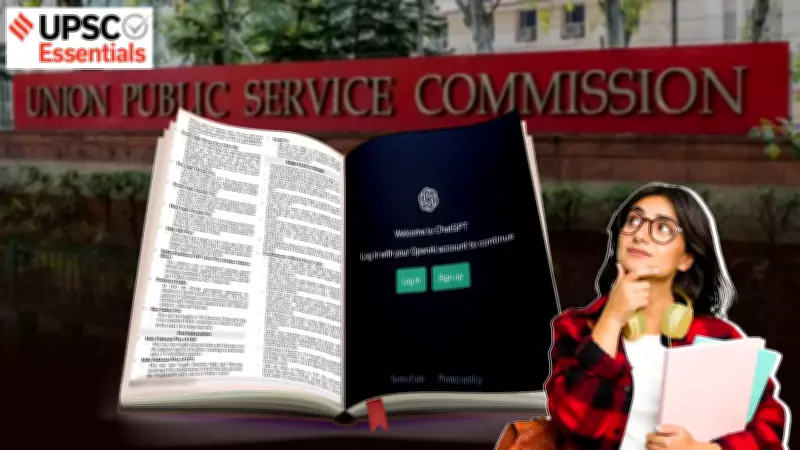
In the high-stakes world of Union Public Service Commission (UPSC) examinations, where aspirants traditionally rely on coaching institutes, extensive reading, and relentless self-study, a technological transformation is quietly unfolding. Artificial Intelligence has emerged as a significant player in this competitive landscape, offering new tools and approaches that are changing how future civil servants prepare for India's most challenging examination.
AI as a Strategic Study Companion
Across India, UPSC aspirants are increasingly incorporating AI tools into their preparation strategies. Roushan Kumar Chandan, a 29-year-old aspirant, represents this new wave of digitally-enhanced preparation. "With the right prompts, AI can significantly improve efficiency and help aspirants manage their workload better," he explains. For Chandan, AI serves as a powerful revision tool that saves precious time otherwise spent navigating multiple, often disorganized sources.
Anurag Srivastava, who has appeared for four UPSC Mains examinations, uses AI specifically for value addition. "It gives you that extra edge," he says, describing how he employs AI to generate academic terms related to urbanization and sociology. The technology's ability to provide multiple perspectives on complex topics has proven particularly valuable for essay writing, where aspirants often struggle to develop diverse viewpoints while managing extensive syllabi.

Practical Applications and Time-Saving Benefits
AI's impact extends across various preparation aspects:
- Answer Evaluation: Many aspirants now use AI tools for Mains answer evaluation instead of waiting for traditional feedback cycles
- Concept Clarification: Aspirants like Snehit Sah credit AI with helping understand historical battles, lesser-known contexts, and difficult geographical concepts
- Time Management: By streamlining research and cross-referencing, AI tools help aspirants optimize their study schedules
- Content Organization: AI assists in creating structured notes from multiple sources
The Limitations and Risks of AI Dependence
Despite these advantages, both aspirants and mentors approach AI with healthy caution. Snehit Sah points out a critical limitation: "AI-generated information is not always reliable and may not reflect the latest information." This concern about accuracy is echoed by multiple users who have experienced AI "hallucinations" - instances where tools produce misleading or fabricated information.
Mudit Gupta, a UPSC mentor and faculty member, advocates for responsible AI use while acknowledging its benefits. "In today's world, AI has made UPSC preparation more self-reliant," he observes, but emphasizes the importance of maintaining traditional learning approaches alongside technological tools.
The Irreplaceable Role of Traditional Methods
A crucial debate centers on whether AI can replace traditional preparation methods like newspaper reading and standard textbooks. The consensus among experienced aspirants and educators is clear: AI supplements but cannot substitute these foundational practices.
Anurag Srivastava offers a compelling perspective: "You don't read newspapers just for facts. You read them to learn how to write - English, grammar, opinions, and perspectives. Relying on AI for newspaper summaries is a blunder." This sentiment is shared by Snehit Sah, who adds an emotional dimension to the discussion, noting the unique connection readers develop with columnists and the tactile experience of physical newspapers.

Expert Perspectives on Balanced Preparation
Seasoned educators emphasize the need for balanced, thoughtful integration of AI tools. Nikhil Sheth, who has taught History and Art and Culture for over 15 years, acknowledges that AI has made preparation more structured and faster. However, he warns against overdependence: "Many students now skip standard books and rely too much on AI shortcuts. Instant answers promote passive learning and reduce the cognitive development needed for the exam."
Ashish Mishra, a faculty member at a premium UPSC coaching institute, highlights the examination's unique challenges: "Success requires reading standard sources, linking ideas, and consistent answer writing. Technology can only act as an aid, not a substitute." He raises a crucial practical concern about examination hall performance, questioning how AI-dependent aspirants will fare during the actual pen-and-paper test.
The Ethical Dimension and Future Implications
Nanditesh Nilay, who teaches ethics to UPSC aspirants, brings an important perspective to the discussion. He emphasizes that the Ethics paper, particularly case studies, tests an aspirant's authentic self and ethical reasoning capabilities. "Wise use of AI should be encouraged, but not at the cost of ethical reasoning," he advises. "Future bureaucrats will face real-world challenges that demand independent thinking, originality, and humanity, not shortcuts."
The emerging consensus suggests that while AI literacy has become essential for modern UPSC preparation, as noted by Bhaswati Sonowal who has been preparing for four years, the technology's role should remain supportive rather than central. The human elements of critical thinking, ethical reasoning, and original analysis continue to define successful UPSC preparation.
Navigating the New Preparation Landscape
As AI continues to evolve, UPSC aspirants face the challenge of integrating new technologies while preserving the core competencies that the examination demands. The most effective approach appears to be a balanced one:
- Using AI for efficiency in specific areas like revision and organization
- Maintaining traditional reading practices for depth and perspective development
- Developing strong prompt engineering skills to maximize AI utility
- Regularly cross-verifying AI-generated information with reliable sources
- Prioritizing original thinking and ethical reasoning development
The UPSC preparation ecosystem is undoubtedly changing, with AI offering unprecedented tools for efficiency and organization. However, as the examination continues to test fundamental competencies in analysis, ethics, and independent thinking, aspirants must remember that technology serves best as a complement to, rather than replacement for, the human intellect and dedication that have always defined successful civil services preparation.