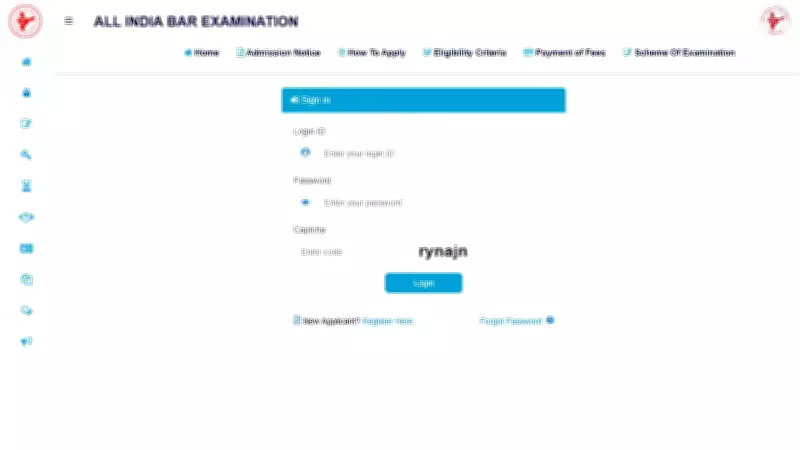
The Bar Council of India (BCI) has officially released the admit cards for the All India Bar Examination (AIBE) XXI on its official website, allindiabarexamination.com. Candidates who have registered for the examination can now access and download their hall tickets by logging in with their registered user ID and password.
AIBE 21 Examination Date and Application Process
The AIBE 21 examination is scheduled to be conducted on June 7, 2026. The application process for this examination commenced on February 11 and concluded on April 30. Candidates appearing for the examination are required to carry a printed copy of the admit card along with a valid photo identity proof to the examination centre.
Steps to Download AIBE 21 Admit Card 2026
Candidates can download the AIBE 21 hall ticket by visiting the official website and clicking on the 'AIBE 21 Admit Card 2026' link available on the homepage. After entering the registration number and date of birth, candidates will be able to view and download the admit card. Students have been advised to keep a printed copy of the hall ticket for examination day and future reference. Accepted identity proofs include Aadhaar card, PAN card, voter ID card, and driving licence.

Direct Link to Check and Download AIBE 21 Admit Card 2026
A direct link to download the admit card is provided on the official website for convenience.
Details Mentioned on the Hall Ticket
The AIBE 21 admit card contains important information related to the examination and candidate identity. The hall ticket includes the candidate's name, roll number, application number, registration number, photograph, signature, reporting time, examination date, shift details, and examination centre address. The admit card also mentions the enrolled state and selected examination language. Candidates will also find examination-day instructions printed on the document.
AIBE 21 Examination Pattern and Qualifying Marks
The AIBE 21 examination will be conducted in offline mode using OMR sheets. The paper will contain 100 multiple-choice questions carrying one mark each. Candidates will be given 3 hours and 30 minutes to complete the examination. There will be no negative marking. The examination will cover 19 law subjects, including Constitutional Law, CPC, CrPC, Evidence Law, Family Law, Administrative Law, and Professional Ethics. The test will be conducted in multiple regional languages. As per the qualifying criteria, candidates from the General and OBC categories must secure at least 45 per cent marks to qualify. Candidates belonging to SC, ST, and specially-abled categories are required to obtain a minimum of 40 per cent marks.
Ready to navigate global policies? Secure your overseas future. Get expert guidance now!
About the Author
Sanjay Sharma is a seasoned journalist with over two decades of experience in the media industry. Currently serving as Assistant Editor - Education at TimesofIndia.com, he specializes in education-related content, including board results, job notifications, and studying abroad. Since joining TOI in 2006, he has played a pivotal role in expanding the platform's digital presence and spearheading major education events. Previously, Sanjay held leadership positions in sports journalism, covering high-profile events such as the Cricket World Cup and Olympics. He holds a PG Diploma in Journalism from Bharatiya Vidya Bhawan and is proficient in various content management systems.