The Evolution of Animation Education: From Classroom to Studio
Animation has undergone a remarkable transformation in recent years. Once considered a specialized craft primarily associated with children's films and niche studios, animation now occupies a central position within a rapidly expanding content ecosystem. This ecosystem is being shaped by multiple forces including the explosive growth of OTT platforms, the expanding gaming industry, advancements in virtual production technologies, and the rise of immersive digital experiences. As both technology and audience expectations continue to evolve at an unprecedented pace, creators must now master a complex intersection of artistic vision, technical proficiency, and compelling storytelling. This new reality demands collaborative, studio-led workflows that reflect how modern animation is actually produced.
Why Traditional Animation Teaching Models Are Becoming Obsolete
The traditional classroom model for animation education is struggling to keep pace with industry changes. Production pipelines, software tools, and professional workflows now evolve faster than conventional academic syllabi can adapt. This has created a significant and growing gap between what is taught in academic institutions and what the animation industry actually expects from new professionals. Consequently, animation education is undergoing a decisive shift toward studio-led learning environments. In these new educational spaces, the core learning experience revolves around practical creation, active collaboration, and real-world problem-solving rather than passive observation and theoretical instruction.
This modern approach to animation training emphasizes several key components:

- Studio-style training environments where students learn by actively creating content rather than merely observing demonstrations.
- Hands-on exposure to industry-standard tools and workflows that are directly aligned with contemporary professional production pipelines.
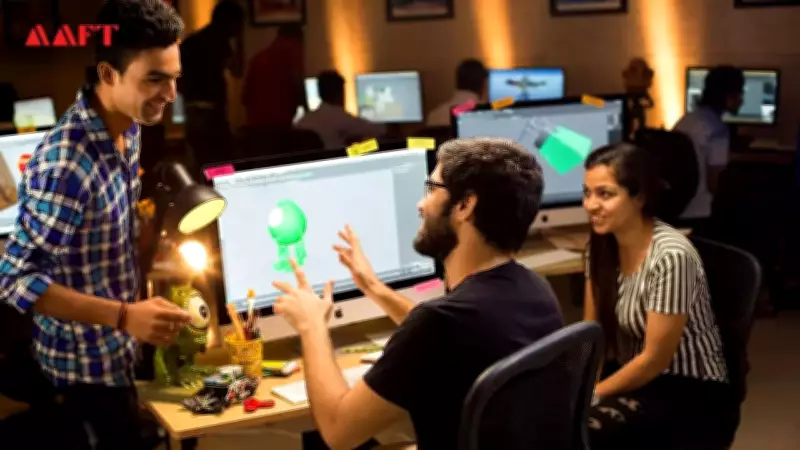
- Collaborative project-based learning that accurately reflects how animation teams function within actual production studios.
- Real-time problem-solving and iterative development to prepare students for the pressures of production deadlines and creative constraints.
- Portfolio-driven evaluation systems where graduates are assessed primarily by the quality and professionalism of their creative work rather than formal academic qualifications.
In this transformed educational landscape, learning animation is no longer about simply completing academic assignments. It has become a comprehensive process of building production-ready skills, developing creative adaptability, and cultivating a professional mindset suited to an industry where constant change and rising expectations are the norm.
AAFT Noida's Pioneering Approach to Studio-Led Animation Education
At AAFT Noida's School of Animation, this studio-led educational philosophy is fully embedded within the B.Sc in Animation programme. The curriculum is structured around hands-on production experience rather than abstract theoretical concepts. Students receive extensive training on industry-standard software tools including Maya and 3ds Max while developing strong command over core animation disciplines such as modelling, rigging, lighting, compositing, and rendering. The programme is specifically designed to familiarise learners with complete production pipelines, helping them understand how individual creative decisions ultimately translate into finished visual outputs across both animation and visual effects projects.

This studio-oriented learning methodology is reinforced by a faculty comprising experienced professionals from animation, visual effects, and media production backgrounds. Rather than functioning solely as traditional instructors, these faculty members act as mentors who guide students through critique sessions, production challenges, and collaborative assignments that mirror real industry expectations. The learning experience is further grounded in current professional practice through masterclasses, live projects, and direct interactions with working professionals. These elements help students understand both the creative possibilities and practical realities of building sustainable careers in animation and VFX.
Recently, the AAFT School of Animation introduced four specialized in-house production studios as part of its innovative In-Studio Experience programme. This initiative gives students direct exposure to authentic studio-style workflows through short-format projects developed within defined production timelines. The specialized studios include:
- Epic Frame Studio dedicated to 3D Animation Production
- Aura Fx Studio focused on VFX Film Production
- Ink Flow Studio specializing in 2D Animation Production
- Nexus AI Studio exploring AI Film Production
"Animation education must be fundamentally rooted in production realities," explains Dr. Ashish Kumar Garg, Dean of the School of Animation at AAFT Noida. "When students work through the entire production pipeline, understanding how elements like modelling, lighting, and compositing come together cohesively, they gain the clarity and confidence needed to meet contemporary industry expectations."
Programme Overview and Target Audience
The B.Sc in Animation programme at AAFT Noida offers comprehensive training with the following key details:
- Batch commencement date: August 2026
- Duration: 3 years
- Eligibility: 10+2 qualification or equivalent undergraduate background
- Course mode: 5 days per week, Full Time, on-campus instruction
AAFT's animation programme is specifically designed for students who want to understand how animated worlds are fundamentally built, not just how they appear on screen. The course is particularly well-suited for:
- Learners genuinely interested in visual storytelling, digital design, and the technical foundations of animation and visual effects
- Students completing their 10+2 education as well as those transitioning from other undergraduate backgrounds
- Individuals who prefer hands-on creation, collaborative workflows, and learning through active production rather than passive instruction
As animation continues its expansion across feature films, streaming content, gaming platforms, and immersive media, pathways into the profession are becoming clearer even as the work itself grows more demanding. In this evolving landscape, learning environments that closely resemble real production studios have become as important as raw creative talent. Educational institutions like AAFT Noida, which are systematically aligning animation education with everyday studio realities, represent a broader transformation in how animation training is being conceptualized and delivered. The focus is gradually shifting toward preparing students for the specific pace, collaborative dynamics, and professional demands of real-world production environments.