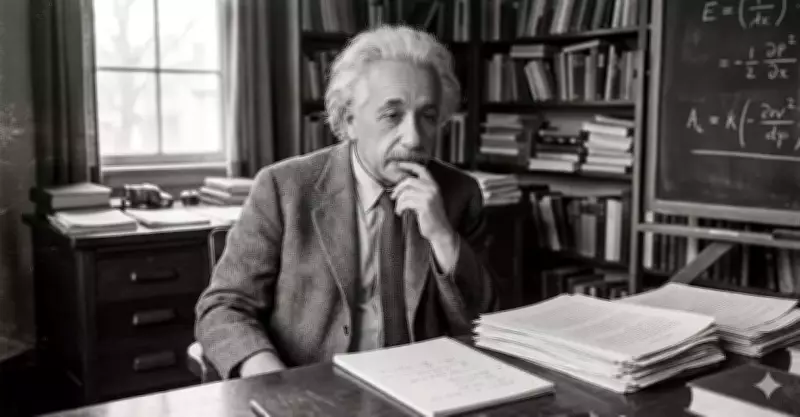
Einstein's Enduring Insight: Genius Lies in Persistence, Not Just Intelligence
Albert Einstein once dismantled the long-cherished notion of genius with a simple yet profound statement: "It's not that I'm so smart, it's just that I stay with problems longer." This is not a boastful remark but a crucial revelation about the nature of learning and achievement. It underscores that effort and perseverance often outweigh raw talent. While society often labels top performers as "blessed" or naturally gifted, Einstein's words puncture this myth, highlighting a deeper truth about how true understanding develops.
Lesson One: Patience Trumps Praise in the Learning Journey
Einstein's academic path was far from the smooth success story it is often portrayed as. He disliked rigid educational systems, resisted rote memorization, and struggled in environments that valued obedience over curiosity. Teachers and institutions frequently failed to recognize his potential. What sustained him, however, was his remarkable patience—his willingness to think deeply and revisit ideas repeatedly. For students today, this lesson is clear: early praise or quick success does not guarantee long-term comprehension. Real progress often unfolds quietly and slowly, shaped over time rather than through immediate applause.
Lesson Two: Speed Does Not Equate to Intelligence
Modern education often celebrates quick answers, labeling fast thinkers as "bright" while viewing slower ones as lagging behind. Einstein's perspective challenges this ingrained belief. Complex concepts in fields like mathematics, science, or the humanities are not meant to be grasped instantly. For students, struggling with a topic does not indicate weakness; it reflects genuine engagement. True learning demands staying power and resilience, not mere speed.

Lesson Three: Embracing Confusion as a Vital Part of Learning
Einstein's groundbreaking work did not advance by avoiding uncertainty. Instead, it progressed because he allowed confusion to persist. He questioned his own assumptions, revisited ideas, and accepted that clarity often arrives gradually. Students frequently abandon difficult subjects when confusion arises, but this lesson teaches that confusion is not a sign of failure. It is an essential stage of critical thinking. Those who learn to sit with confusion and dig for answers develop a deeper comprehension of concepts.
Lesson Four: Focus is a Skill to Be Cultivated, Not a Given Trait
Einstein's breakthroughs required extended periods of uninterrupted thought. In today's distraction-filled world, maintaining attention can be challenging. However, his quote serves as a reminder that focus is not merely a choice but a foundational skill. Staying with a problem demands time, minimal interruptions, and the patience to let ideas unfold slowly. This discipline is not acquired overnight, but once established, it offers lifelong benefits in learning and problem-solving.
Lesson Five: Intelligence Grows Through Effort and Engagement
Perhaps the most powerful lesson from Einstein's words is what he does not say: intelligence is not a fixed trait. His implication is that wisdom and understanding are built through struggle and perseverance. For students, this reframes learning—shifting the focus away from labels and comparisons toward active engagement. The goal is not to demonstrate intelligence but to construct it through dedicated effort.
Einstein's insight remains highly relevant for learners of all ages. By valuing persistence over innate ability, embracing confusion, and cultivating focus, students can unlock their true potential. This approach transforms education from a race for quick answers into a meaningful journey of discovery and growth.