From Homework Dodger to Nobel Laureate: The Unlikely Journey of Toshihide Maskawa
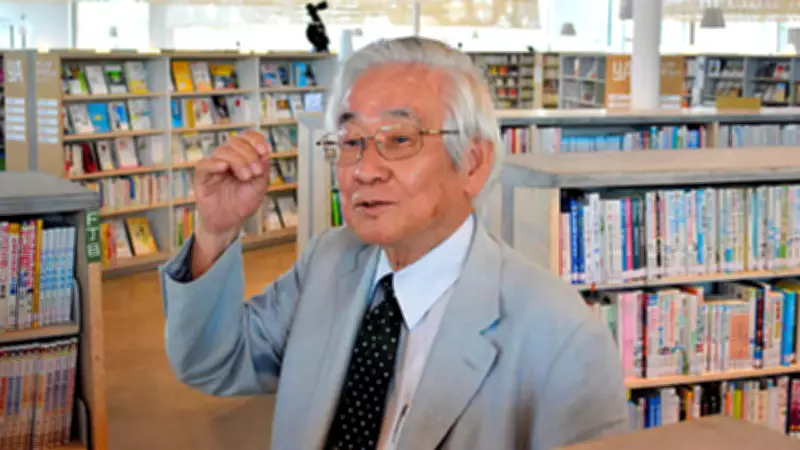
You might assume a future Nobel laureate would be the student who diligently completed every assignment. The reality, however, is often far more surprising. Toshihide Maskawa, who won the Nobel Prize in Physics in 2008, shared a revealing childhood anecdote on X (formerly Twitter) through The Nobel Prize account. His mother once pleaded with his teacher, "Please give my son homework at least occasionally." The teacher's response was blunt: "Your son has never done his homework despite the fact that I give him homework every day!"
Maskawa's school days were characterized by confusion, comedy, and a touch of chaos. Yet these early academic struggles did not prevent him from eventually revolutionizing the field of physics. His journey demonstrates that conventional measures of school success are not always predictors of future achievement.
The Secret Weapon: Unquenchable Curiosity
Despite his disregard for homework, Maskawa possessed a powerful secret weapon: an insatiable curiosity. While classmates memorized textbook facts, he asked probing questions about why eclipses don't occur monthly or how three-phase motors actually rotate. His teachers were often baffled by his inquiries, but it was evident that Maskawa was driven by a deep desire to understand the fundamental "why" behind phenomena.

Even with mediocre grades, this relentless curiosity kept him intellectually engaged. That spark of wonder would eventually ignite a career that transformed our understanding of the physical universe. His story challenges the notion that academic performance in childhood determines lifelong potential.
The Turning Point: A Newspaper Revelation
High school failed to motivate Maskawa significantly until he encountered a newspaper article about Professor Shoichi Sakata's particle theory. This was a transformative moment. He realized that groundbreaking science wasn't confined to 19th-century Europe—it was happening contemporaneously in Nagoya, practically in his own backyard.
This revelation ignited a newfound passion. Maskawa dedicated himself to preparing for Nagoya University's entrance exam with unprecedented determination. His father, who had hoped his son would join the family business, granted him just one chance to succeed. Maskawa seized that opportunity and gained admission.
University Challenges and Intellectual Growth
University presented entirely new challenges. Lectures on mathematical analysis, Archimedes' axioms, and Dedekind's "Cuts" seemed abstract and impenetrable, almost like magical incantations. Rather than retreating, Maskawa doubled down on his efforts.
He immersed himself in complex topics like chiral symmetries and current algebra, and even conducted voluntary experiments in neural networks. As he later reflected, "These experiments were etudes for a physicist, just as painters make variations of changing poses." Each failure and every calculation served as a crucial lesson in perseverance, building the resilience that would define his career.
The Nobel Breakthrough: CP Violation Discovery
The pivotal breakthrough came years later when Maskawa collaborated with Makoto Kobayashi to investigate CP violation in particle physics. This work demanded extraordinary perseverance—months of intricate calculations, numerous dead ends, and moments of profound frustration, including insights that reportedly came to him while in the bathtub.
Maskawa confessed that he nearly abandoned the four-quark model and considered writing a negative research paper. Then, in a flash of inspiration, he realized the six-quark model might hold the key to explaining CP violation. This insight ultimately led to their Nobel Prize-winning work, recognized with the 2008 Nobel Prize in Physics.
Lessons for Learners Everywhere
Maskawa's narrative powerfully illustrates that initial struggles with homework, classroom confusion, and even apparent failures are not reliable indicators of ultimate success. They are merely chapters in the broader learning journey. His story proves that curiosity combined with persistent effort can transform a mediocre student into a Nobel laureate.

The educational process is a marathon, not a sprint. When you encounter difficult homework or feel you're falling behind, remember Toshihide Maskawa. His early struggles were not an ending but a prologue to extraordinary achievements. The very assignments that seem insurmountable today might contain the seeds of tomorrow's groundbreaking discoveries.
Who could have predicted that a childhood aversion to homework would lead to Nobel Prize-winning physics? Your current academic challenges might similarly become the catalyst for your own remarkable journey from struggle to triumph.