Lucknow Education Summit Tackles AI, Screen Time, and Leadership Development
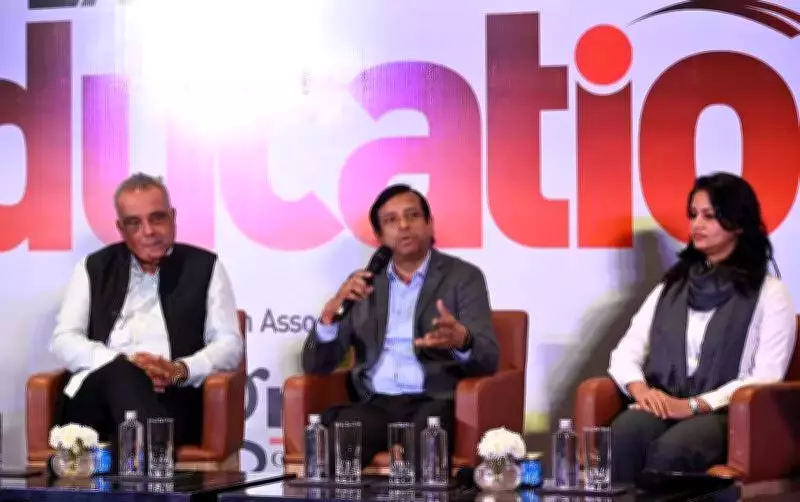
The "Excellence in Education" event, held in Lucknow on Saturday, brought together educators and industry leaders to discuss pressing challenges in modern education. Organized by The Times of India and Navbharat Times in association with Gravity Classes, the summit focused on balancing students' screen time, the content they consume, and the evolving responsibilities of institutions and faculty in preparing future leaders through artificial intelligence.
Redefining Education for Next-Generation Leaders
A key panel discussion, titled "Developing the Next Generation Leaders: Redefining the Role of Education Institutes," emphasized moving beyond academic marks to foster holistic development. Sharda University Vice-Chancellor Shibram Khara advocated for institutions to identify and nurture students' individual strengths. Director of PR and Outreach at the Graphic Era Group of Institutions, Sahib Sablok, stressed the importance of combining academic knowledge with practical skills and teaching students to consume digital content responsibly.
Dean and Head of the Institute of Management Studies at Banaras Hindu University, SK Dubey, highlighted the value of project-based learning to help students discern useful content for their growth. Geeta Gandhi Kingdon, Manager of City Montessori School, noted that active learning surpasses purely theoretical approaches. "Students should be guided on what content to consume, including social media, to support learning," she said, adding that methods like the 'Third Pen' strategy and AI-based classes promote independent learning but require human guidance for character development.

Empowering Educators in AI-Enabled Classrooms
Another panel, "Faculty as Change Agents: Empowering Educators for Future Learning," explored the critical role of teachers in technology-driven environments. Ambrish K Srivastava, Senior General Manager at Tata Consultancy Services, urged faculty to master AI prompts and introduce innovative projects to enhance engagement. Saurabh Tyagi, Chief Marketing Officer of DeepSpacial, emphasized teachers' responsibility in guiding students ethically in digital spaces.
Assistant Professor at Ram Manohar Lohiya Law University, Isha Yadav, pointed out that workshops, effective prompt usage, and new project ideas can boost student engagement and foster independent learning. "Teachers must also be aware of students' mental health, and faculty should use technology while keeping mental health in mind," she advised, underscoring the need for a balanced approach to educational technology.
Key Takeaways from the Summit
- Institutions should focus on holistic student development beyond academic performance.
- AI and digital tools require responsible integration with human guidance for character building.
- Faculty must adapt to AI-enabled classrooms through training and innovative teaching methods.
- Mental health considerations are crucial when implementing technology in education.
- Project-based learning helps students apply knowledge and evaluate content effectively.
The event concluded with a consensus on the need for collaborative efforts between educational institutions and industry to prepare students for future challenges, leveraging AI while maintaining ethical and developmental priorities.