Panjab University Extension Library in Ludhiana Grapples with Underutilisation Amid Access Restrictions
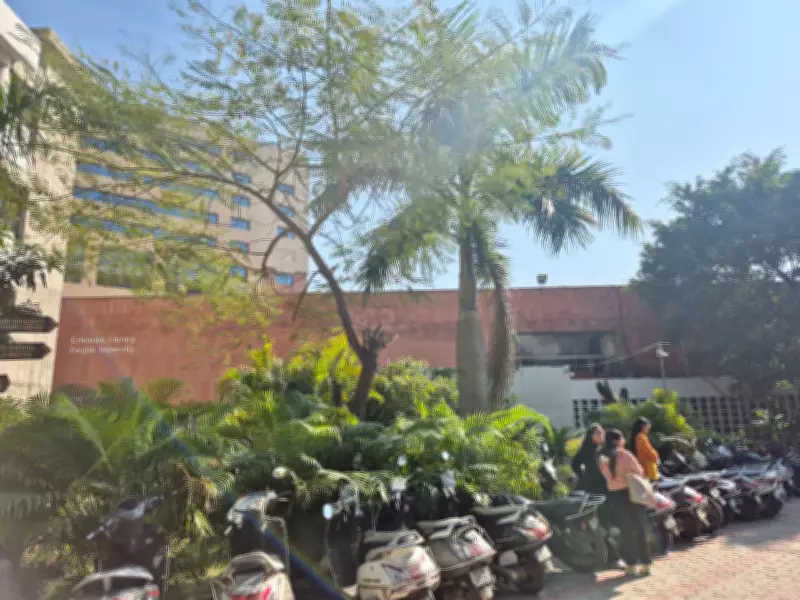
The Panjab University Extension Library (PUEL) in Ludhiana, one of Punjab's oldest academic libraries, is facing growing criticism and underutilisation despite housing nearly 1.78 lakh publications. Readers and former members highlight restricted working hours, weekend closures, and steep membership fees as key issues hampering access in Punjab's largest urban centre, which lacks a full-fledged district library.
Limited Operating Hours and Weekend Closures Spark Outcry
Currently, the library operates only from Monday to Friday between 9 am and 5 pm, remaining shut on Saturdays, Sundays, and holidays. This arrangement contrasts sharply with other Panjab University campus libraries, drawing ire from the local community. Mukesh Arora, a seven-time former senate member of Panjab University, emphasised the demand for extended hours, stating, "Getting the library opened on all seven days and at least for 12 hours a day is a common demand from students." He noted that this issue has been raised with the Vice-Chancellor and requires more staff deployment for shift work to facilitate longer hours.
Rising Membership Fees Deter Public Access
Adding to the dissatisfaction are the revised membership charges. Public members must deposit a security of ₹3,500 and pay an annual subscription of ₹750 plus 18% GST, totalling ₹885. While enrolled students benefit from lower fees, graduates preparing for competitive exams are charged at public rates, even if they primarily use only the reading room. Dr Jernail S Anand, an alumnus of SCD Government College, Ludhiana, commented, "The reading habits are already on the decline, and the heavy fee by the PUEL needs to be scaled down." He advocated for free access for disadvantaged students and public cataloguing of library resources.

Historical Context and Legacy of the Library
Founded in July 1960 through a joint initiative of Panjab University, Chandigarh, the University Grants Commission (UGC), and the Indian Wheat Loan Education Exchange Programme of the US Embassy, the library was established after a UGC committee assessed Ludhiana's large student population. With initial support from UGC, PL-480 contributions, and book donations from organisations like the Asia Foundation and British Council, it started with over 43,000 books. The present building, constructed in 1966 at a cost of ₹9 lakh, features:
- Stacking capacity of 1.5 lakh volumes
- Seating for 200 readers
- An auditorium with 250 seats
Today, it holds 1,78,559 publications, including reference books, rare books, government documents, and Braille resources, subscribing to 16 newspapers and about 60 magazines.
Infrastructural Shortcomings and Underused Resources
Readers report poor utilisation due to administrative and infrastructural gaps. Brij Bhushan Goyal, a former student worker, noted that UGC-provided Braille resources for visually impaired students remain unused, with no dedicated seating for disabled users. Computers are non-functional, and internet access requires additional fees on personal laptops. The reading hall, with only 80 chairs, sees hundreds of students daily, compounded by poor lighting and inadequate cooling in summer. Goyal recalled that until the early 2000s, the library remained open till 7 pm and on weekends, stating, "This is a great dampener on reading culture."
Calls for Reform and Future Prospects
Amid these challenges, there are calls for systemic improvements. Professor P K Sharma (retired) argued, "Libraries ought to be open on all days. There is no logic in excessive library fees, which carry 18% GST." Former Senate member Naresh Gaur highlighted past efforts to extend reading room hours till 10 pm and increase its size, noting "huge room for improvement." With smaller cities like Barnala, Sangrur, and Bathinda gaining district libraries, questions arise about Ludhiana's shrinking access to its historic library.

Sources indicate that matters regarding increased timing, daily operations, and enhanced facilities will be discussed in the PU advisory council meeting post-Senate and Syndicate elections. A source revealed, "The library is extremely short of staff as of now, and hence increasing the working hours or opening it on all days is possible only if the staff is at least doubled." As Ludhiana's academic community awaits reforms, the PU Extension Library's rich legacy remains at risk of further underutilisation without addressing these critical access issues.