Tamil Nadu's Puthalvan Scheme Proves Crucial in Preventing Student Dropouts
A groundbreaking report from the Tamil Nadu State Planning Commission (TNSPC) has highlighted the significant impact of the state's Puthalvan scheme on higher education retention. The study found that nearly 90% of students identified as at risk of dropping out credited the monthly financial assistance of ₹1,000 with enabling them to continue their college studies.
Report Details and Submission
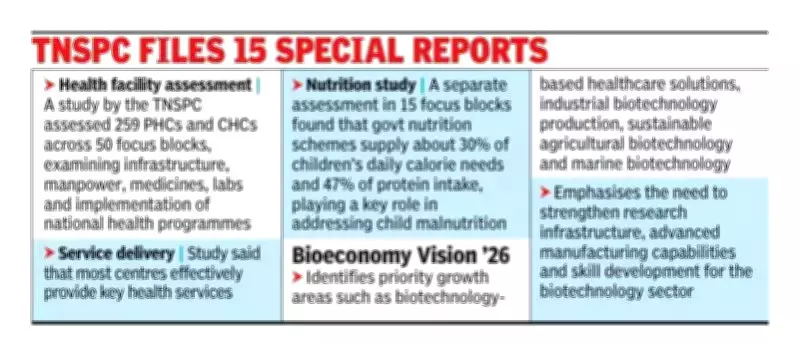
The findings were part of 15 special reports prepared by the commission, which were formally submitted to Chief Minister M K Stalin on Tuesday. Deputy Chief Minister Udhayanidhi Stalin, who also serves as vice-chairman of the commission, along with executive vice-chairman J Jeyaranjan, presented the comprehensive documents. These reports are designed to inform and guide government policymaking across various sectors.
Beneficiary Assessment and Usage
The commission conducted a detailed assessment of 8,278 beneficiaries of the Puthalvan scheme. The overwhelming majority of these students utilized the monthly ₹1,000 support primarily for essential educational expenses, including college fees, textbooks, and transportation costs. This targeted financial aid has played a pivotal role in alleviating the economic pressures faced by low-income families, thereby facilitating continued enrollment in higher education institutions.

Broader Commission Work and Additional Findings
During its current tenure, the Tamil Nadu State Planning Commission has prepared more than 100 reports covering a diverse array of sectors. These include agriculture, health, urban development, industry, rural development, water management, and public finance. The commission's work provides a robust evidence base for strategic governance and policy formulation.
In addition to the Puthalvan scheme evaluation, the commission assessed the Illam Thedi Kalvi 2.0 programme across 13 districts. This evaluation involved 1,102 students from 79 schools and found that the initiative successfully strengthened foundational learning skills while simultaneously improving student engagement and attendance rates.
The success of the Puthalvan scheme underscores the importance of targeted financial interventions in supporting educational continuity for economically disadvantaged students. By addressing the direct costs associated with higher education, the scheme has become a critical tool in Tamil Nadu's efforts to reduce dropout rates and promote inclusive access to college education.