UGC Equity Regulations Spark Nationwide Campus Unrest and Legal Battles
In the dynamic landscape of Indian higher education, policy documents rarely remain confined to bureaucratic files. They quickly transition from paper to practice, entering classrooms and, when they intersect with issues of identity and representation, often spill onto the streets. This week has witnessed precisely such a transformation, as a recent regulatory amendment aimed at institutionalizing equity in higher education institutions has triggered widespread student protests, sparked political debates across states, and drawn the judiciary into a crucial review process.
Nationwide Student Agitation Against UGC Framework
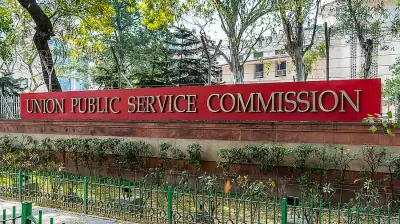
The opposition to the University Grants Commission (Promotion of Equity in Higher Education Institutions) Regulations, 2026, which were officially notified on January 13, manifested simultaneously across multiple campuses and courtrooms on Wednesday. The regulations have become a flashpoint for student discontent, with demonstrations erupting in various parts of the country.
Delhi University Protest Turns Tense

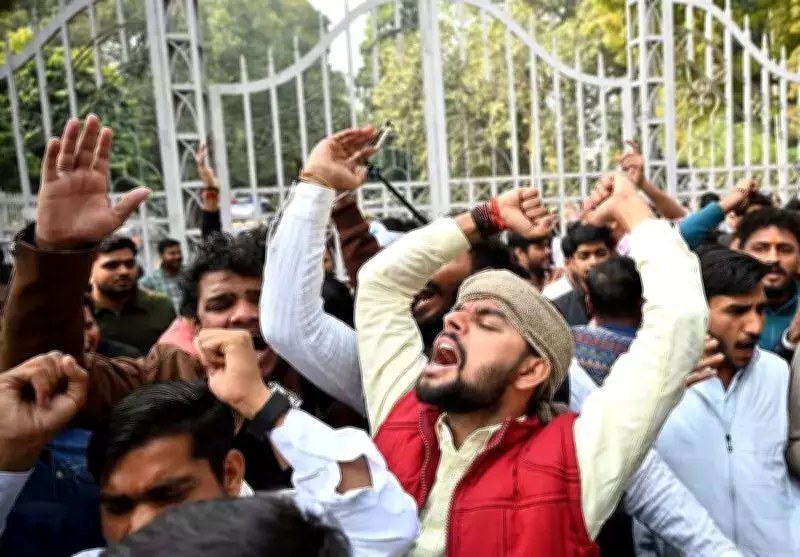
At Delhi University's North Campus, students predominantly identifying as belonging to the general category gathered near the Vice-Chancellor's office to protest what they described as an exclusionary framework. According to reports, the protest escalated when students breached initial police barricades and attempted to advance toward the administrative block. In response, police authorities closed the main university gate to prevent further escalation of the situation.
The protesters argued that the new UGC guidelines violate fundamental principles of educational equality by allegedly excluding general category students from representation in grievance redressal mechanisms. Carrying placards with messages such as "Equity for all, not for few" and "Education with justice builds a strong nation," the students warned that their agitation would intensify if the regulations were not withdrawn completely.
Satvik Sharma, one of the protesting students, emphasized their demand for a complete rollback of the regulations. "There is no clear procedure outlined. The definition of discrimination remains vague, and the UGC should clearly enumerate what constitutes discriminatory behavior. If there is no rollback, we will escalate our protest to Parliament and the courts. This black law will not be accepted," Sharma stated in an interview.
Another protester, Akhilesh Tiwari, alleged that the regulations appeared tilted in favor of specific categories. He explained that students were not opposing safeguards against discrimination but were demanding amendments based on principles of natural justice, claiming that the general category had been systematically excluded from the new framework.
Patna Witnesses Street Protests and Strike Call
In Bihar, opposition to the proposed UGC framework took a more confrontational turn. Patna witnessed tense scenes as hundreds of students staged a protest at Dinkar Golambar, a major traffic intersection, disrupting normal movement for considerable time. Organized under the banners of the All Bihar Students Union and Savarna Ekta Manch, the protest featured sloganeering against the central government and burning of materials on the road.
Student leader Vishal Kumar alleged that the proposed UGC regulations were against the interests of upper-caste students. "If you stay united, you will be safe; if you divide, you will be destroyed," Kumar told the gathering. He questioned why such legislation was being introduced despite political rhetoric about national unity and integrity.
Another student leader, Suryadev Kumar, described the framework as inherently divisive. "This law is designed to divide students into opposing groups. While caste-based politics is being promoted on one hand, upper castes are being specifically targeted on the other. Upper castes will not tolerate this injustice," he asserted.
The protesters announced that if the regulations were not withdrawn, they would organize a nationwide strike on February 1, signaling their determination to continue the agitation.
Uttar Pradesh Students Join Growing Movement

As the agitation expanded beyond Delhi and Bihar, students across Uttar Pradesh staged protests for a second consecutive day against the UGC Regulations, 2026. Raising slogans such as "UGC Roll Back" and "Ek Hain Toh Safe Hain," the demonstrators accused the UGC of promoting discriminatory policies in the name of equality.
Chhatra Panchayat president Shivam Pandey expressed strong opposition to the regulations. "This black law is completely unacceptable. While the Prime Minister speaks of national unity, these regulations will only poison the atmosphere within university campuses. Students currently study together, eat together, and often don't even know each other's surnames. This law appears politically motivated and aims to create divisions among students," Pandey stated.
Legal Challenges Reach Supreme Court
As protests unfolded across the country, the legal challenge to the UGC regulations progressed simultaneously. The Supreme Court is scheduled to hear a batch of petitions challenging the regulations on Thursday. A bench led by Chief Justice of India Surya Kant and Justice Joymalya Bagchi will examine the matter.
The petitioners have argued that the regulations institutionalize discrimination by allegedly denying grievance redressal mechanisms to individuals belonging to non-SC, ST, and OBC categories. One petition contends that the definition of caste-based discrimination under the regulations accords legal recognition of victimhood exclusively to certain categories, regardless of the nature or gravity of discrimination faced by others.
The plea seeks directions to ensure that Equal Opportunity Centres, equity helplines, inquiry mechanisms, and Ombudsperson proceedings are made available in a "non-discriminatory and caste-neutral manner," alleging violations of Articles 14, 15(1), and 21 of the Constitution.
Political Support and Criticism
Amid the growing backlash, Tamil Nadu Chief Minister M. K. Stalin defended the regulations, calling them overdue but necessary. In an interaction with media, Stalin described the UGC regulations as a welcome step in reforming a higher education system "scarred by deep-rooted discrimination and institutional apathy."
Stalin pointed to what he described as a visible rise in student suicides within Indian higher education institutions, particularly among SC and ST students, since the current central government came to power. He argued that equity safeguards were "not a matter of choice but an unavoidable necessity" and supported the inclusion of OBCs within the framework.
However, the Chief Minister also expressed concerns about implementation challenges. Referring to cases such as the suicide of Rohith Vemula, Stalin questioned how equity committees chaired by institutional heads could function independently. He emphasized that the regulations must be strengthened, revised to address structural gaps, and enforced with "real accountability."
From Campus Unrest to Constitutional Test
As the controversy travels from university campuses to the Supreme Court, and from street protests to political platforms, the Union government has attempted to steady the narrative. Union Education Minister Dharmendra Pradhan has assured that the UGC's equity regulations will not be misused and that there will be no discrimination in their implementation—positioning the framework as a safeguard rather than a sanction.
However, this reassurance has not slowed the pushback. Political leaders and state governments have interpreted the same regulations through sharply different lenses. While some have called them unconstitutional and divisive, others have defended them as an overdue response to institutional discrimination, warning against any dilution under political pressure.
What began as a regulatory correction has evolved into a broader contest over how equity is defined, administered, and contested in public institutions. With student groups mobilized across states, political leaders divided in their responses, and petitions now before the Supreme Court, the UGC's attempt to transform anti-discrimination norms into enforceable governance stands at a critical juncture. The regulations' intent is being defended, their design is being disputed, and their future is likely to be shaped as much by judicial scrutiny as by evolving political consensus.