VTU Vice-Chancellor Highlights Critical Role of AI in Modern Education
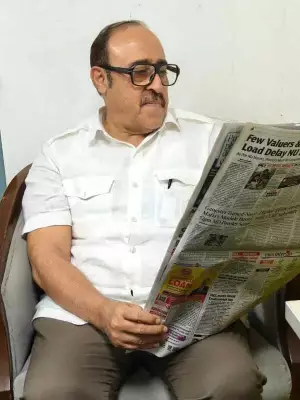
In a significant address at Mysuru, Visvesvaraya Technological University Vice-Chancellor S Vidyashankar emphasized the growing importance of artificial intelligence in reshaping the educational landscape. Speaking at the valedictory ceremony of a two-day faculty development program titled 'AI for Educators', organized by Vidyavardhaka College of Engineering, Vidyashankar outlined the urgent need for both teachers and students to master AI integration.
Impending Job Market Transformation Demands Reskilling
Vidyashankar presented compelling data indicating that approximately 85% of existing jobs are likely to undergo substantial changes by the year 2030. This dramatic shift is driven by rapid technological advancements, making continuous reskilling and upskilling essential across all professional domains. The vice-chancellor stressed that educational institutions must proactively prepare learners for this evolving employment scenario.
Availability Versus Effective Utilization of AI Tools
While acknowledging that numerous AI tools are already accessible and many more are expected to emerge, Vidyashankar pointed out that the primary challenge lies not in tool development but in effective application. He argued that comprehensive training programs are crucial for educators, students, and the broader society to harness AI's full potential.

"Extensive training is required not only for teachers but also for society at large," Vidyashankar stated, highlighting the gap between technological availability and practical implementation.
Practical Example: AI in Agriculture and Student Involvement
Using agriculture as a case study, the VC illustrated how AI-based solutions are being created to assist farmers. However, many farmers may lack the technical expertise to utilize these tools independently. In such situations, students can serve as vital intermediaries, guiding farmers while applying their classroom knowledge. This underscores the necessity for teachers to equip students with relevant AI skills that can address real-world challenges.
VTU's Proactive Initiatives in AI Education
Vidyashankar revealed that VTU has already implemented several forward-thinking measures:
- Introducing AI as a mandatory common subject in the first semester across programs
- Launching Innovation and Design Thinking initiatives to encourage students to identify practical problems and devise solutions
- Promoting indigenous technological development to support India's goal of self-reliance in advanced technologies by 2047
Call for Continuous Learning and Knowledge Sharing
Emphasizing the accelerated pace of technological change, Vidyashankar urged educators to consistently update their expertise and adapt to emerging tools. He encouraged participants of training programs to disseminate their acquired knowledge among colleagues, thereby expanding the benefits to wider academic communities.
"Teachers who attend such training programmes should share their learning with colleagues in their institutions, so that the benefits reach a wider academic community," he advised.
Dignitaries Present at the Event
The program was attended by several notable figures including Sadashive Gowda, Principal of VVCE; Vishwanath P, Secretary of VVS; Shobha Shankar, Vice-Principal of VVCE; Ashok BC, Dean of Corporate & International Affairs at VVCE; Pooja, Professor & Head of the Department of CSE at VVCE; Alamelu N, Co-founder of PALS IIT Madras; and Arun K Tangirala, Professor at IIT Tirupati.
Vidyashankar concluded by reinforcing the imperative for robust research and innovation, calling upon educators and students to contribute actively to homegrown technological advancements, positioning India as a global leader in AI and related fields.