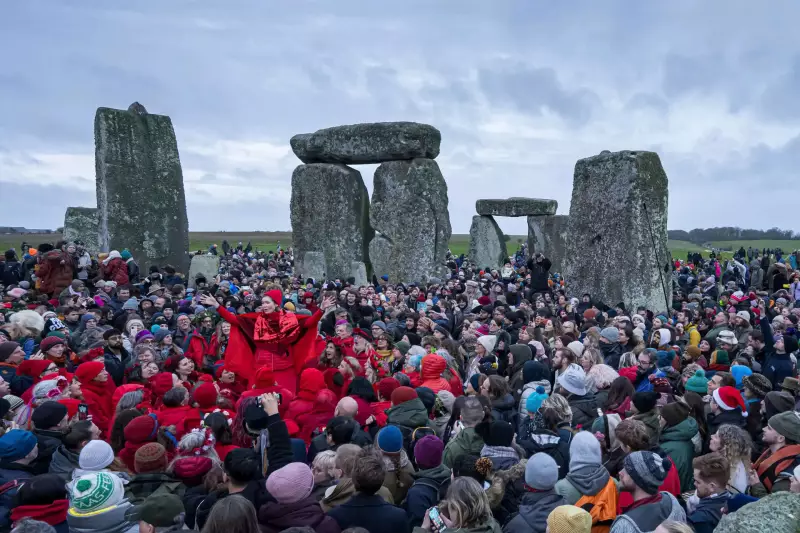
The Winter Solstice is far more than a simple notation on your calendar. It represents a precise, fixed point in our planet's annual journey around the sun. For millennia, human civilizations have observed this pivotal day to decode the rhythms of the seasons, ensure their survival, and measure the passage of time. Today, Sunday, 21 December 2025, this celestial moment arrives once again for the Northern Hemisphere, heralding the day with the least daylight and the longest night of the entire year.
What Exactly is the Winter Solstice?
The Winter Solstice occurs when the sun attains its lowest possible arc across the daytime sky. On this specific date, the sun traces its shortest path above the horizon. This astronomical configuration results in the Northern Hemisphere receiving the least amount of daylight and the longest night of the year. The term "solstice" itself has ancient roots, originating from the Latin words 'sol' (sun) and 'sistere' (to stand still). Early sky-watchers noted that the sun's position at noon seemed to halt for several days before reversing its course.
Modern science explains this phenomenon through Earth's axial tilt. Our planet is tilted on its axis by approximately 23.4 degrees. During the month of December, this tilt directs the North Pole away from the sun. Consequently, continents like Europe, North America, and much of Asia are bathed in less direct sunlight, leading to the shorter days and extended nights characteristic of winter.

Exact Timing and Global Impact in 2025
According to astronomical data, the precise moment of the Winter Solstice in 2025 is 3:03 pm Coordinated Universal Time (UTC). For observers in India, this translates to 8:33 pm Indian Standard Time (IST) on December 21st. It's crucial to understand that this solstice happens at the same instant globally, but its effects are felt differently based on geography. Locations farther from the equator experience the most dramatic shift in day length, while regions close to the equator notice minimal variation throughout the year.
This astronomical event also highlights a stark hemispheric contrast. While winter begins astronomically today in the Northern Hemisphere, the December solstice signals the start of summer in the Southern Hemisphere. Countries like Australia, South Africa, and Argentina enjoy their longest day of the year, demonstrating how a single cosmic event shapes life in opposite ways across the globe.
Why the Solstice Remains Relevant for Students and Society
In our modern world, dominated by artificial light and rigid schedules, our direct reliance on sunlight has diminished. Yet, the Winter Solstice retains profound significance. From a scientific perspective, it is a powerful reminder of the predictable, clockwork-like natural systems that govern life on Earth. Historically, it stands as a testament to how human knowledge evolved through patient, long-term observation of the skies, leading to the creation of marvels like Stonehenge, which were sophisticated observatories, not mere decorations.
On a personal and philosophical level, the solstice offers a timeless lesson in patience and perspective. It marks a definitive turning point in the season. From December 22nd onward, daylight will begin its slow, incremental return—initially by mere seconds each day, then by minutes. This gradual increase leads to the balance of the Spring Equinox in March and the peak of daylight at the Summer Solstice in June. For students and everyone else, it symbolizes that meaningful change often begins imperceptibly before its effects become visible. The Winter Solstice assures us that after the longest night, the light steadily, and surely, begins to grow again.