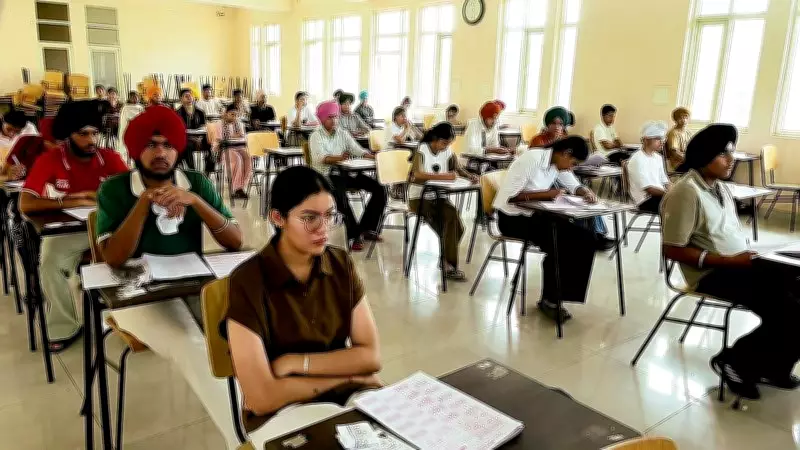
More than 1,000 aspirants appeared for the entrance examination conducted on Sunday by Punjab Agricultural University (PAU) for the 2026-27 academic session. The Agriculture Aptitude Test (AAT) saw 1,014 candidates, including 665 boys and 349 girls, with an attendance rate of 92%, reflecting strong interest among students.
Examination Arrangements and Response
Vishwajit Singh Hans, controller of examinations, said six centres were set up to ensure smooth conduct of the test. The high attendance underscores the demand for PAU's academic programmes. Vice-Chancellor Satbir Singh Gosal encouraged the students to work with dedication and perseverance to achieve success in life.
Training Course on Eco-Friendly Products
Separately, at least 51 farmers, including farm women, attended a five-day training course on preparation of herbal soap and cleaning products using bio-enzymes. The course was organised by the Skill Development Centre, Directorate of Extension Education, PAU, in collaboration with the Department of Microbiology and the Department of Chemistry.

Rupinder Kaur, associate director, skill development, said eco-friendly cleaning products can be prepared easily at home, reducing household expenses while protecting the environment. She highlighted that these products also offer opportunities for self-employment and income generation.
Practical Demonstrations and Lectures
Sonia Kaushal from the Department of Chemistry explained the harmful effects of conventional cleaning products on human health and the environment. She demonstrated the preparation of eco-friendly cleaning products and provided practical training on the formulation of nail polish remover.
Urmila Gupta, head, Department of Microbiology, delivered lectures on the use of bio-enzymes as organic cleaners and explained the process of their preparation. Priya Katyal discussed various applications of bio-enzymes, demonstrated the method of preparing bio-enzymes from agricultural waste and provided valuable information on their quality assessment.
Course coordinator Prerna Kapila conducted practical sessions on the preparation of organic dish washing soap, aloe vera soap, herbal soap using cold process method, natural scrubs, hand wash, stain removal techniques and face packs. Kulvir Kaur, also a course coordinator, and Kanwaljeet Kaur demonstrated the preparation of furniture polish and phenyl through hands-on practical sessions.
Satinder Kaur Khattra from the Department of Civil Engineering shared her experiences on the use of bio-enzymes in wastewater treatment.