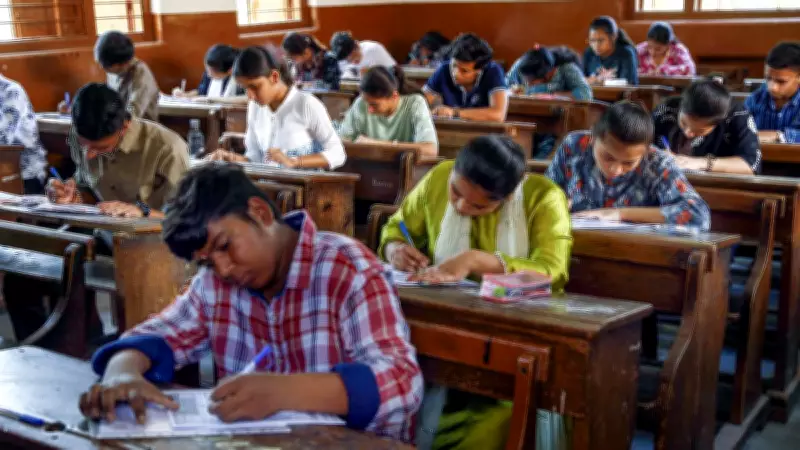
CBSE Class 10 Hindi Paper 2026: A Comprehensive Review and Student Feedback
The Central Board of Secondary Education (CBSE) conducted the Class 10 Hindi examination for the academic year 2025-2026 on March 2, 2026. This crucial board exam has garnered significant attention from students, parents, and educators nationwide. Following the completion of the paper, initial reactions and analyses have begun to surface, offering insights into the overall difficulty level, question patterns, and student preparedness.
Paper Structure and Format Overview
The CBSE Class 10 Hindi paper adhered to the prescribed syllabus and followed a structured format designed to assess students' language proficiency comprehensively. The examination was divided into multiple sections, each targeting specific skills such as reading comprehension, writing, grammar, and literature.
Key sections included:

- Reading comprehension passages with questions to test understanding and inference skills.
- Writing tasks involving letter writing, essay composition, and application drafting.
- Grammar exercises focusing on sentence correction, word usage, and syntax.
- Literature-based questions from the prescribed textbooks, covering prose, poetry, and drama.
The paper maintained a balanced mix of objective and subjective questions, aiming to evaluate both conceptual knowledge and creative expression. The total marks and time duration aligned with CBSE guidelines, ensuring a fair assessment framework.
Student Reactions and Feedback
Immediately after the exam, students shared varied opinions on the difficulty level and their overall experience. Many found the paper to be moderately challenging but manageable, with a few sections posing unexpected hurdles.
"The reading comprehension was straightforward, but some grammar questions were tricky," remarked a student from Delhi. Another from Mumbai noted, "The literature section was scoring if you had revised the textbooks thoroughly."
Common points of discussion among students included:
- The complexity of grammar exercises, which required careful attention to detail.
- The length of the writing tasks, with some students feeling pressed for time.
- The clarity of questions in the literature section, which most found fair and aligned with expectations.
Overall, initial feedback suggests that students who had prepared consistently found the paper to be within their capabilities, though it demanded a thorough understanding of the syllabus.
Teacher Analysis and Expert Insights
Educators and subject experts have also weighed in on the CBSE Class 10 Hindi paper, providing a professional perspective on its design and difficulty. Teachers highlighted that the paper was well-structured and adhered to the latest CBSE patterns, promoting a holistic evaluation of language skills.
According to a senior Hindi teacher from a CBSE-affiliated school in Kolkata: "The paper effectively tested students' comprehension and application abilities. It was neither too easy nor overly difficult, striking a good balance for a board exam."
Experts pointed out that the emphasis on grammar and writing skills was appropriate, as these are crucial for language development. They also appreciated the inclusion of diverse topics in the reading and writing sections, which encouraged critical thinking and creativity.
Recommendations from teachers for future students include:
- Focusing on regular practice of grammar rules and writing formats.
- Thorough revision of literature chapters to tackle questions confidently.
- Managing time effectively during the exam to complete all sections.
Comparative Analysis with Previous Years
When compared to previous years' papers, the 2026 CBSE Class 10 Hindi exam showed consistency in format but introduced subtle variations in question types. The difficulty level was perceived as similar to or slightly higher than the 2025 paper, particularly in the grammar and writing sections.
Historical trends indicate that CBSE aims to maintain a standard of assessment that challenges students while remaining accessible. This year's paper continued that tradition, with minor adjustments to keep the evaluation process dynamic and relevant.

Conclusion and Future Implications
The CBSE Class 10 Hindi paper for 2026 has set a precedent for balanced and comprehensive language assessment. Student and teacher reactions collectively suggest that the exam was fair, though it required diligent preparation. As board exams play a pivotal role in academic progression, such analyses help in understanding evolving educational standards and preparing future candidates effectively.
With the Hindi paper now concluded, students are advised to focus on upcoming exams while reflecting on their performance to identify areas for improvement. The insights from this analysis will undoubtedly aid educators in refining teaching methodologies and supporting students in achieving linguistic excellence.