Chandigarh Celebrates Historic Literacy Milestone with 99.93% Rate
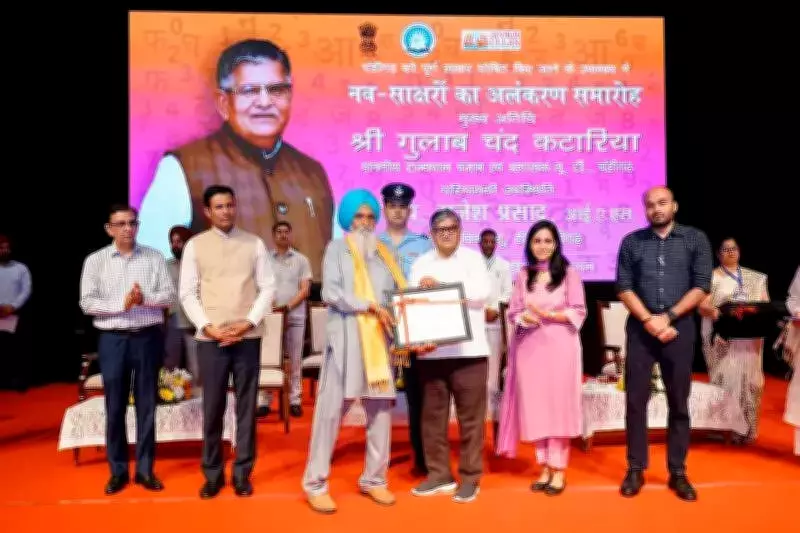
In a remarkable achievement, Chandigarh has recorded a literacy rate of 99.93%, positioning itself as one of the few regions in India to approach universal literacy. This significant milestone was celebrated with a felicitation ceremony organized by the Chandigarh administration's education department under the ULLAS-Nav-Saksharon ka Alankaran Samaroh initiative.
Inspiring Stories of Newly Literate Citizens
The ceremony highlighted numerous inspiring stories of individuals who overcame age and physical challenges to achieve literacy. Vimla Devi, a 90-year-old resident of Khuda Lahora, exemplified this spirit. Despite being unable to walk without assistance and having limited hand function that prevents her from writing, she has learned to read for the first time in her life.
Another heartwarming example came from Baldev Singh and Lachhmi Kaur, a couple in their 80s who successfully passed the literacy assessment together. Their son, a journalist, watched with immense pride as his parents demonstrated their newly acquired reading and writing skills. "He is proud that now his parents can read and write," Baldev Singh shared.

Program Impact and Statistical Success
According to official data, the ULLAS initiative has transformed literacy in Chandigarh:
- 15,556 citizens enrolled in the literacy program
- 14,711 participants successfully cleared the literacy assessment
- Literacy rate increased from 93.7% to 99.93%
- Women's literacy saw dramatic improvement, rising from 90.7% to 99.89%
Governor Gulab Chand Kataria, who attended the ceremony, described the achievement as historic. He emphasized that the initiative helped Chandigarh surpass the 95% literacy benchmark established under the National Education Policy 2020.
Personal Journeys Toward Independence
For many participants, literacy represents newfound independence and empowerment. Aarti Yadav, a 39-year-old originally from Uttar Pradesh now living in Manimajra, joined the program with four friends. They learned Hindi and basic mathematics from the same teachers who instruct their children at school.
"If we can learn cooking and sewing as life skills, why not reading and writing?" Yadav questioned. For mothers like her, literacy now means being able to assist their children with studies and embracing a stronger sense of self-reliance.
Educator Involvement and Digital Literacy
Educators across Chandigarh played a crucial role in reaching non-literate residents. Neelu Sharma, an educator in Sector 29, explained that teachers personally mentored learners, with each educator adopting two to three individuals and providing four to five months of training.
The initiative extended beyond traditional literacy to include basic digital literacy, enabling many elderly participants to use UPI for payments and navigate the city independently. This comprehensive approach has opened new avenues for practical daily living.
Collaborative Success Factors
Officials credited the program's success to the combined efforts of multiple stakeholders:
- Chandigarh administration's strategic implementation
- Dedicated teachers and educators
- Volunteers who provided essential support
- NGOs and social organizations that helped identify and train non-literate citizens
This collaborative model has created a sustainable framework for maintaining and potentially improving upon Chandigarh's exceptional literacy achievements, setting a powerful example for other regions across India.