When the COVID-19 pandemic forced schools across India to shut their doors six years ago, students faced an unexpected hurdle: the high cost of mobile data. Relying on video platforms for online lectures consumed massive data volumes, draining family budgets with daily top-up requirements. This widespread challenge sparked a simple yet revolutionary idea from a government schoolteacher in Tamil Nadu, leading to the creation of a vast, free educational resource.
From Pandemic Solution to Public Audio Hub
A. Karthick Raja, a teacher from Cuddalore, observed his students' struggles firsthand. Tired of seeing them spend excessively on data, he launched a free-to-use 'online radio' platform called Online Kalvi Radio. His solution was elegantly simple: instead of data-heavy videos, he began uploading audio files of daily lessons. This approach allowed students to continue learning without exhausting their mobile data limits or finances.
What started as an emergency measure has since transformed into a comprehensive audio repository. Today, the website houses a staggering eight lakh (800,000) audio recordings on a wide variety of subjects. These files have been compiled by a community of students, teachers, and parents. "When schools reopened after the pandemic, my website evolved into a dedicated audio space, and students themselves became the biggest contributors," says Raja. He now manages the platform with the help of district-wise coordinators who engage contributors through WhatsApp groups.

Community-Driven Learning and Recognition
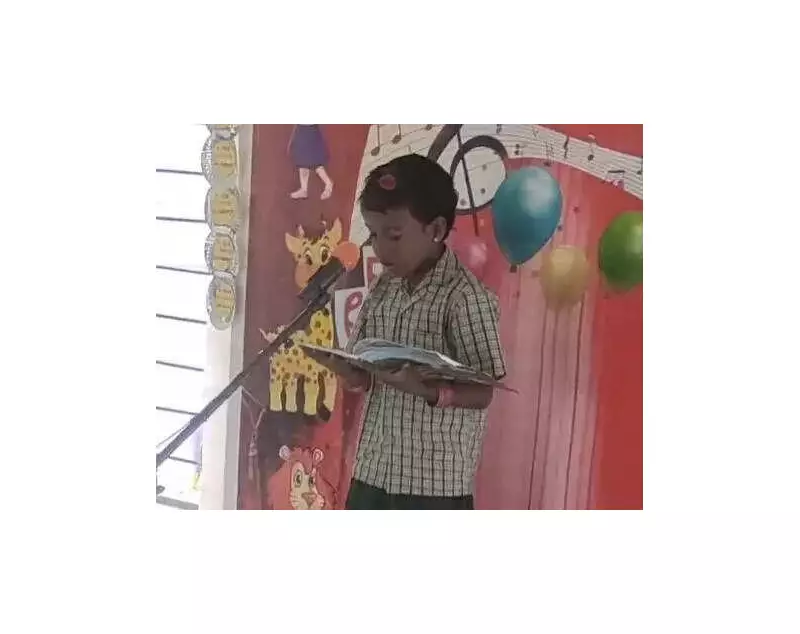
The content on Online Kalvi Radio is diverse and community-sourced. Audio clips feature textbook lessons, readings from library books, and announcements about upcoming events. The platform actively encourages participation through themed submissions; for instance, students have recently been invited to contribute audio files of Thirukkural verses for Thiruvalluvar Day (January 14) and for Republic Day.
The initiative's success is powered by its contributors. Over 10,000 students and members of the general public have uploaded files to the platform. Furthermore, more than 1,300 teachers, parents, and volunteers from the Illam Thedi Kalvi (ITK) scheme act as guides, assisting students in recording high-quality audio. Kuzhanthai Theresa, a guide and government schoolteacher from Chengalpet, highlights the pedagogical benefits. "This initiative particularly helps students who struggle with reading. Their interest peaks when they record what they read and then hear it played back on a public website. I started with six students; now 17 more have shown interest," she explained.
Official Endorsement and Future Impact
The initiative has garnered praise from educational authorities for its innovative approach. School Education Director S. Kannappan noted that such projects benefit teachers professionally. "Teachers can include these initiatives in their portfolios, which is considered when they apply for recognitions like the Dr. Radhakrishnan award," he stated. He commended the effective use of the community radio model, calling it a commendable medium for disseminating information and enhancing education.
Online Kalvi Radio stands as a powerful testament to grassroots innovation in Indian education. Born from necessity during a global crisis, it has matured into a sustainable, community-owned resource that promotes literacy, encourages participation, and provides a low-cost, high-impact model for digital learning across the state and potentially the nation.