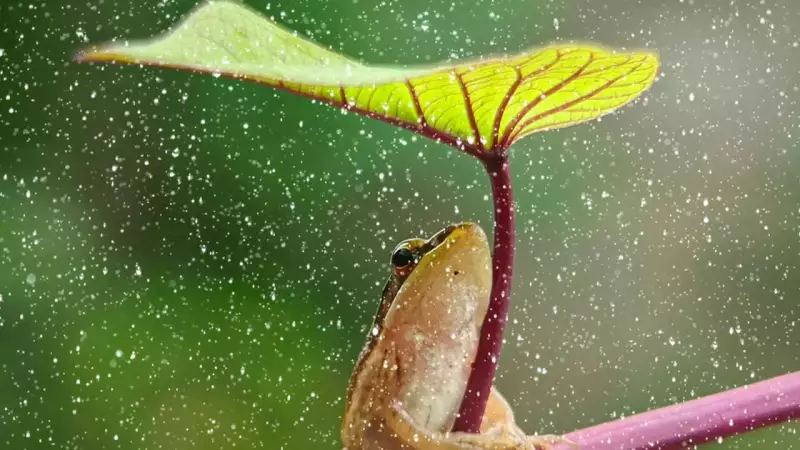
Children are naturally curious, especially about the world around them. A common question that puzzles young minds during the monsoon or a sudden shower is: "Where is all this water coming from?" Many imagine the sky as a giant tank with an open tap. The truth, however, is far more fascinating and is driven by a continuous natural process known as the water cycle.
The Earth to Sky Journey: Evaporation
The story of rain doesn't start in the clouds; it begins right here on Earth. When the Sun shines, its heat energizes water from various sources. This includes oceans, seas, rivers, lakes, and even small puddles. The heat causes the water to turn into an invisible gas called water vapour, rising up into the atmosphere. This transformation is known as evaporation. A simple way to understand this is to think of water disappearing as steam when you boil it in a pot. We often see the result of evaporation when wells or ponds dry up in the summer.
Cloud Formation: Nature's Water Storage
As the water vapour rises high into the cooler atmosphere, it begins to lose heat. This cooling causes the vapour to condense back into tiny liquid water droplets or ice crystals. This stage is called condensation. Millions of these microscopic droplets come together to form what we see as clouds. While they may look soft and fluffy like cotton candy, clouds are essentially vast collections of this condensed water. As more and more droplets collide and merge, the clouds grow in size and weight, much like a sponge soaking up water until it can't hold any more.

The Downpour: Precipitation in Action
When the cloud becomes too heavy to hold all the water droplets, gravity takes over. The droplets fall back to Earth. This final stage is called precipitation, which we commonly experience as rain. The intensity—whether a light drizzle or a heavy downpour—depends on the density and size of the water droplets. Precipitation isn't always just rain; it can take different forms based on atmospheric temperature, such as hail, snow, or sleet.
Once the water reaches the ground, it collects back into rivers, lakes, and oceans, ready to begin the cycle all over again. This is the perfect cycle of nature. Rain is crucial for balancing dryness, helping plants grow, providing drinking water, and regulating the Earth's temperature. In essence, it sustains all life. Collected rainwater can also be purified and reused for various purposes like irrigation, highlighting its endless value.