NCERT Removes Controversial Map from Class 8 Textbook After Rajasthan Royal Families Object
The National Council of Educational Research and Training (NCERT), India's apex curriculum body, has taken decisive action by removing a disputed map from the revised digital edition of the Class 8 Social Science English textbook for the academic session 2026–27. This move follows sustained objections from historians, Rajput organizations, and several former royal families of Rajasthan, who argued the map presented historically inaccurate information.
Details of the Textbook Revision
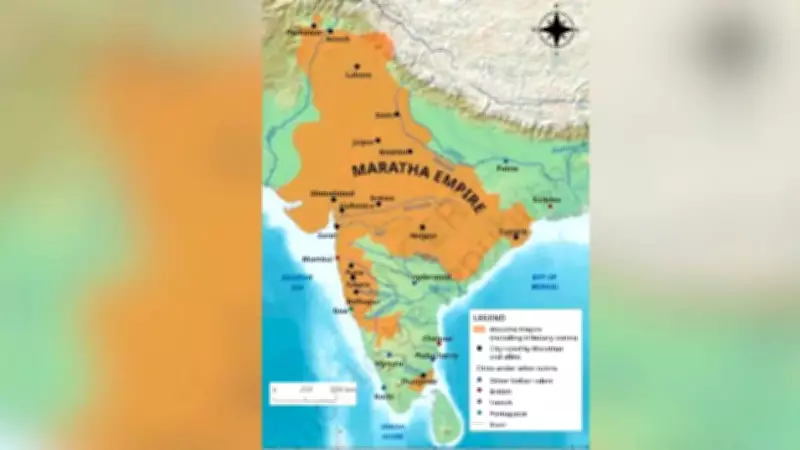
In the previous academic year's (2025–26) English textbook, the controversial map appeared on page 71, depicting Jaisalmer as part of the Maratha Empire. However, in the newly updated digital edition for 2026–27, NCERT has completely excised this map from pages 70 and 71. This correction aligns with an earlier decision where NCERT removed the same map from the Hindi version of the textbook for 2025–26 and omitted it from subsequent digital updates.
Roots of the Controversy and Objections
The controversy erupted when the Class 8 Social Science textbook published by NCERT included a map showing Jaisalmer within the boundaries of the historical Maratha Empire. This depiction was met with strong opposition from various quarters:

- Historians and Rajput Groups: They contended that the map was factually incorrect, as there is no historical evidence to support Maratha rule over Jaisalmer or significant parts of Rajasthan as illustrated.
- Former Royal Families: Key figures like Chaitanya Raj Singh, a former member of the Jaisalmer royal family, led the charge. Singh labeled the map "historically misleading" and a "serious error," demanding immediate correction from the Union Education Minister.
- Widespread Protests: Following Jaisalmer, royal families from Mewar and Bundi also raised objections to being inaccurately portrayed as part of the Maratha Empire. Public representatives and community leaders submitted formal demands to the central government for the map's removal.
Official Responses and Reactions
Confirming the removal, Chaitanya Raj Singh detailed their advocacy process: initial objections were raised via social media, followed by formal written communication to NCERT. He welcomed the correction, stating, "Academic institutions are expected to provide students with accurate and authentic knowledge." Singh emphasized that history is intertwined with cultural heritage and self-respect, necessitating unbiased, fact-based presentations without agenda-driven compromises.
Devendra Pratap Singh, Director of the Jaisalmer Fort Palace Museum, reinforced this view, noting the map lacked historical evidence and had been opposed by prominent Rajasthan royal families. He described the removal as a positive step following their written appeal to the NCERT Director.
Vikram Singh Nachna, another royal family member, echoed these sentiments, asserting that portraying Jaisalmer and Rajasthan as part of the Maratha Empire was misleading and contrary to established historical facts.
Community Impact and Resolution
The decision has brought relief and satisfaction to the people of Jaisalmer, who take pride in their region's rich history, including events like the "Dhai Saka." Locals viewed questioning this proud heritage without solid evidence as unacceptable, making NCERT's action a welcome resolution.
With the map's removal from both Hindi and English textbooks, the controversy has subsided for now. Experts and community leaders have applauded NCERT's responsiveness, highlighting the importance of expert review and historical authenticity in curriculum development to ensure accurate knowledge for future generations.