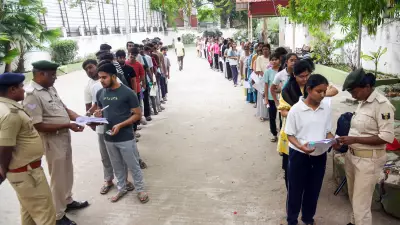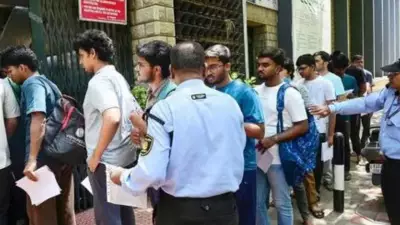
In a significant development at Lucknow University, students affiliated with the National Students' Union of India (NSUI) staged a protest by surrounding the Vice-Chancellor's office on Tuesday. This action came in response to the abrupt discontinuation of an interaction programme featuring Rahul Jhansla, the Vice-President of the Delhi University Students' Union (DUSU).
Police Intervention Halts Student Interaction
The event, which was intended to foster dialogue between student leaders and the university community, was brought to a premature end by the local police. According to reports, the intervention was carried out at the explicit request of the Lucknow University administration, citing concerns over maintaining order on the campus.
NSUI Accuses University of Favoritism
Prince Prakash, the national coordinator of NSUI, leveled serious allegations against the university authorities. He claimed that the LU administration has been permitting activities organized by the Akhil Bharatiya Vidyarthi Parishad (ABVP), which is affiliated with the Rashtriya Swayamsevak Sangh (RSS), while simultaneously denying permission to other student groups like NSUI.

"This selective approach undermines the principles of fairness and equality on campus," Prakash asserted, highlighting what he described as a pattern of bias in the university's handling of student events.
University Administration Cites Security Concerns
When contacted for clarification, Rakesh Dwivedi, the Proctor of Lucknow University, provided the administration's perspective. He explained that the permission for the interaction programme was denied due to apprehensions about a potential breach of peace.
"Our primary responsibility is to ensure the safety and security of all students and staff on campus. We had credible information that the event could lead to disturbances, hence the decision to request police intervention," Dwivedi stated.
Broader Implications for Student Politics
This incident has sparked a broader debate about the state of student politics and administrative neutrality in Indian universities. Key points of discussion include:
- The role of university administrations in regulating student activities.
- Allegations of political bias affecting campus events.
- The balance between freedom of expression and maintaining campus security.
The protest by NSUI students underscores the growing tensions between student organizations and university authorities, particularly in the context of increasing political activism on campuses across India. As the situation develops, stakeholders are calling for transparent and equitable policies to govern student-led programmes and ensure a harmonious academic environment.