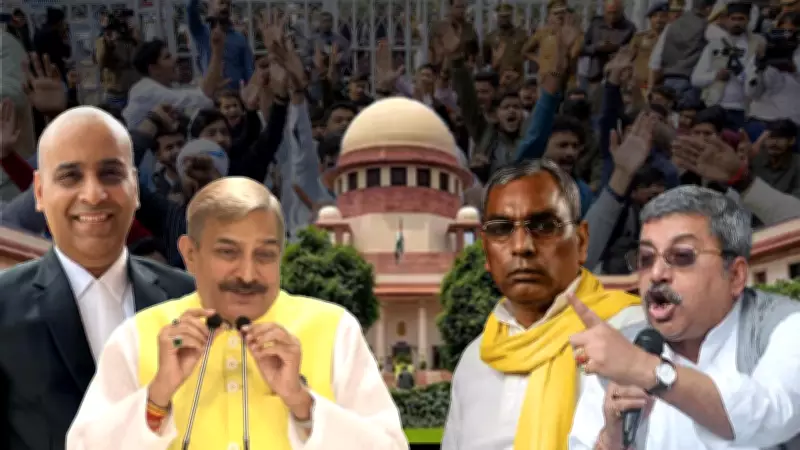
Supreme Court Intervenes in UGC's 2026 Equity Framework on Caste Definition
The Supreme Court of India has issued a significant stay order on the University Grants Commission's 2026 equity regulations that specifically address the definition and handling of caste discrimination in higher educational institutions. This judicial intervention comes amid mounting petitions challenging the new framework, with the court expressing apprehension about its potential to fragment societal harmony within academic environments.
Court's Directive and Immediate Implications
While acknowledging the noble objectives of equity and inclusion underpinning the regulations, the Supreme Court bench emphasized that the current formulation appears prone to creating divisions rather than fostering unity. In a decisive move, the court has directed that the earlier 2012 UGC regulations will remain operational for the time being, ensuring continuity in institutional procedures.
The bench has formally issued notices to both the Central Government and the University Grants Commission, mandating their detailed responses to the concerns raised. The matter has been scheduled for further hearing on March 19, 2026, setting the stage for a crucial legal examination of these contentious regulations.

Petitioners' Arguments Against the New Regulations
The petitions presented before the Supreme Court articulated several fundamental objections to the 2026 equity framework:
- Exclusion of General Category: Critics argue that the regulations inadequately address the concerns of students from the general category, creating an imbalance in protective measures.
- Insufficient Safeguards: The framework allegedly lacks robust mechanisms to prevent potential misuse and ensure fair implementation across diverse institutional settings.
- Vaguely Defined Equity Committees: Petitioners highlighted that the regulations establish equity committees with poorly delineated powers and responsibilities, which could lead to arbitrary decisions and administrative confusion.
Political Reactions and Broader Context
The Supreme Court's intervention has already triggered widespread political reactions across party lines, reflecting the sensitive nature of caste-based policies in India's educational landscape. This development occurs against the backdrop of ongoing national conversations about social justice, educational access, and institutional equity.
As the legal process unfolds, educational institutions nationwide await clarity on how caste discrimination matters will be addressed in compliance with constitutional principles while maintaining social cohesion and academic integrity. The March hearing promises to be a pivotal moment in shaping the future of equity regulations in Indian higher education.