As the preschool start date approaches, many parents experience growing anxiety about their child's academic preparedness. Concerns often center on alphabet recognition, number counting, and the ability to maintain prolonged sitting. In this context, play can mistakenly appear as mere distraction or entertainment to be minimized.
The Hidden Curriculum of Play
This perspective fundamentally misunderstands what preschool truly demands from young children. While academic skills receive much attention, the core requirements involve attention regulation, social adaptation, and emotional management—all areas where play serves as the primary training ground.
Building Sustained Attention Through Play
Preschool environments require children to participate in group activities, follow instructions, and transition between structured tasks. The capacity for sustained attention proves more critical than alphabet memorization. Play develops this attention organically through activities that naturally engage children's interest.

When a child constructs block towers, they demonstrate remarkable focus that often exceeds adult expectations. The iterative process of building, collapsing, and rebuilding teaches persistence and problem-solving without explicit instruction. Similarly, puzzle assembly or toy sorting activities cultivate concentration through hands-on engagement.
Even imaginative scenarios demonstrate attention-building potential. Children operating pretend kitchens or managing imaginary stores remain deeply engaged because they care about narrative continuity. This ability to maintain involvement in self-directed activities directly transfers to classroom participation.
Developing Social Competence Naturally
For many children, preschool represents their first consistent peer interaction environment. Navigating shared spaces, turn-taking protocols, and minor conflicts becomes daily reality. These complex social skills resist direct teaching but emerge naturally during play interactions.
When two children desire the same toy, they encounter authentic social negotiation. Determining who proceeds first, managing waiting periods, and addressing emotional responses—these seemingly chaotic moments constitute genuine practice for preschool social dynamics.
Board games, pretend scenarios, and outdoor physical play all teach children to interpret social cues. They learn appropriate timing for communication, conflict resolution strategies, and group reintegration techniques—skills more valuable than formal manners in preschool settings.
Processing Emotions Through Play Activities
Young children experience intense emotions with limited verbal expression capabilities. Preschool doesn't eliminate these feelings but introduces additional triggering situations. Play provides essential outlets for emotional processing and regulation.
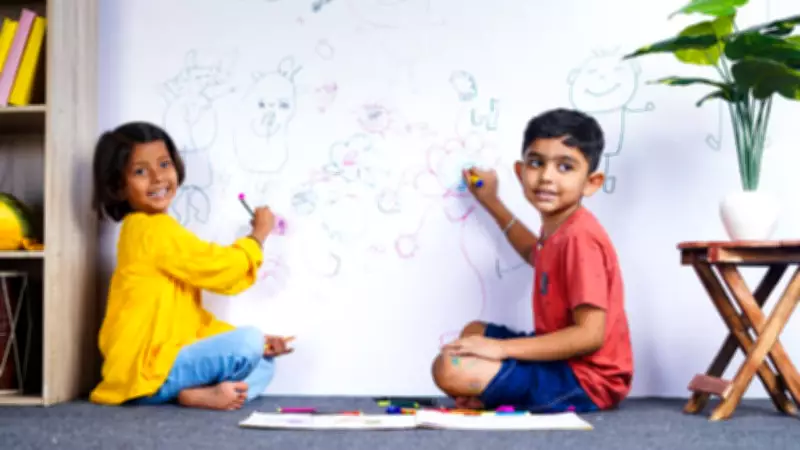
Physical activities like running, jumping, and climbing help dissipate restlessness and excess energy. Creative expressions including drawing, painting, or clay manipulation offer alternatives when words prove insufficient. Pretend play holds particular significance as children reenact confusing real-world experiences—assuming teacher, baby, or doctor roles to gain symbolic control over overwhelming situations.
Understanding Routine Through Playful Transitions
Preschool operates on predictable schedules involving circle time, snack periods, cleanup routines, and outdoor sessions. These structured patterns can feel abrupt and restrictive to young children. Home-based play introduces routine concepts gradually through natural transitions.
Toy cleanup before new game initiation, block construction and disassembly sequences, and activity conclusion rituals all familiarize children with transition expectations. Games incorporating simple rules—turn-taking protocols, step-by-step procedures, and clear endpoints—prepare children for structured environments without creating performance pressure.
The Value of Messy Play Experiences
Hand-based painting, floor-scattered sand, and water exploration often test adult tolerance thresholds. This apparent chaos actually serves crucial developmental purposes. Messy play enhances coordination and bodily awareness through sensory engagement.

Water pouring, clay manipulation, and paper tearing activities strengthen hand muscles and improve focus—the same foundational skills required for pencil gripping and scissor usage. Beyond physical development, messy play builds psychological resilience as children discover that mistakes remain manageable and cleanup represents achievable tasks. This confidence proves invaluable when navigating unfamiliar preschool environments.
Ultimately, play represents not merely childhood entertainment but essential preparation for preschool success. By developing attention capacity, social skills, emotional regulation, and routine adaptation, play establishes the fundamental competencies that enable children to thrive in structured educational settings.