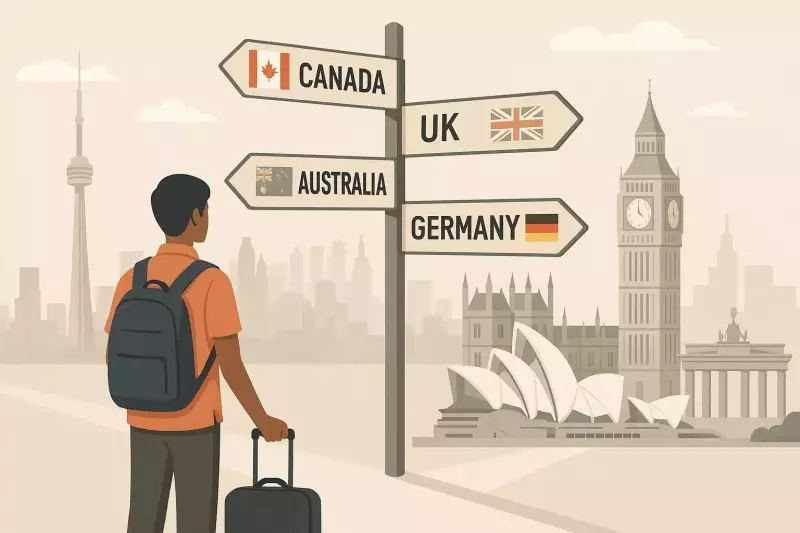
In a notable shift, the number of Indian students pursuing higher education overseas saw a decline in 2025, reflecting a year of heightened caution and recalibration among families. According to the latest data from India's Ministry of External Affairs (MEA), over 1.2 million Indian students were enrolled abroad in 2025, marking a 5.7% decrease from the approximately 1.33 million recorded in 2024.
This modest dip is not a signal of fading aspirations but rather a pragmatic response to a volatile global landscape. Unpredictable visa rule changes, rising costs, and a strategic broadening of horizons beyond traditional hubs have led Indian students and their families to pause and reconsider their options more carefully than before.
The Big Four: A Mixed Bag of Challenges and Opportunities
The classic destinations—Canada, the United States, the United Kingdom, and Australia—have each presented a unique set of circumstances in 2025, contributing to the overall trend of hesitation.

Canada's Sharp Slowdown
While Canada retains its position as the top destination, its growth trajectory has stalled sharply. Immigration, Refugees and Citizenship Canada (IRCC) data reveals a concerning trend: only 9,955 new study permits were issued to Indian students between January and August 2025. This is a drastic fall from nearly 1.5 lakh in the same period in 2023 and over 76,000 in 2024. The refusal rate for Indian applicants stood at a staggering 71% in 2025, causing many to reassess the country's appeal against rising uncertainty.
United States: Growth Under Pressure
The US presents a paradox. On-campus enrollments from India grew from about 3.32 lakh in 2023 to 3.63 lakh in 2024. However, a leading indicator suggests future headwinds: F-1 visas issued to Indian students dropped by 44% in the first half of 2025 compared to 2024. This slowdown coincides with a diversification of US classrooms, with countries like Vietnam seeing a 20% rise in student visas.
Australia's Uneven Picture
Australia's story is one of contrasts. Total Indian student enrollments reached around 1.39 lakh between January and September 2025, a 4% year-on-year increase. Yet, beneath this figure lies a shift: growth is concentrated in universities, while vocational sector numbers have declined. Notably, new student commencements from India fell by 8% in that period, indicating a potential future softening of overall numbers.
The UK's Steady Appeal
Amid the turbulence, the UK emerges as a stable and attractive option. UK Home Office data shows nearly 98,015 sponsored study visas were granted to Indian students up to June 2025, nearly matching Chinese numbers. With a high approval rate of 96% and a 44% surge in grants in Q2 2025, demand, particularly for master's programs, remains robust despite policy adjustments.
The Rise of New Educational Destinations
The most significant trend of 2025 is the deliberate diversification by Indian students beyond the traditional 'Big Four'. European nations are gaining remarkable confidence.
Germany has seen its Indian student population more than double from about 28,900 in 2020 to over 59,400 in 2024, with engineering remaining the dominant field of study. France, aiming to host 30,000 Indian students by 2030, saw enrollments grow 17% in 2024–25 to around 9,100 students.
Other countries are also benefiting from this shift. Ireland now hosts over 7,000 Indian students, making India its largest international student cohort. New Zealand has seen numbers stabilize at around 12,000 Indian students in 2025 after a post-pandemic surge.
What This Means for Future Aspirants
The 2025 data underscores a new maturity in the Indian study abroad journey. The decision-making process has evolved from a singular focus on destination prestige to a complex calculus weighing visa predictability, cost, post-study opportunities, and long-term outcomes.

Indian students are becoming more informed and strategic, spreading their applications across a wider global map. This cautious, diversified approach is not a retreat from world-class education but a smarter, more resilient pathway to securing it. The global education landscape is being quietly reshaped by these calculated choices, promising a more balanced and sustainable flow of Indian talent across continents in the years to come.