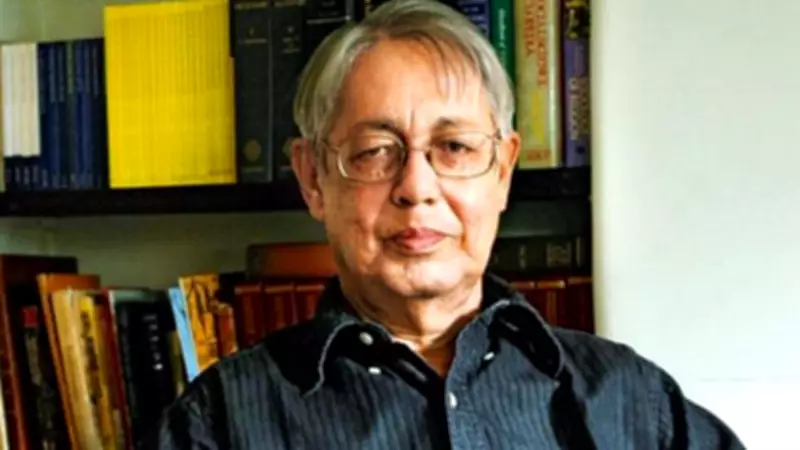
André Beteille: The Sociological Visionary Whose Work Transcended Boundaries
The passing of Professor André Beteille this week marks not an end but a celebration of a legacy that fundamentally shaped modern Indian sociology. As the field's foundational figure, Beteille opened doors for future generations to move beyond one-dimensional, micro-level studies toward comprehensive examinations of India and the world.
Revolutionizing Village Studies with Universal Theory
When Professor Beteille published his landmark work Caste, Class and Power, it represented far more than just another village study. This groundbreaking research masterfully integrated Indian politics with universal sociological theory in equal measure. His examination of a Brahmin-dominated village in Tamil Nadu vividly captured the powerful emerging currents of Dravidian politics alongside the complex dynamics of caste, economic influence, and political power.
His work remains the most outstanding analysis of the transition from cumulative to dispersed inequalities in rural India, where the traditional convergence of ritual, political, and economic dominance began to fragment. This conceptual framework provided a profound alternative to Louis Dumont's emphasis on ritual hierarchy in caste studies, establishing Beteille as a truly original thinker.

A Global Scholar with an Indian Heart
Despite receiving numerous international accolades including the Padma Bhushan and election as a Fellow of the British Academy, Beteille remained deeply connected to India. When asked why he chose to teach at the Delhi School of Economics rather than prestigious universities worldwide, his response was characteristically straightforward: "He enjoyed working here." Without resorting to grand nationalist declarations, he simply stated that he found fulfillment in his work at the institution.
This sentiment resonated with many leading Indian intellectuals who similarly value meaningful contribution over international recognition. Beteille's intellectual duels with Marxists were always tinged with admiration, reflecting both his Kolkata college years and his fundamentally comprehensive intellectual approach.
Personal Encounters Revealing Character
Those who interacted with Professor Beteille consistently noted his remarkable generosity toward critics and his ability to maintain personal relationships despite professional disagreements. On one occasion when a colleague responded rudely to his critical comments, Beteille displayed characteristic dignity by carrying on as if nothing had happened, only pretending to forget the incident when apologies were offered weeks later.
His transition to writing regularly for The Times of India demonstrated another dimension of his commitment to public engagement. Through these widely read articles, he successfully merged esoteric sociological subjects with popular concerns, significantly raising the standards of public debate in India.
Beyond Sociology: A Renaissance Mind
Few who admired Beteille's sociological work knew of his deep interests in music, poetry, and fine arts. His remarkable memory allowed him to recite long verses in English and Bengali with admirable ease until nearly the end of his life. When colleagues discussed literary works like Walter Scott's Ivanhoe or Cervantes' Don Quixote, Beteille could recall minute details from texts he had read decades earlier, demonstrating the extraordinary breadth of his intellectual engagement.
His prolific writing encompassed virtually the entire sociological landscape—from tribes, peasants, and castes to universities, democracy, and citizenship. As one colleague noted while compiling Beteille's essential writings, he successfully brought Max Weber to Indian sociology while demonstrating that the most effective sociological concepts should serve as important markers of universal knowledge, applicable beyond India's borders.

The Enduring Model of Intellectual Excellence
Professor Beteille spoke and wrote with charming lucidity that made complex ideas accessible. His sentences were consistently crisp, meaningful, and enviably elegant—so much so that people would attend his public lectures simply to hear him speak. For aspiring social scientists, he represented the ultimate model of intellectual rigor combined with clear communication.
In the respectful but playful relationships he maintained with colleagues—what sociologists term "joking relationships" where boundaries are crossed with affection—Beteille demonstrated how professional admiration could coexist with genuine friendship. His legacy continues through the generations of scholars who walk through the doors he opened, studying India and the world with the comprehensive vision he pioneered.