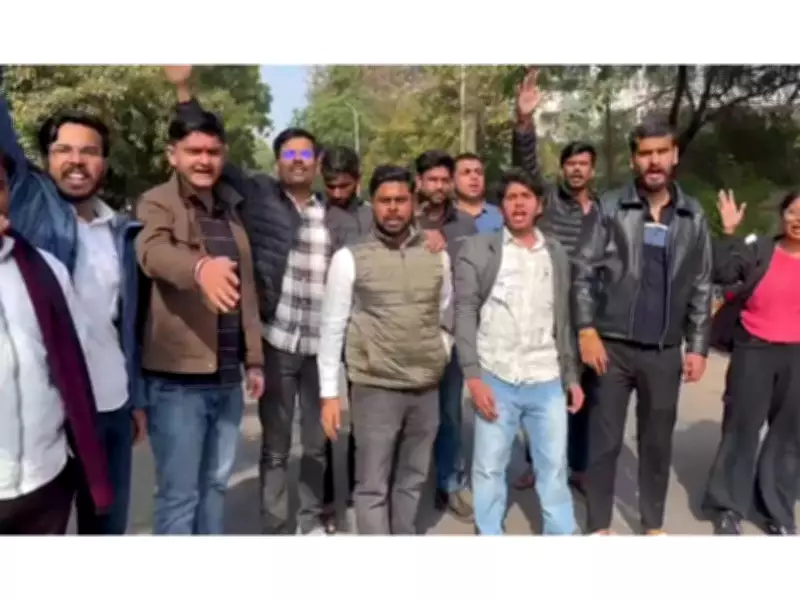
Lucknow University Students Celebrate Supreme Court's Stay on UGC Equity Regulations
Students at Lucknow University in Uttar Pradesh erupted in celebration on Thursday following the Supreme Court's decision to temporarily halt the implementation of the University Grants Commission's Promotion of Equity in Higher Education Institutions Regulations, 2026. The campus echoed with chants of "Chhatr ekta zindabad" (Hail Students Unity) as the news spread, marking a significant moment in the ongoing debate about educational equity in India.
Student Voices: A Victory Against Divisive Guidelines
Speaking to media, student Shakti Dubey expressed relief and gratitude, stating, "This is a victory for the students. Keeping our interests in mind and considering the nationwide protests where Lucknow University played a crucial role, the Supreme Court delivered this verdict. It should be thoroughly reviewed, discussed, and amended." He emphasized that the court's intervention was a direct response to student activism across the country.
Another student, Jatin Shukla, criticized the new UGC guidelines as "completely divisive" and recounted the university's persistent protests. "We organized a massive demonstration on January 27 and submitted a memorandum to the UGC Chairman. The Chief Justice of India's emphasis on moving forward together resonates with us. For now, we have won," he said, highlighting that while the 2012 rules were acceptable, the recent updates sparked widespread opposition.

Astha Pandey noted the positive impact of the court's decision, saying, "This has had a very positive effect on us. By staying these regulations, the Court has acted in our best interest against those trying to create division. We are thankful."
Legal Challenges and Court's Rationale
The new UGC regulations, notified on January 23, faced multiple petitions alleging they were arbitrary, exclusionary, discriminatory, and violated both the Constitution and the UGC Act of 1956. In response, the Supreme Court ordered that the 2012 regulations remain in effect for the time being.
The court specifically pointed out vagueness in Regulation 3(C), which defines caste-based discrimination, warning that it could be misused. "The language needs to be re-modified," the bench observed, underscoring the need for clearer, fairer guidelines to prevent potential abuse.
Background on the Controversial Regulations
Introduced to address caste-based discrimination in higher education institutions, the 2026 regulations mandated:
- Establishment of special committees to handle complaints
- Creation of helplines for students, particularly from SC, ST, and OBC categories
- Updated frameworks from the 2012 rules on the same issue
However, these measures sparked intense criticism from general category students, who argued that the rules could inadvertently lead to discrimination against them. The controversy highlights the delicate balance between promoting equity and ensuring fairness for all students in India's diverse educational landscape.
The Supreme Court's stay order has provided a temporary reprieve, but the debate over how best to achieve equity in higher education continues, with Lucknow University students at the forefront of this national discussion.