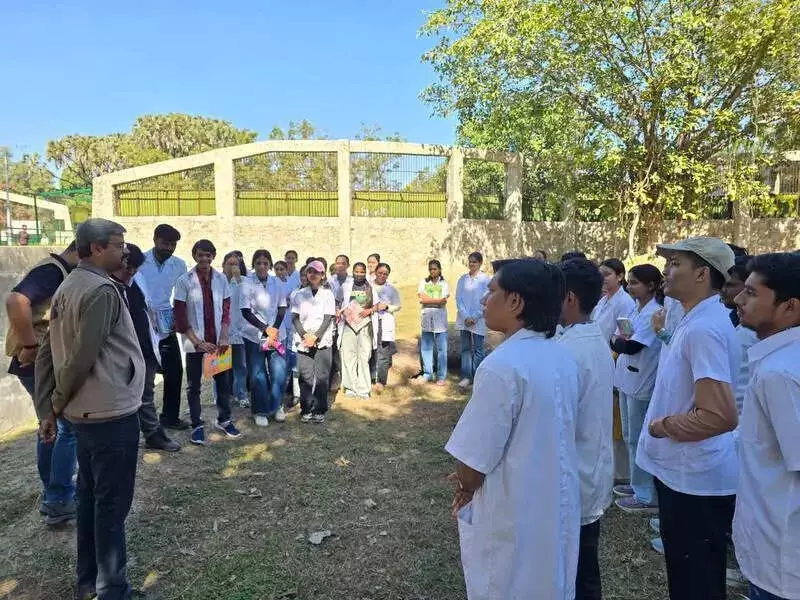
Vadodara's historic Sayajibaug Zoo has become the top choice for undergraduate zoology students seeking practical experience, with a significant number from the local university now training within its premises.
MSU Embraces NEP with Mandatory Internships
As part of its revised curriculum under the National Education Policy (NEP), the Maharaja Sayajirao University (MSU) has made internships a compulsory academic component. For the current sixth-semester batch of the BSc Zoology program, this has opened a door to real-world learning. Out of the total 106 students in the semester, a notable 42 have selected Sayajibaug Zoo as their preferred internship centre.
Hands-On Learning in Wildlife Management
Pratyush Patankar, the curator of Sayajibaug Zoo, explained that the university provides students the flexibility to choose their internship venue. He emphasized that this initiative allows students to move beyond textbooks and gain hands-on training in captive wildlife management and conservation techniques.

"Such initiatives are a result of the zoo's sustained efforts towards conservation education and community engagement," Patankar stated. To ensure effective learning, zoo officials are conducting regular instructional sessions for the student interns as part of the structured program.
Building a Bridge Between Academia and Conservation
This partnership marks a significant step in linking academic zoology with frontline conservation work. The internship provides students with unique insights into animal care, zoo operations, and public education strategies. For Sayajibaug Zoo, engaging with young scholars fosters a culture of conservation and helps build informed future advocates for wildlife.
The collaboration between MSU and the zoo is seen as a model for how educational institutions and wildlife facilities can work together under the NEP framework to create meaningful, skill-based learning experiences for students in Vadodara and beyond.