Panjab University's Green Legacy: 5,045 Trees Define Campus Identity
Panjab University in Chandigarh presents a remarkable green landscape. The campus spreads across academic blocks, hostels, sports grounds, and residential areas. Its green cover demonstrates both impressive volume and careful planning.
A Diverse Collection of Mature Trees
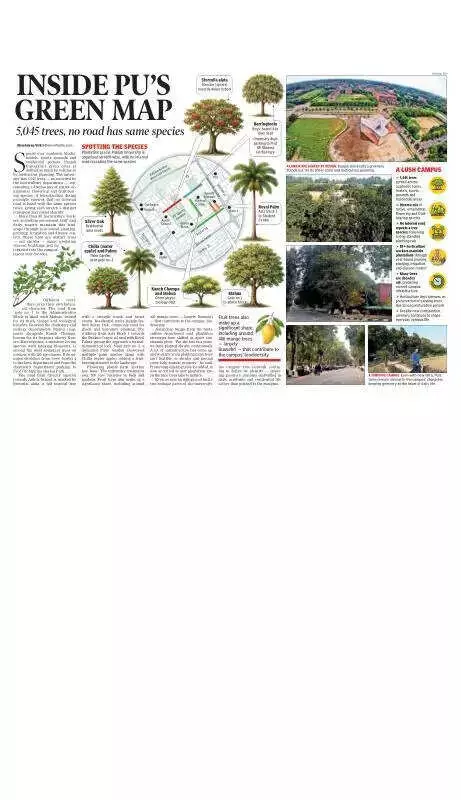
The university's horticulture department records exactly 5,045 trees on campus. These are not shrubs but mature trees. Many predate current buildings and have grown alongside the university for decades. The collection includes native, ornamental, flowering, and fruit-bearing species.
A longstanding design principle ensures variety along every internal road. No stretch features the same tree species twice. This approach gives each corridor its own distinct ecological and visual character.

Dedicated Maintenance and Care
More than eighty horticulture workers maintain this extensive landscape. The team includes permanent staff and daily wagers. They perform year-round planting, pruning, irrigation, and disease control. Their continuous efforts keep the campus green and healthy.
Botanical Corridors with Unique Identities
Different campus roads carry specific botanical signatures. The route from Gate No. 1 to the Administrative Block features Mahua trees. These trees provide thick canopy cover and offer significant ecological benefits.
Between the chemistry and zoology departments, Mahua appears again alongside Kanch Champa. Kanch Champa is known for its fragrant and showy flowers. Barringtonia represents another prominent species on campus.
This moisture-loving tree with hanging blossoms counts 295 specimens. It dominates stretches from Boys' Hostel 4 to the Laws Department. Barringtonia also lines the road from the chemistry department parking to Prof GP Sharma Herbal Park.
Specialized Planting Across Campus Zones
The road from the Director (Sports) office toward Ankur School features Sterculia alata. This tall tropical tree has a straight trunk and broad crown. Residential zones largely showcase Silver Oak trees. People commonly use Silver Oak for shade and boundary planting.
The walkway from Arts Block 1 toward the Student Centre presents a formal appearance. Royal Palms line this approach, creating a symmetrical look. Near Gate No. 3, a dedicated Palm Garden displays multiple palm species.
This garden also includes Chilta, commonly known as water apple. The fruit-bearing Chilta adds another functional element to the landscape.
Flowering Plants and Fruit Trees
Flowering plants form another crucial layer of campus greenery. The university maintains over one hundred rose varieties in beds and gardens. Fruit trees also contribute significantly to biodiversity.
Approximately four hundred mango trees grow on campus, largely of the Dussehri variety. These fruit trees enhance both the ecological and aesthetic value of the university grounds.
Adapting to Space Constraints
Amandeep Singla from the horticulture department explains shifting plantation strategies. "For the last two years, we have planted shrubs continuously," he states. "A lot of infrastructure has come up, and in many areas planting more trees isn't feasible. Shrubs and ground cover help sustain greenery."
Singla emphasizes the importance of preserving existing trees. Given the long time trees require to mature, protection has become as critical as new plantation efforts.
Green Identity Amid Development
New buildings and facilities continue to reshape parts of the university. Despite this development, the campus tree network maintains its defining role. This careful balance ensures greenery remains embedded in daily academic and residential life. The green cover avoids being pushed to the margins as the institution evolves.